
A public-housing work-order project is slipping exit criteria, and the test manager has fresh monitoring data on progress, defects, and coverage. Which GenAI prompt best supports test monitoring?
Select an answer to reveal the explanation.
Short Explanation
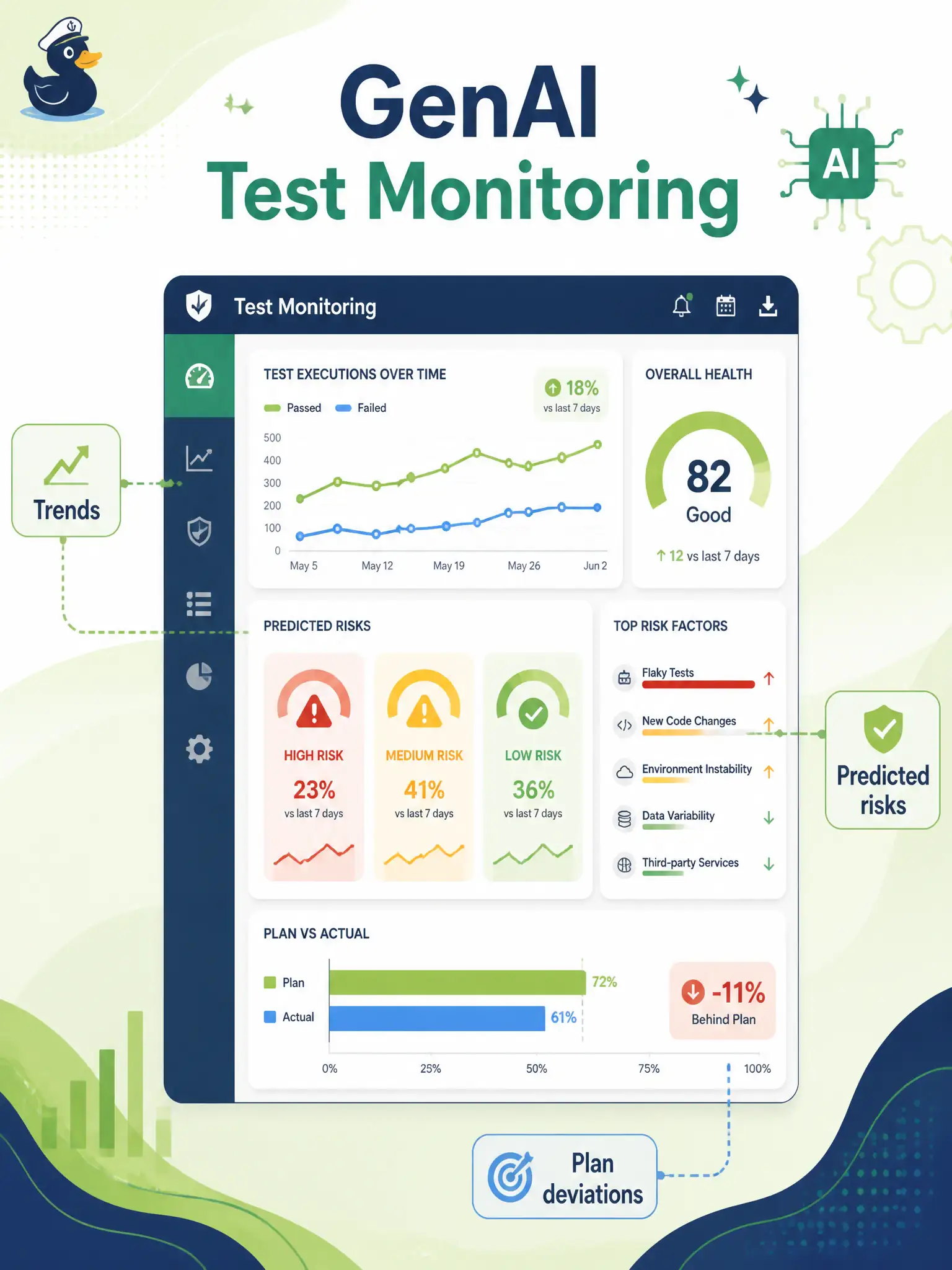
When the exit gate starts to wobble, you need a dashboard whisperer—not fifty new scripts. Ask GenAI to read the monitoring pile for trends, risks, and plan drift.
Full Explanation
When a public-housing work-order project is slipping exit criteria and the test manager has fresh monitoring data on progress, defects, and coverage, the GenAI prompt that best supports test monitoring is to analyze that data for trends, predicted risks, and deviations from the test plan. Civic housing maintenance depends on early detection of plan drift so residents’ repair SLAs remain credible. Generating fifty new Gherkin scenarios for every open work-order type fails because bulk design generation is not monitoring analysis of current metrics. Redesigning the housing application’s database schema from scratch fails as scope escape from test monitoring into architecture. Producing red-team jailbreak payloads against the team’s chatbot fails by concept: adversarial LLM testing is not progress/defect/coverage monitoring for the work-order system. Exam caveat: monitoring prompts consume metrics to surface trends and deviations; they do not substitute unrelated generation or attack tasks. Operational check: export the municipal dashboard extracts, prompt GenAI for trend and risk narratives tied to the plan, validate predictions against open severity-1 defects, and brief housing leadership with human-confirmed deviations before changing exit criteria.