
A library makerspace-booking tester wants functional cases from acceptance criteria, then a coverage table, then a better prompt for end-to-end procedures. Which approach should they select?
Select an answer to reveal the explanation.
Short Explanation
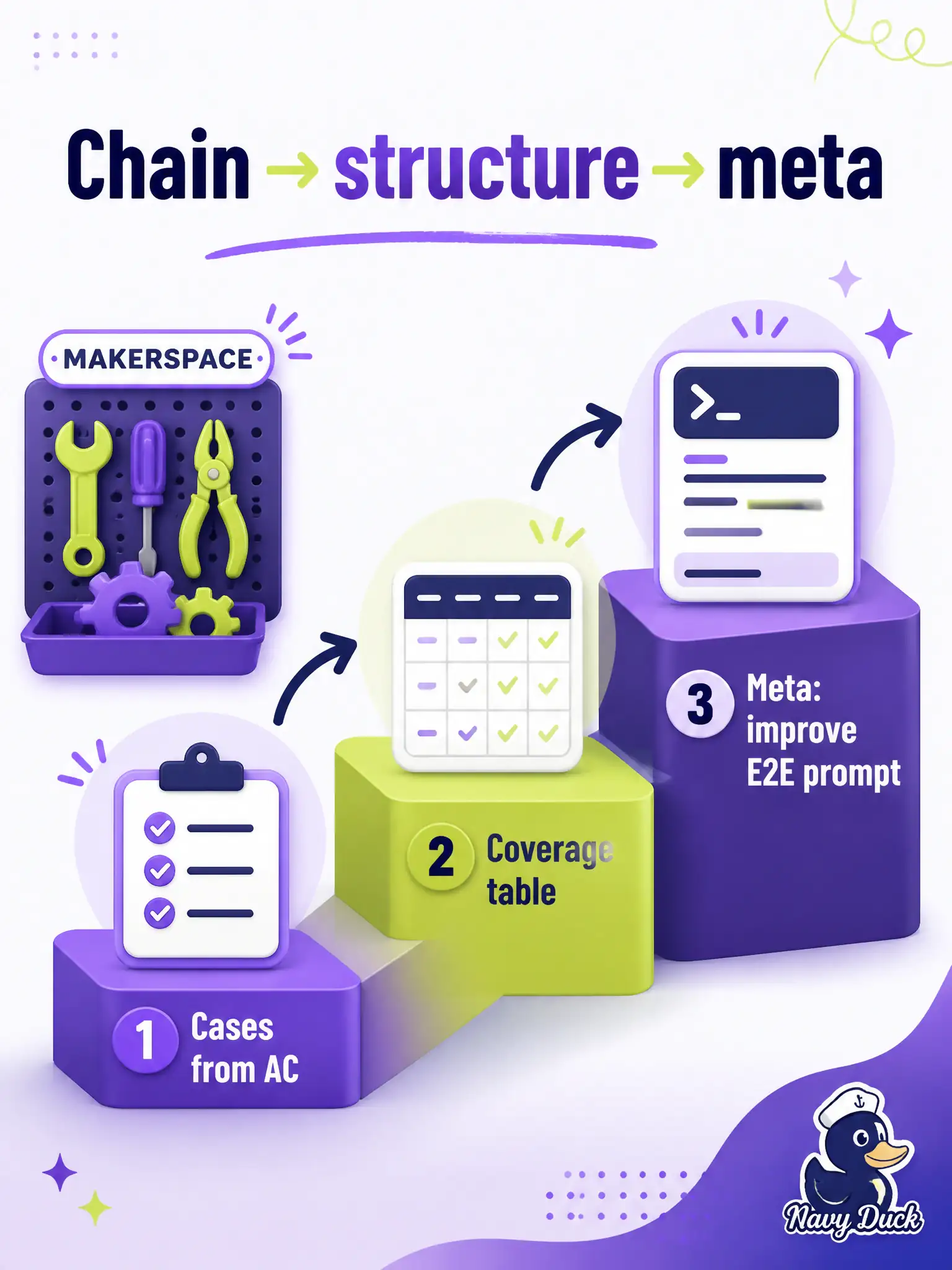
Build the makerspace suite like a three-station workshop: cases, then coverage, then a smarter next prompt. Chain structured asks and use a meta step to improve the end-to-end procedure prompt. One unverified mega-blob skips the stations.
Full Explanation
A library makerspace-booking tester who wants functional cases from acceptance criteria, then a coverage table, then a better prompt for end-to-end procedures should select a chained sequence using structured prompts and then a meta prompt for the next ask. Civic makerspace access depends on staged artifacts so coverage and procedures stay aligned to public booking rules. One unverified blob that asks for everything at once fails because it collapses structure, skips intermediate review, and raises omission risk. Only neuron-coverage testing of the makerspace chatbot model fails by concept: the workflow improves application testware via chaining and meta prompting, not white-box model coverage. Abandoning GenAI and forbidding any coverage table fails as an extreme that ignores legitimate assisted analysis for municipal booking flows. Exam caveat: chaining builds intermediate structured outputs; meta prompting helps craft the subsequent procedure-oriented ask. Operational check: run structured case generation, verify the coverage table against makerspace AC, use a meta prompt to refine the E2E procedure ask, gate each civic stage with librarian-tester review, and publish procedures only after the coverage gaps are closed or explicitly deferred.