
A youth-soccer registration desk already writes Given–When–Then scenarios. Which prompting approach best emits matching conditions and cases for a new story in that house format?
Select an answer to reveal the explanation.
Short Explanation
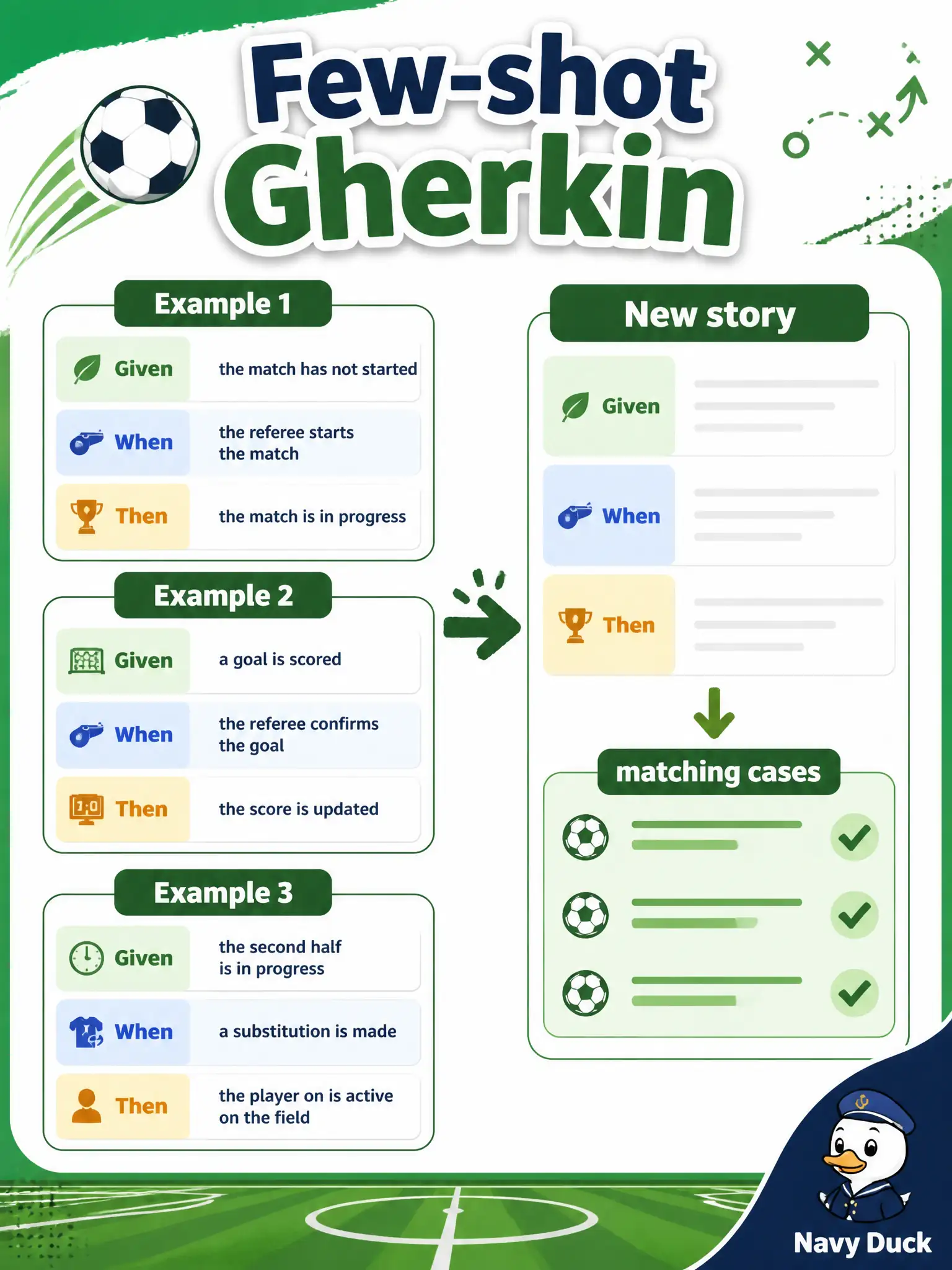
House Gherkin is a jersey style—show a few worn examples and ask for the same cut. Few-shot prompting with those Given–When–Then samples steers conditions and cases into the constrained format. Skipping examples invites freestyle that does not match the desk.
Full Explanation
When a youth-soccer registration desk already writes Given–When–Then scenarios, few-shot prompting that supplies several house Gherkin examples before the new story best emits matching conditions and cases in that civic house format. Public youth-sports systems benefit when new artifacts rhyme with existing BDD style so volunteers and vendors share one dialect. Zero guidance that asks the model to invent a proprietary binary protocol fails because it abandons the house format and the testing goal. Using only CT-AI metamorphic relations that treat the LLM as the registration SUT fails by concept: the need is application scenario generation in Gherkin, not metamorphic evaluation of the model. A system-prompt rewrite that bans examples because examples “confuse models” fails against few-shot practice, where examples steer structure. Exam caveat: few-shot is the technique of choice when house format must be imitated. Operational check: paste three approved soccer Gherkin samples, add the new story, require matching Given–When–Then output, have a league steward reject any case that breaks civic registration vocabulary, and baseline the accepted scenarios before automation authoring begins.