
A transit-pass refill suite was reordered by an LLM using risk plus dependencies. What should the tester do before the night run?
Select an answer to reveal the explanation.
Short Explanation
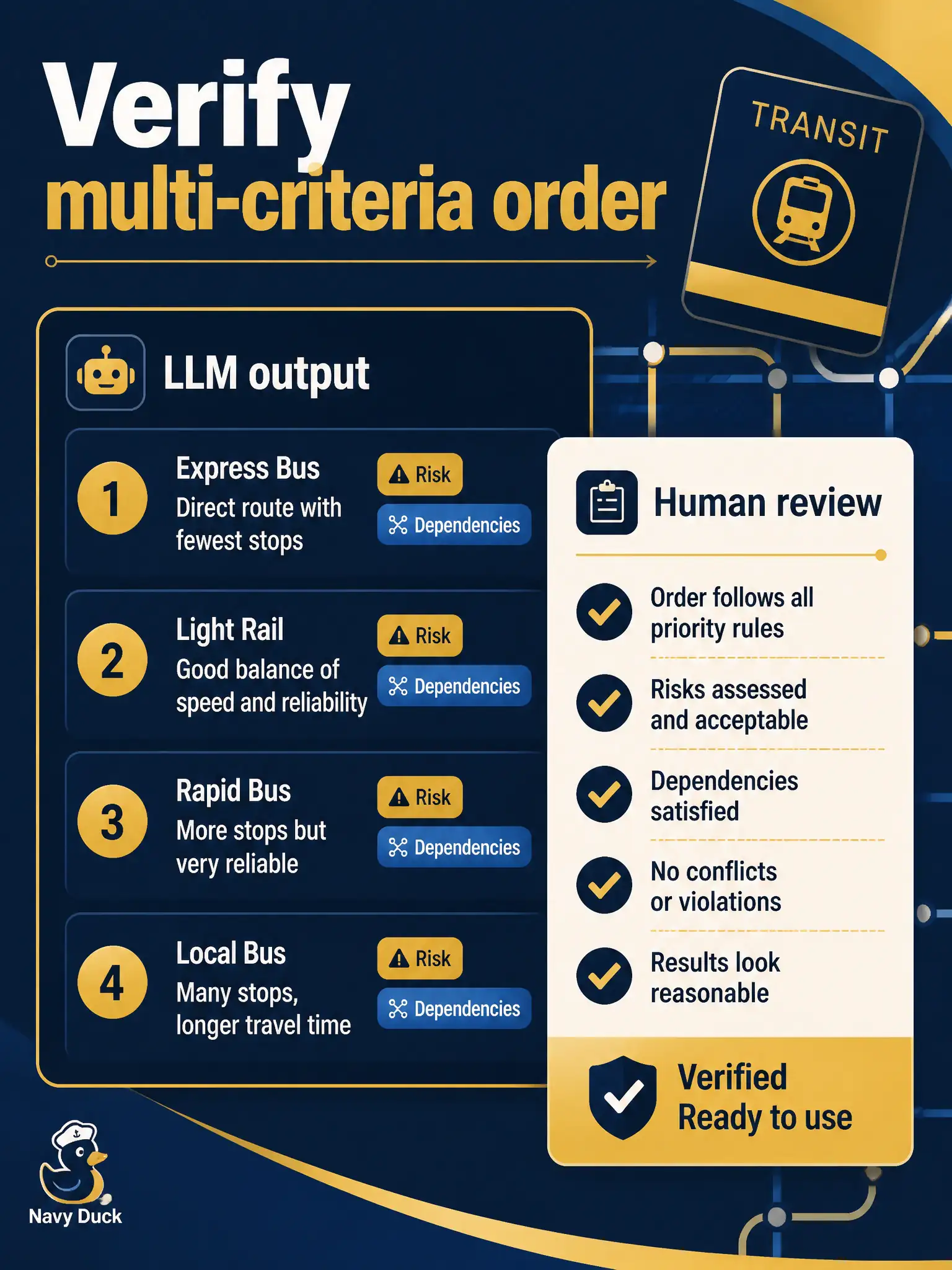
A fluent reorder is still a draft night schedule. Check the risk-and-dependency reasoning by hand before the transit-pass run. Smooth wording is not the same as a sound multi-criteria plan.
Full Explanation
When an LLM reorders a transit-pass refill suite using risk plus dependencies, the tester should manually verify the multi-criteria reasoning behind the proposed order before the night run. Civic transit payment paths affect riders’ ability to travel, so fluent explanations are not sufficient proof that priority and prerequisites were applied correctly. Trusting the order solely because the explanation reads fluently fails as overtrust in narrative polish—a core GenAI risk. Deleting all dependency constraints so every case can run first fails because prerequisites exist to prevent nonsensical execution and false failures. Replacing the suite with jailbreak tests against the LLM as the product under test fails by scope: the task is validating application suite ordering, not attacking the assistant model. Exam caveat: GenAI planning outputs require human verification of multi-criteria logic before operational use. Operational check: walk the proposed night order against refill dependencies, confirm high-risk payment cases are early enough given resources, correct mis-sequenced civic cases, capture the verified order in the runbook, and only then schedule the municipal CI night run for public rider payment confidence.