
A county recycling-pickup release has twelve user stories and a backlog of test conditions. Which GenAI analysis ask best supports coverage analysis?
Select an answer to reveal the explanation.
Short Explanation
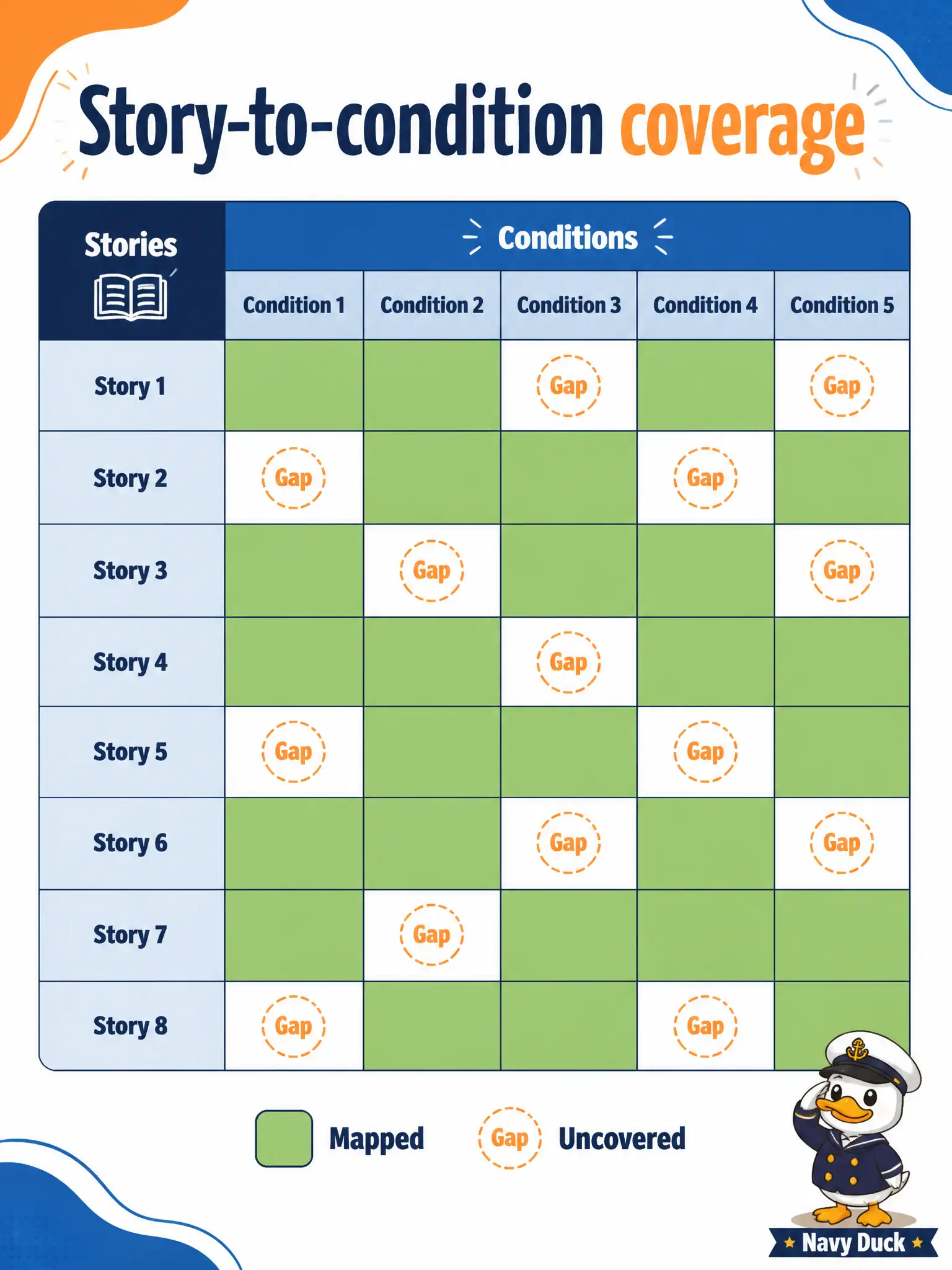
Coverage analysis is matching each story tile to condition pins on the board. Prompt GenAI to draw those links and call out uncovered corners of the pickup release. Skipping conditions or chasing model jailbreaks does not map the board.
Full Explanation
For a county recycling-pickup release with twelve user stories and a backlog of test conditions, the GenAI analysis ask that best supports coverage analysis is to map requirements or stories to conditions and flag uncovered aspects. Civic sanitation releases need traceable links so public service behaviors are not silently untested before trucks roll. Asking only for a marketing slogan fails because branding copy does not measure requirement coverage for municipal pickup rules. Deleting all conditions to claim 100% coverage fails as a fraudulent metric that erases work rather than demonstrating mapping. Running adversarial jailbreaks against the LLM because “coverage” means model robustness fails by concept: here coverage means story-to-condition traceability for the recycling application, not LLM red-team breadth. Exam caveat: coverage analysis in this syllabus is about relating test conditions to the basis, not emptying the backlog or shifting to model attacks. Operational check: prompt GenAI to produce a story-to-condition matrix for the municipal pickup release, highlight uncovered story facets, have leads accept or reject gaps, and add missing civic conditions before exit criteria are signed for public service go-live.