
A school-lunch allergy field is a numeric serving-size with clear minimum and maximum edges. Which GenAI analysis ask fits that condition?
Select an answer to reveal the explanation.
Short Explanation
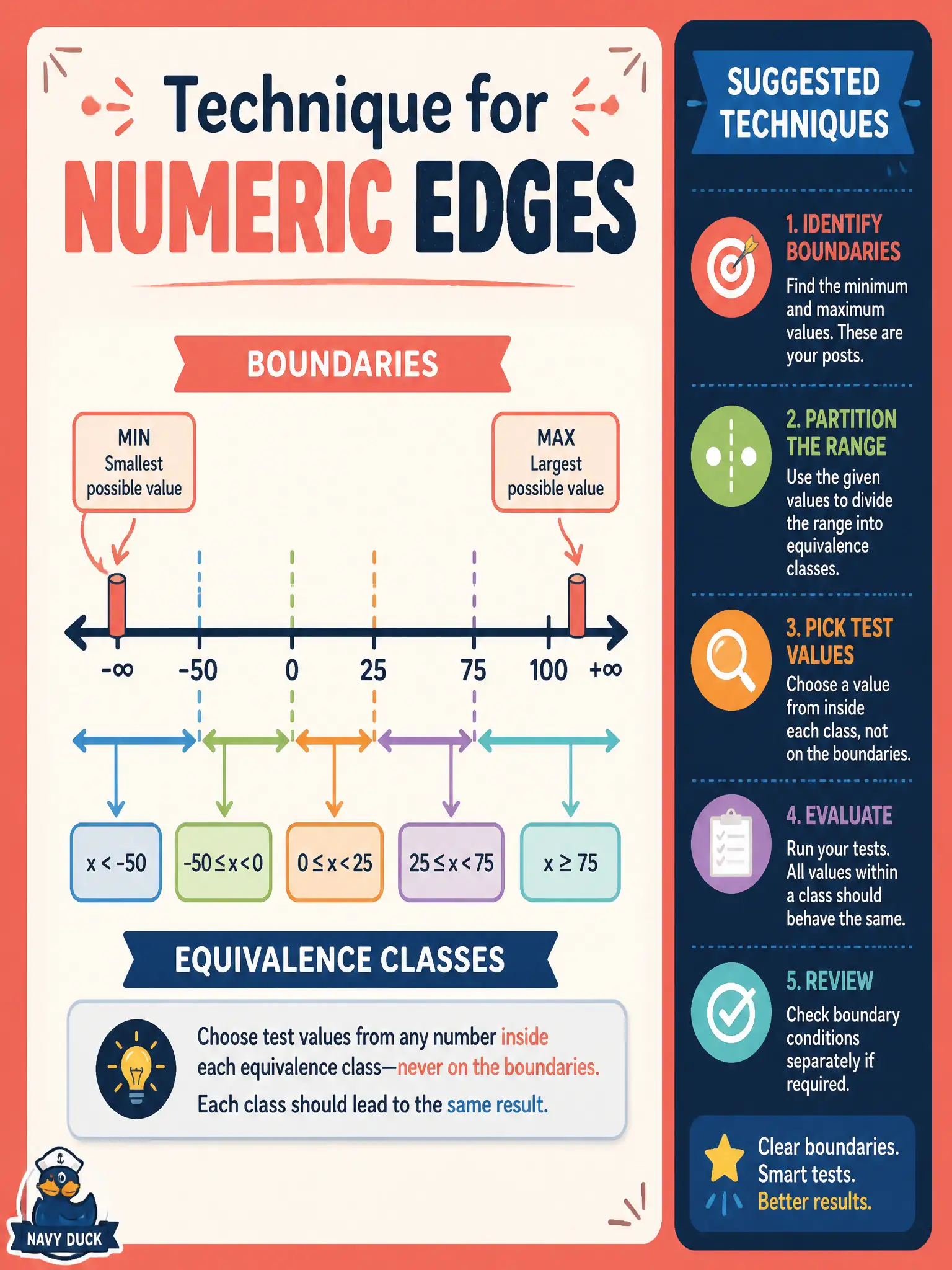
A serving-size with clear edges is a classic fence-post problem. Ask GenAI which technique fits—often boundary value analysis or equivalence partitioning—not a locator self-heal. Match the technique to the requirement shape.
Full Explanation
A school-lunch allergy field modeled as a numeric serving-size with clear minimum and maximum edges calls for a GenAI analysis ask that suggests a relevant technique such as boundary value analysis or equivalence partitioning. Civic meal programs must probe edge servings where allergen and portion mistakes harm students. Suggesting only regression self-heal of button locators ignores the numeric requirement shape and addresses UI fragility instead of data boundaries. Measuring neuron coverage of an LLM that wrote the lunch menu fails by concept: internal model coverage is unrelated to selecting black-box techniques for a numeric application field. Skipping technique choice because GenAI supposedly invents oracles without structure fails because responsible analysis still matches techniques to condition types rather than abandoning structure. Exam caveat: when the stem highlights numeric min/max edges, prefer boundary/equivalence guidance over automation-maintenance or LLM-SUT metrics. Operational check: ask GenAI which technique fits the serving-size field, generate min/just-inside/just-outside/max candidates, verify against the posted nutrition policy, and file boundary cases into the district lunch regression suite before production menus change.