
An after-school bus-tracker assistant has a standing system rule to stay ISTQB-aligned and avoid speculation, plus today’s user ask to summarize last night’s failed runs. How does the LLM typically use those prompts?
Select an answer to reveal the explanation.
Short Explanation
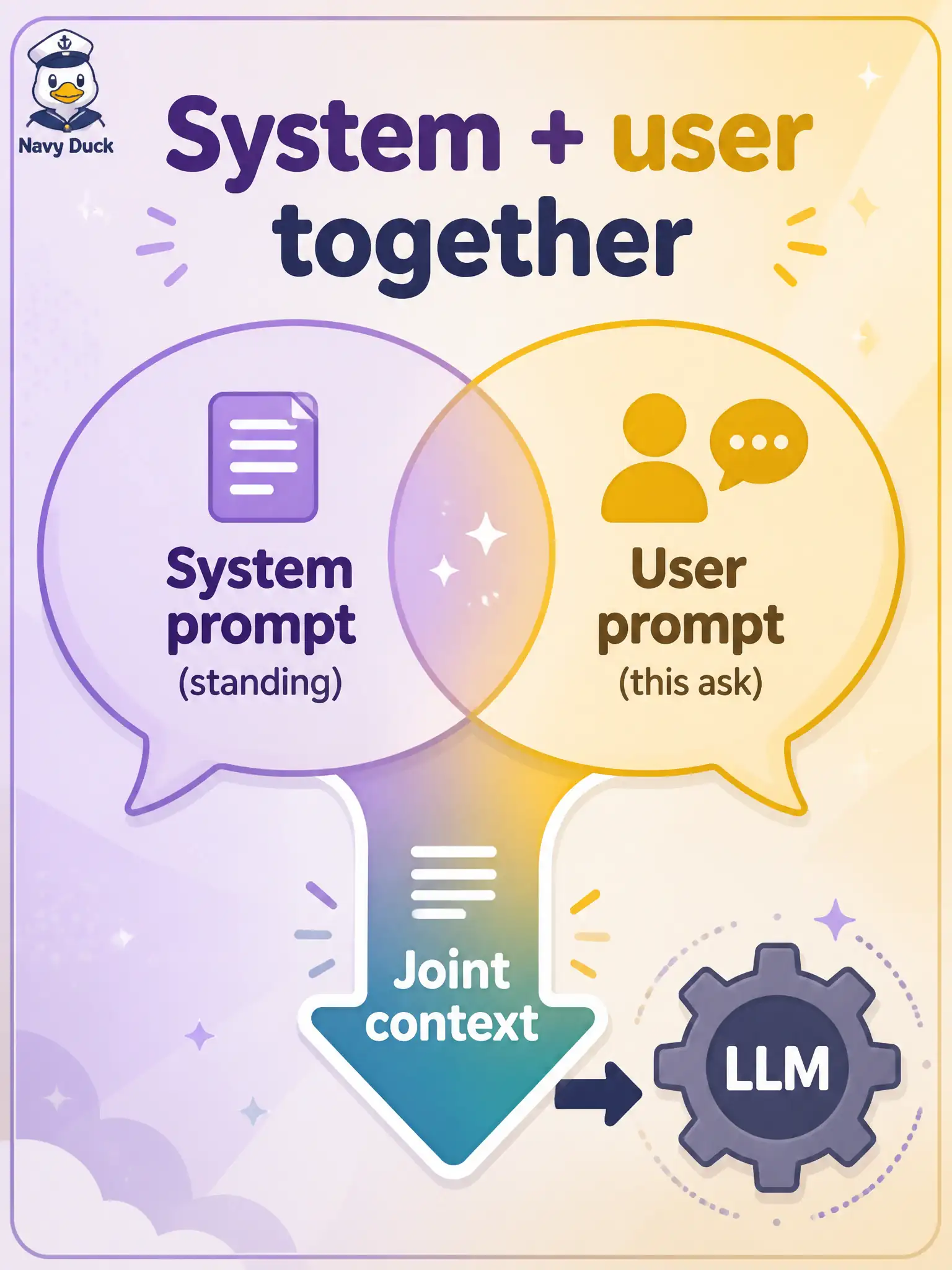
Picture two notes taped side by side on the driver’s clipboard: standing policy and today’s trip summary request. The model reads both together, not just the final line. Standing ISTQB-aligned rules still shape how last night’s failures get summarized.
Full Explanation
An after-school bus-tracker assistant with a standing ISTQB-aligned, no-speculation system rule plus a user ask to summarize last night’s failed runs illustrates how an LLM typically uses both prompts together. Civic transportation testing needs the unchanging safety and quality stance to shape how the model interprets today’s operational request, not a contest where one prompt cancels the other. Claiming the model ignores the system prompt whenever a user prompt is present fails because system instructions are designed to remain in force across turns. Asserting it uses only the last sentence of the user prompt and discards earlier user text fails as an over-simplification that is not the governing design model for this syllabus point. Replacing the system prompt with neuron-coverage thresholds for the model under test fails by concept: neuron coverage targets LLM-as-SUT evaluation, not how system and user prompts jointly steer ordinary test-summary generation for a municipal tracker. Exam caveat: expect combined consideration of system plus current user prompt unless a product explicitly documents otherwise. Operational check: for the school-district bus tracker, verify a summary ask still refuses speculation, cites failed-run evidence, and stays aligned to testing vocabulary from the system prompt before sharing results with civic operations.