
A city-park picnic-permit lead calls the six-part layout (role, context, instruction, input data, constraints, output format) “few-shot prompting.” Which statement best separates prompt structure from prompting techniques?
Select an answer to reveal the explanation.
Short Explanation
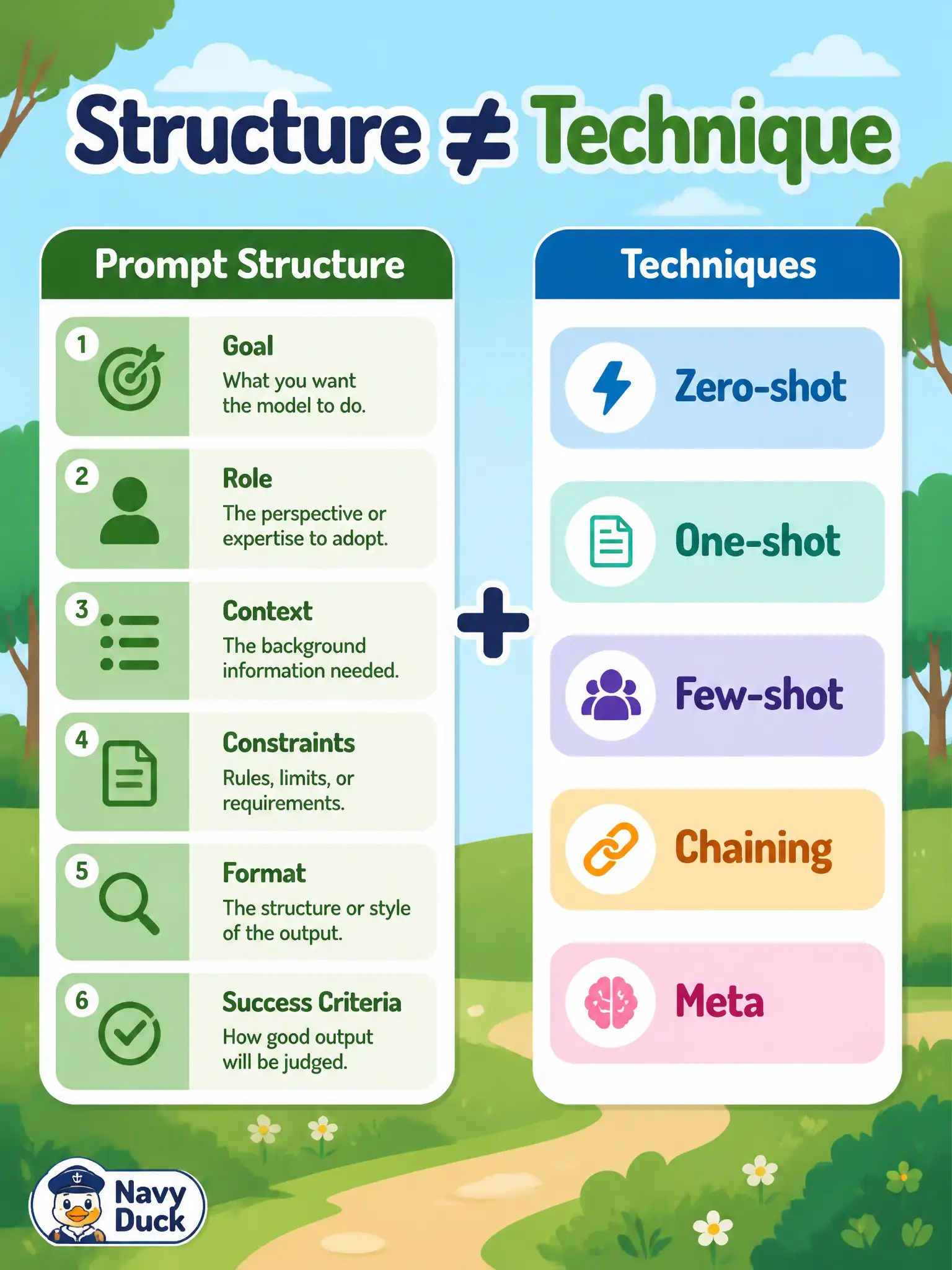
Structure is the skeleton; techniques are how you fill and sequence it. The six parts are not “few-shot.” Few-shot means multiple examples inside a prompt — something you can still combine with that skeleton.
Full Explanation
The six-component layout (role, context, instruction, input data, constraints, output format) is prompt structure and is combined with techniques such as zero-shot, one-shot, few-shot, chaining, and meta prompting. Structure is not a synonym for few-shot. A city-park picnic-permit lead who calls the six-part layout “few-shot prompting” collapses two syllabus ideas civic teams must keep separate when training staff.
Treating few-shot as another name for listing all six structure components is exactly that collapse. Claiming prompt chaining replaces the need for any of the six structure components overreaches—chaining still benefits from structured prompts at each step. Claiming zero-shot means the six-part layout is omitted entirely confuses “no examples” with “no structure.”
Exam caveat: structure × techniques. You can few-shot inside a six-part prompt; few-shot does not rename or replace the structure.
Operational check: in picnic-permit training, show one six-part zero-shot prompt and one six-part few-shot prompt; label structure versus technique on both; correct any slide that equates the layout with few-shot; store the distinction in the municipal GenAI glossary used by park testers.