
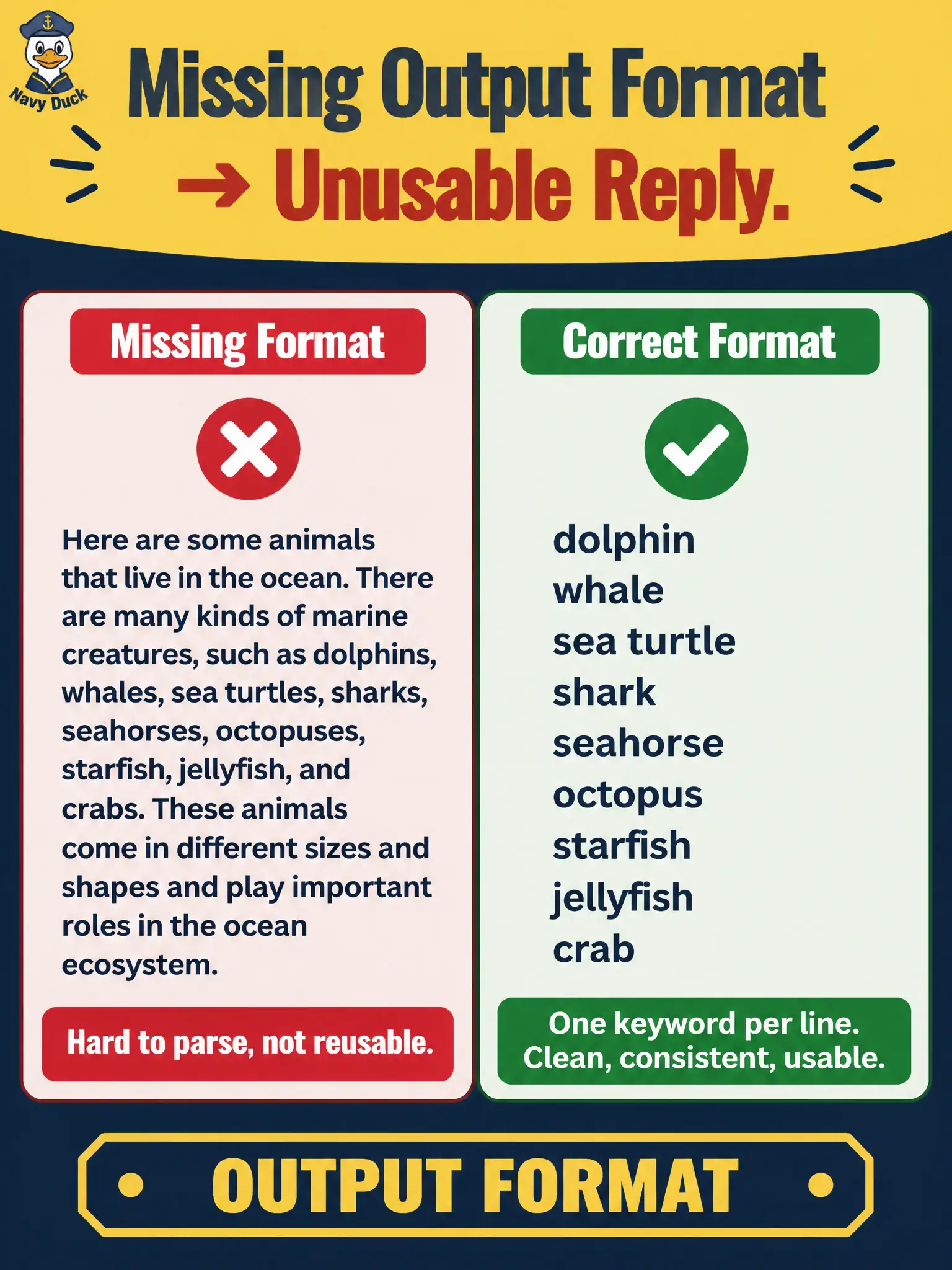
A transit-pass refill kiosk tester wants keyword steps, but the prompt never says “one keyword per line.” The model returns a narrative. Which missing component most likely made the reply unusable downstream?
Select an answer to reveal the explanation.
Short Explanation
Output format is what turns a useful idea into paste-ready steps. Wanting one keyword per line and never saying so invites a narrative. The ask existed; the shape did not.
Full Explanation
Missing Output format most likely made the reply unusable downstream when a transit-pass refill kiosk tester wanted keyword steps but never said “one keyword per line,” so the model returned a narrative. Specifying reply shape makes testware usable for civic automation pipelines. Narrative prose blocks keyword-driven tools even when the underlying step ideas are otherwise sound.
Input data examples help quality, but the stem’s failure is shape, not absence of all basis. Instruction can ask for keyword steps yet still omit line-shape rules—chaining is not required merely to state format. Role as test automation engineer helps tone but does not guarantee one-keyword-per-line output without an Output format component.
Exam caveat: Output format turns “keyword steps” into machine-usable structure. Downstream usability is a format problem as often as a content problem on CT-GenAI prompt-structure items.
Operational check: add Output format “one keyword step per line, no prose wrapping”; regenerate; paste into the kiosk keyword runner; confirm parse success; save the format line in the transit-pass municipal automation prompt and add a CI pre-check for narrative replies. Transit automation owners should reject GenAI keyword drafts that fail a one-line-per-step lint before they touch the refill kiosk runners.