
A library makerspace-booking prompt asks for cases on laser-cutter slot rules but never states “do not invent paid add-ons; minors need a guardian field.” Which missing component most likely caused house limits to be ignored?
Select an answer to reveal the explanation.
Short Explanation
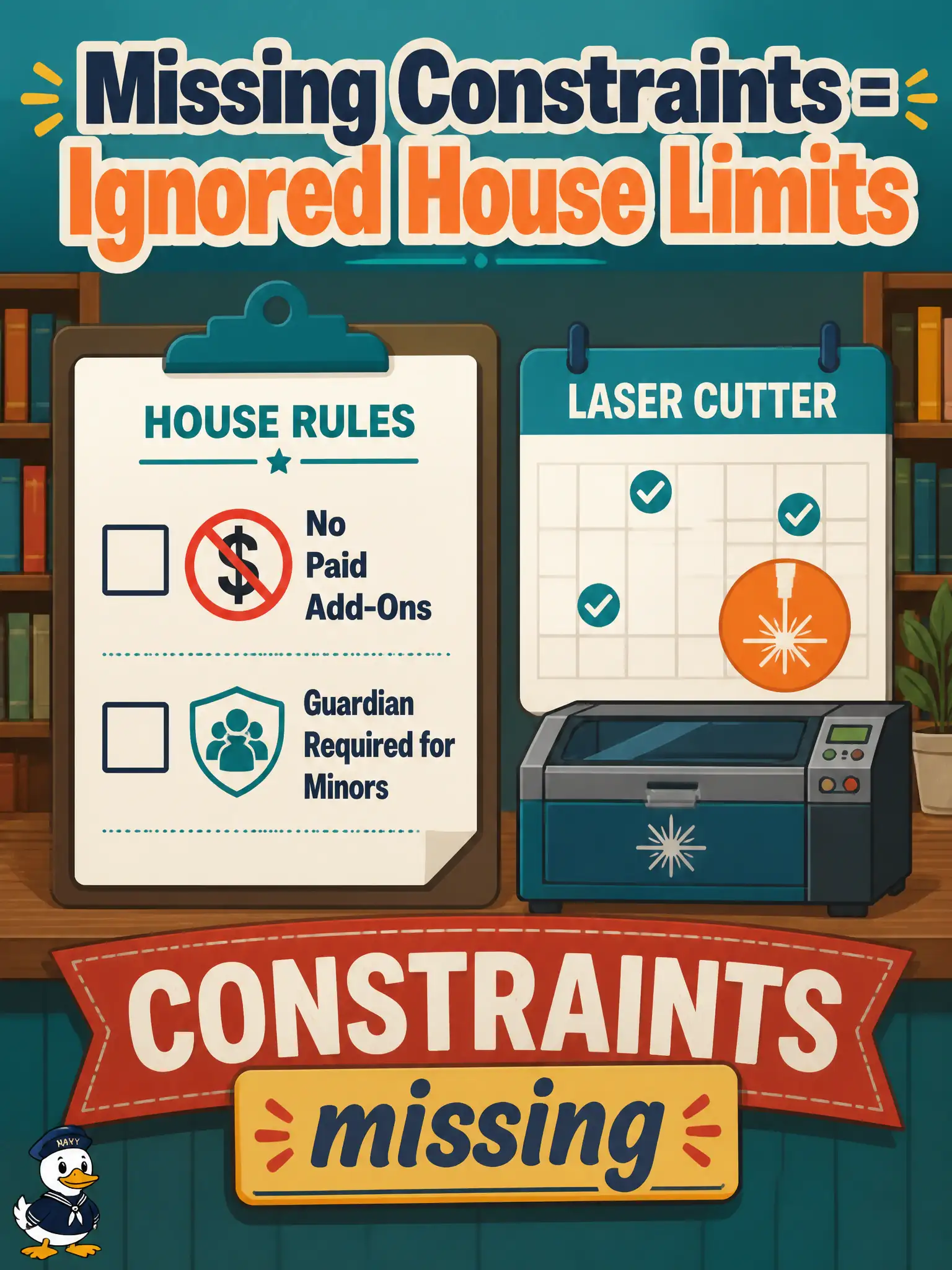
House rules like “no invented paid add-ons” and “minors need a guardian field” belong in constraints. If those limits never appear, the model has nothing to adhere to. Role and reply shape do not replace stated restrictions.
Full Explanation
Missing Constraints most likely caused house limits to be ignored when a library makerspace-booking prompt asked for cases on laser-cutter slot rules but never stated “do not invent paid add-ons; minors need a guardian field.” Restrictions the model should adhere to were never stated, so drafts may invent paid features or omit guardian requirements. Civic makerspaces have policy and safety limits GenAI will not reliably guess without explicit Constraints.
Role as a facilities-manager persona does not encode those limits by itself. Output format claiming slot rules only work as numbered lists is a red herring—the failure mode is ignored house limits. Context about laser cutters without floor plans does not explain invented add-ons; that is a Constraints gap.
Exam caveat: Constraints are explicit restrictions on how Instruction applies. If you care about “don’t invent X” or “minors need Y,” write it as Constraints on the prompt.
Operational check: add Constraints for no invented paid add-ons and required guardian field for minors; regenerate laser-cutter cases; audit for invented SKUs and missing guardian; lock Constraints into the makerspace municipal template and peer-review prompts for silent policy gaps.