
A volunteer fire-hall roster story is pasted into a prompt, but overnight mutual-aid and radio-dead zones are never mentioned. Which prompt component supplies the test-object background the model needs to determine relevant test conditions?
Select an answer to reveal the explanation.
Short Explanation
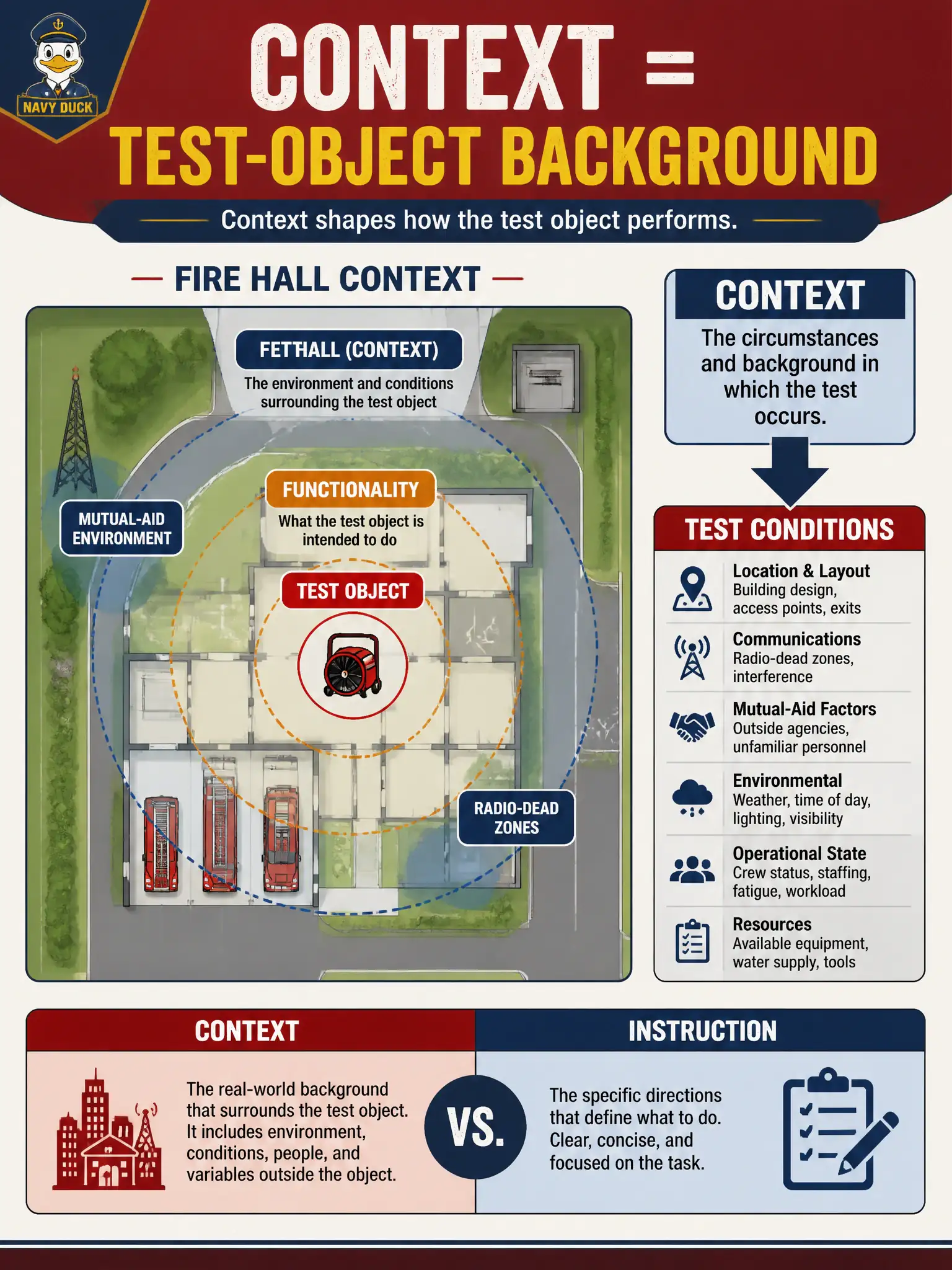
Context is the scenery around the story — what the system is and where it runs. Without mutual-aid and radio-dead-zone background, conditions drift off the real fire-hall roster. Instruction says what to do; context says what you are testing.
Full Explanation
Context supplies background about the test object, functionality, and setting that orients which test conditions are relevant. Pasting a volunteer fire-hall roster story alone may leave overnight mutual-aid and radio-dead-zone realities unstated; those civic operational facts belong in Context so the model can determine pertinent conditions instead of inventing a daytime-only roster fantasy. Without Context, even good Instructions produce generic conditions detached from the fire-hall environment.
Instruction states the imperative task but does not by itself supply domain background. Role assigns a tester persona without describing mutual-aid coverage or radio gaps. Output format shapes the reply structure and cannot replace environmental background that changes which conditions matter.
Exam caveat: Context ≠ Instruction and Context ≠ Input data. Background that orients conditions is Context; the roster story file, once attached as the artefact to use, is Input data.
Operational check: add an explicit Context block covering overnight mutual-aid and radio-dead zones; regenerate conditions; confirm new conditions reference those civic realities; keep Context versioned in the fire-hall prompt template beside the story Input data.