
A sidewalk-snow-shovel registry will use GenAI on a high-visibility city service. Which named instrument is the regulation that classifies applications by risk level and mandates transparency, accountability, and bias mitigation for GenAI used in testing?
Select an answer to reveal the explanation.
Short Explanation
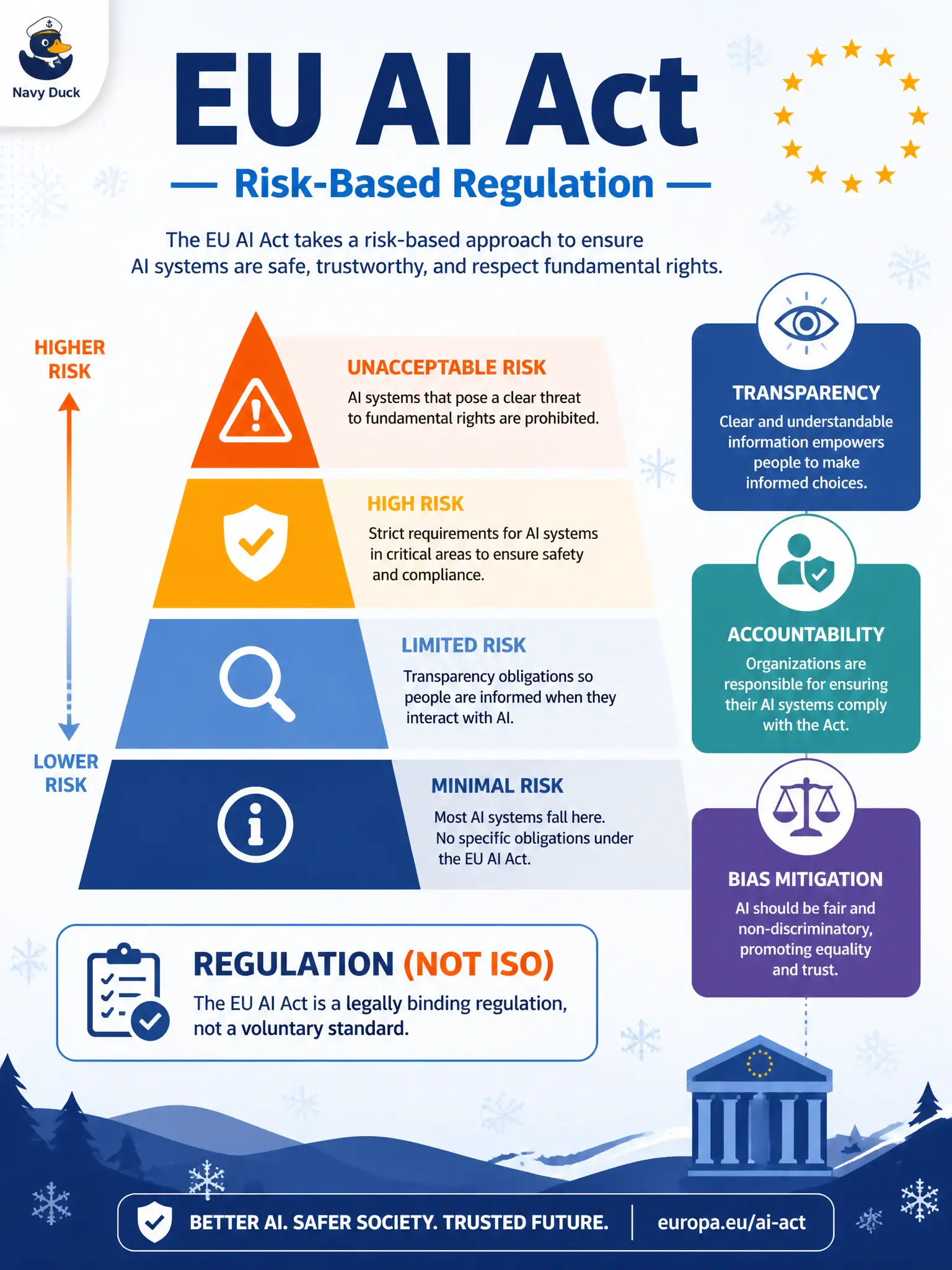
Risk classes plus legal duties on transparency, accountability, and bias point to the EU AI Act—a regulation, not a voluntary ISO. GDPR protects personal data (and still matters for prompts) but does not play the AI risk-classification role here.
Full Explanation
Sidewalk snow-shovel registries using GenAI on high-visibility city services need the regulation that classifies applications by risk level and mandates transparency, accountability, and bias mitigation: the EU AI Act. Risk classes plus legal duties mark a regulation, not a voluntary ISO alone.
ISO/IEC 42001:2023 as only a voluntary management-system standard fails the “regulation / risk classification” ask even though 42001 remains useful for management systems. GDPR as the regulation that classifies AI applications by risk level fails—GDPR protects personal data and does not play that AI risk-class role here. NIST AI RMF 1.0 as a binding EU statute fails type and jurisdiction.
Exam caveat: GDPR still matters for personal data in prompts, but this stem’s risk-classification regulation is the EU AI Act.
Operational check: screen shovel-registry GenAI uses for AI Act risk posture where applicable; document transparency and bias mitigations; keep GDPR DPIAs separate but coordinated; do not call NIST a binding EU statute in training. Snow-shovel registry GenAI uses should be screened for AI Act risk posture where applicable, with transparency and bias mitigations documented beside—not instead of—GDPR data-protection work. Staff materials must not describe NIST AI RMF as a binding EU statute.