
A municipal boat-slip waitlist team wants the named framework for AI systems using machine learning that stresses lifecycle, data quality, transparency, and safety for GenAI used in testing. Which instrument is that?
Select an answer to reveal the explanation.
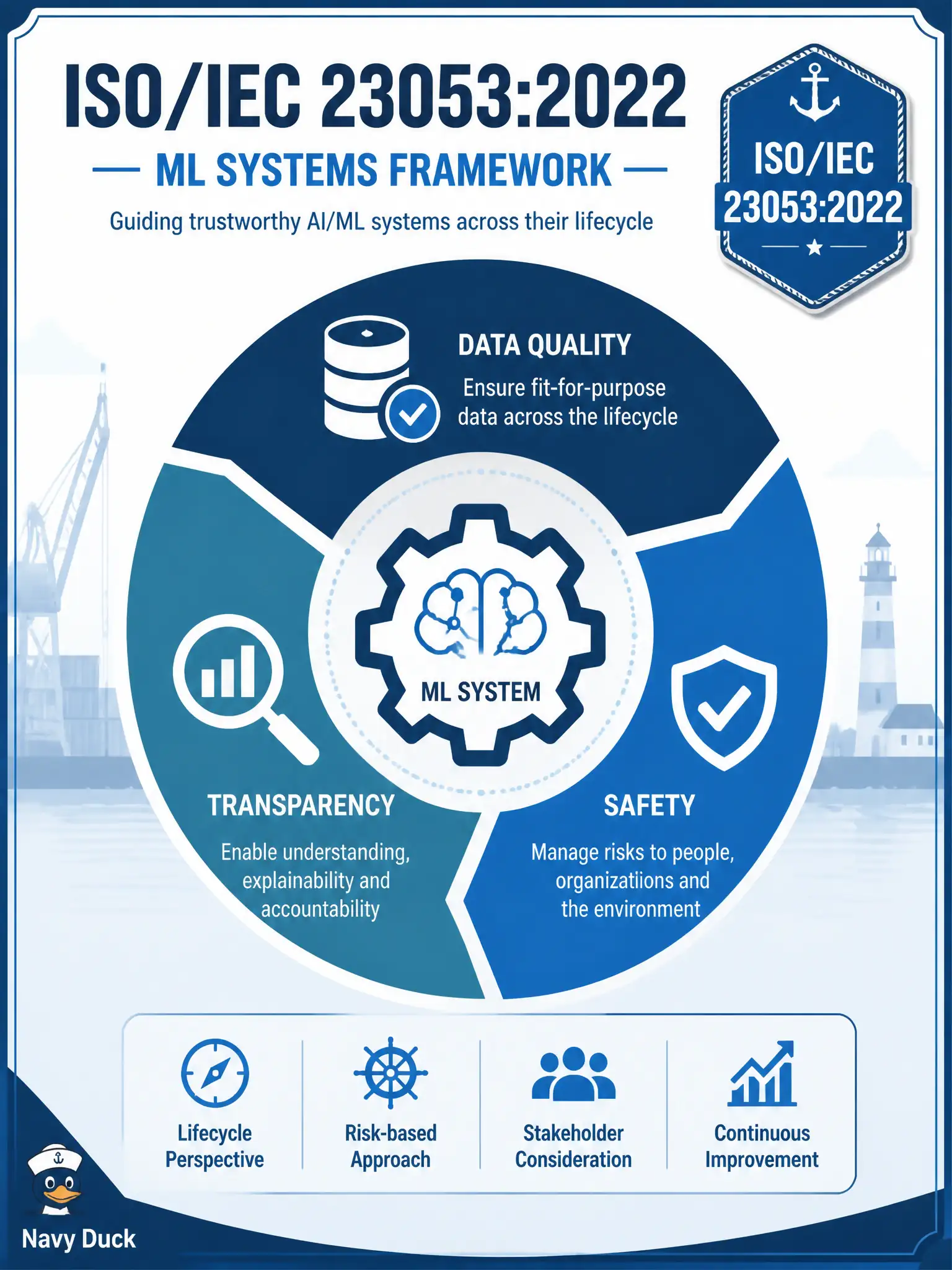
Short Explanation
Machine-learning lifecycle, data quality, transparency, and safety point to ISO/IEC 23053:2022. That is the ML-systems framework, not the AI management-system standard (42001) and not a regulation. Keep the names and jobs straight.
Full Explanation
Boat-slip waitlist teams wanting the named framework for AI systems using machine learning that stresses lifecycle, data quality, transparency, and safety should select ISO/IEC 23053:2022. That is the ML-systems framework for GenAI used in testing contexts emphasized by those themes.
ISO/IEC 42001:2023 fails here because it is the AI management-system requirements standard, not the ML framework description asked. The EU AI Act fails because it is a risk-based regulation, not that ML framework. NIST AI RMF 1.0 as a binding EU regulation fails both type and geography labels.
Exam caveat: lifecycle/data quality/transparency/safety for ML systems → 23053; do not swap with 42001’s management-system role.
Operational check: cite 23053 when discussing ML lifecycle quality for waitlist GenAI tools; keep 42001 for organizational AIMS clauses; avoid calling either a regulation. Waitlist ML quality discussions should cite ISO/IEC 23053:2022 for lifecycle, data quality, transparency, and safety themes, reserving 42001 language for management-system clauses. Training decks must not label 23053 as an EU regulation or as NIST’s framework. Hang a one-line placard in the waitlist war room: lifecycle and ML safety themes cite 23053; organizational AIMS clauses cite 42001—never swap the nameplates.