
A municipal campground lead refuses to care about GenAI energy use until given an exact kilogram of CO₂ per test case. Which syllabus stance best responds?
Select an answer to reveal the explanation.
Short Explanation
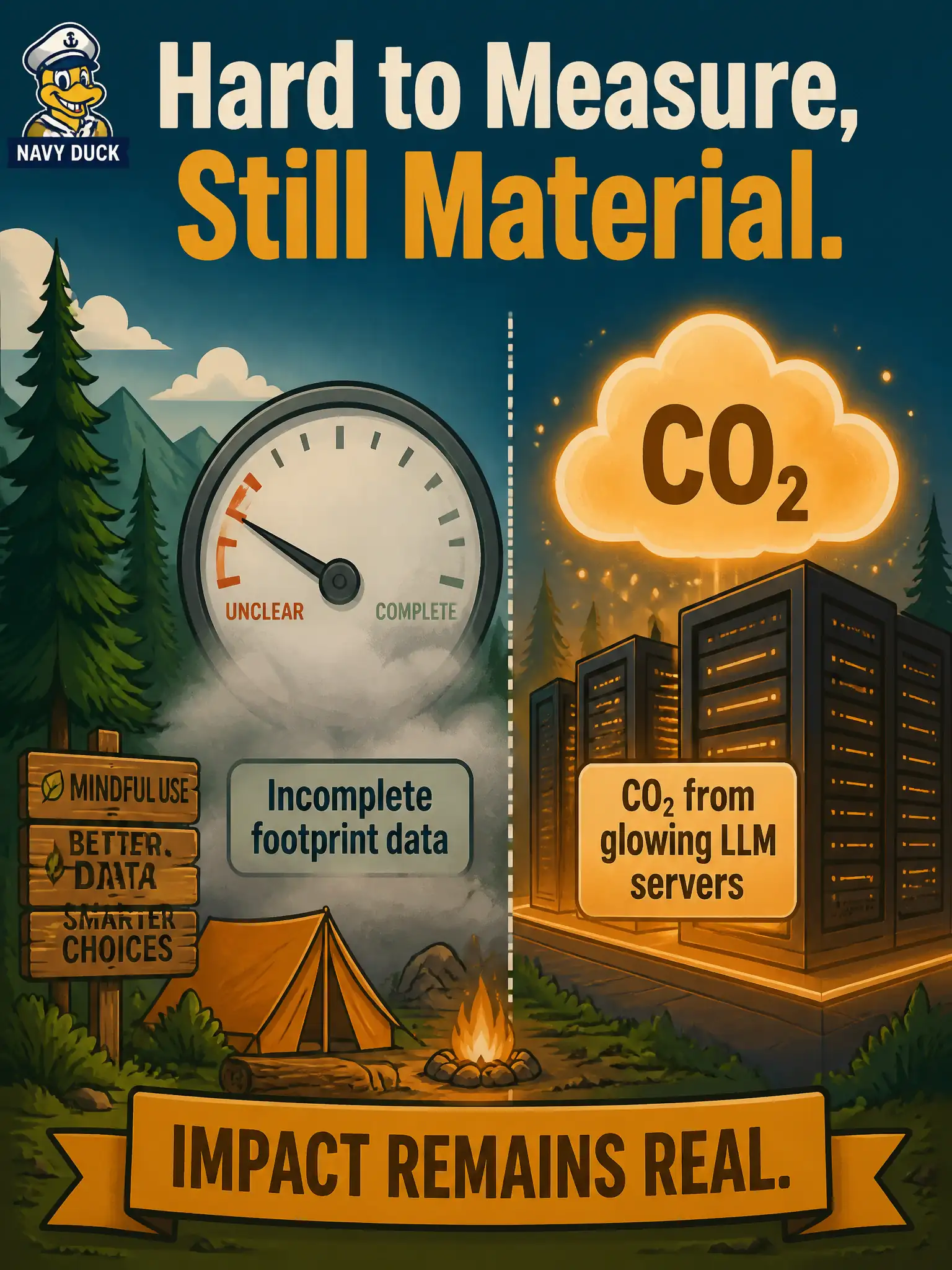
Waiting for a perfect kitchen scale before noticing the oven is hot misses the point. Precise footprints are hard to get, but heavy GenAI work still adds real CO₂. Testers act on that reality without needing a calculator lab first.
Full Explanation
Municipal campground leads who refuse to care about GenAI energy until given an exact kilogram of CO₂ per test case miss the syllabus stance: accurate environmental data is hard to obtain, yet energy-intensive GenAI operations still contribute significant CO₂. Testers act on that reality without waiting for a perfect kitchen scale.
Claiming exact per-case CO₂ is always published by every vendor fails by concept—opacity is common, and delay is not justified. Claiming environmental impact is irrelevant once coverage is green fails because quality metrics do not erase energy externalities. Claiming only HO-3.3.1 simulator results are acceptable written-exam evidence fails scope: the simulator is non-examinable hands-on practice.
Exam caveat: imperfect footprint data is not permission to ignore heavy GenAI use in civic testing programs.
Operational check: track call volume and modality (text vs image) for campground GenAI work; set reduction targets without demanding vendor-perfect CO₂; prefer lighter sufficient tasks; brief leadership that uncertainty ≠ zero impact. Publish monthly interaction counts so “we lack kilograms” cannot stall conservation. Campground programs can govern energy with interaction counts and modality mix even while vendor CO₂ kilograms remain incomplete, documenting assumptions openly for auditors. Leadership briefings should state that waiting for perfect footprints is not a prerequisite for reducing heavy GenAI use.