
A city fountain-show booking chatbot is used all afternoon from testers’ laptops for GenAI-assisted case drafting. Where does that usage increase load and energy use?
Select an answer to reveal the explanation.
Short Explanation
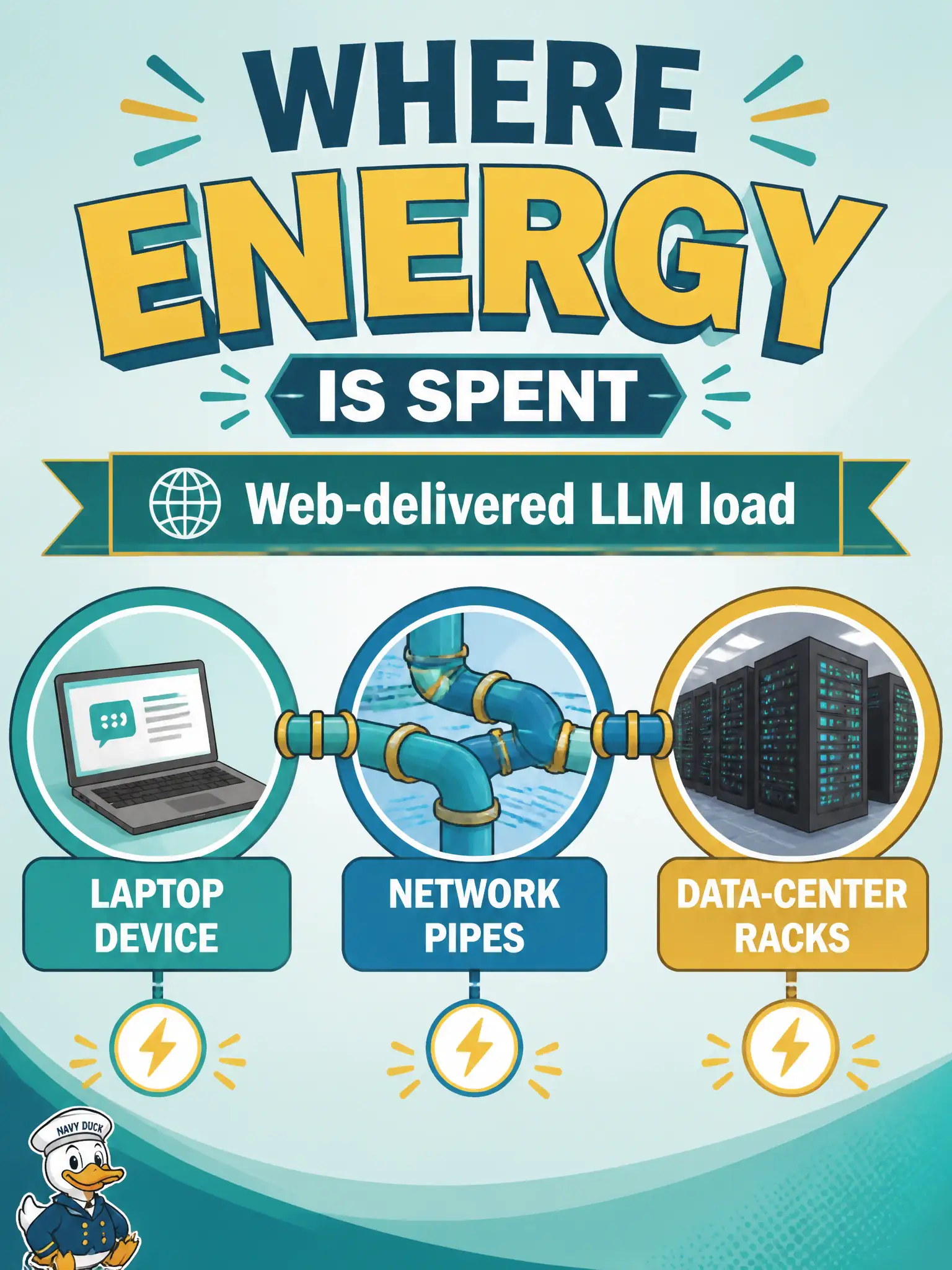
The energy story is not just “the chip in the cloud.” Afternoon chatbot use loads testers’ devices, the networks in between, and the data centers that host the model. All three raise energy use together.
Full Explanation
City fountain-show booking chatbots used all afternoon from testers’ laptops increase load and energy use on devices, networks, and data centers supporting the web-delivered LLM. The energy story is the whole path, not only a remote GPU slogan.
Claiming only the local laptop GPU with no network or data-center effect fails by concept for typical web LLM use. Claiming only paper printers fails absurdly. Claiming only the fountain-control PLC fails because show-control hardware is not the GenAI inference path described.
Exam caveat: web-delivered civic GenAI testing loads the client device, transit networks, and hosting data centers together.
Operational check: measure and communicate all three layers in environmental briefings; discourage all-afternoon idle chat sessions; batch drafting work; shut down unused sessions; prefer efficient clients and scheduled off-peak heavy jobs when operations allow. Fountain-show testing afternoons should batch drafting, close idle LLM sessions, and brief staff that laptops, networks, and data centers all share the load from web-delivered models. Prefer scheduled heavy jobs over all-day background chats that keep devices and sessions warm without producing accepted packs.