
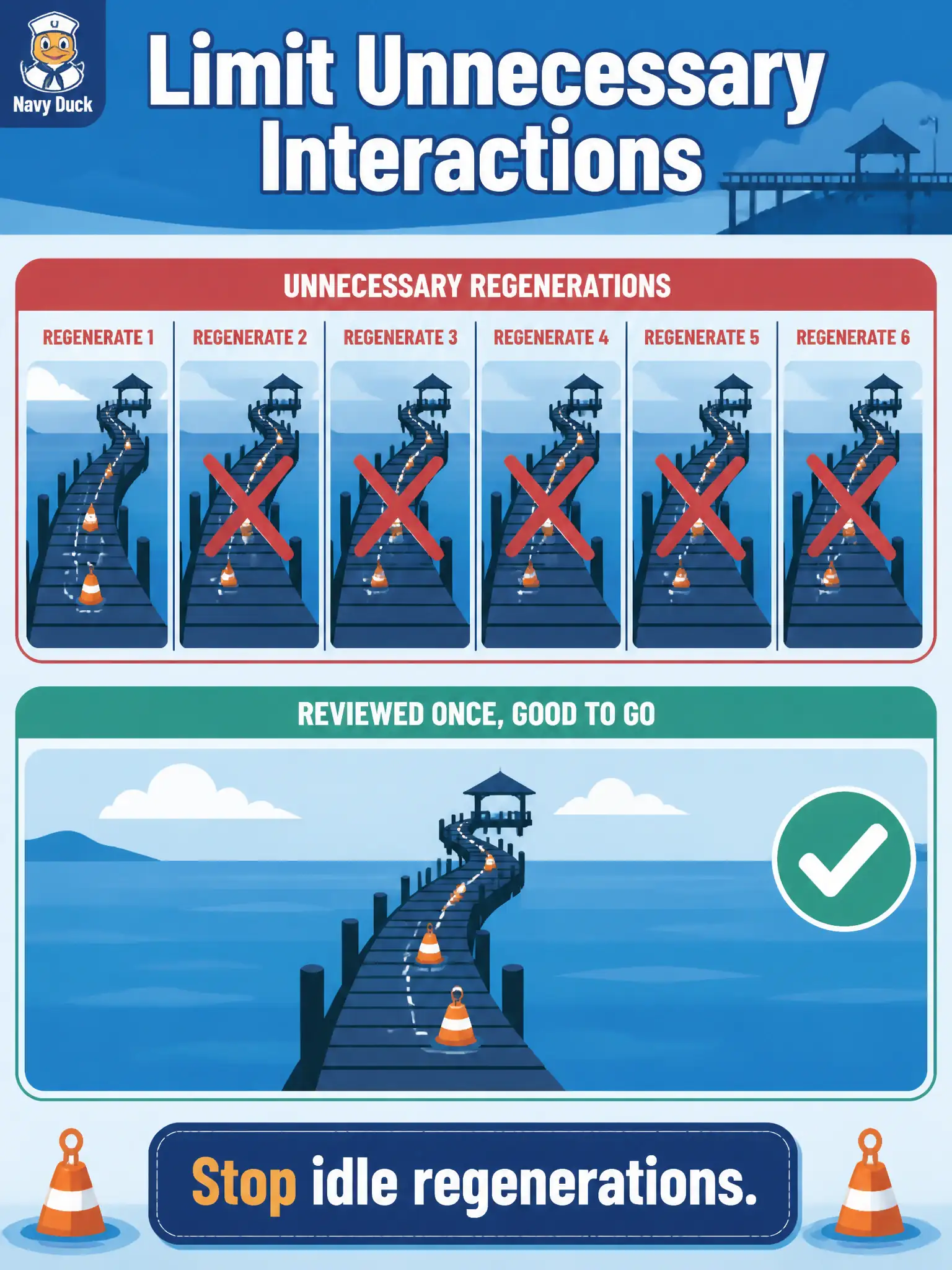
A public-pier fishing-license kiosk regenerates the same happy-path pack six times “for luck” with no prompt change. Which official environmental practice should the tester apply?
Select an answer to reveal the explanation.
Short Explanation
Spinning the same pack six times for luck is like pressing the elevator button repeatedly—it does not help and still burns power. The syllabus practice is to limit unnecessary model interactions. Idle regenerations are exactly what to stop.
Full Explanation
Public-pier fishing-license kiosks that regenerate the same happy-path pack six times “for luck” with no prompt change should apply the official practice: limit unnecessary model interactions. Idle regenerations burn energy without improving the civic pack.
Always preferring image generation for lower energy fails by concept—images are typically heavier. Increasing temperature each regenerate to reduce CO₂ fails nonsensically. Running the accredited-course energy simulator before every idle regenerate fails scope: the simulator is hands-on practice, not a prerequisite ritual for each click, and does not excuse unnecessary calls.
Exam caveat: limiting unnecessary interactions is the actionable environmental practice tested here—not simulator operation.
Operational check: disable “lucky” re-run culture; cache accepted pier packs; regenerate only after prompt or basis changes; review dashboards for duplicate identical prompts in the same day. Pier license packs should be cached after acceptance; identical prompts without basis changes must not auto-rerun six times in the same day. Tooling can warn on duplicate prompt hashes to enforce the limit-unnecessary-interactions practice without opening any classroom simulator.