
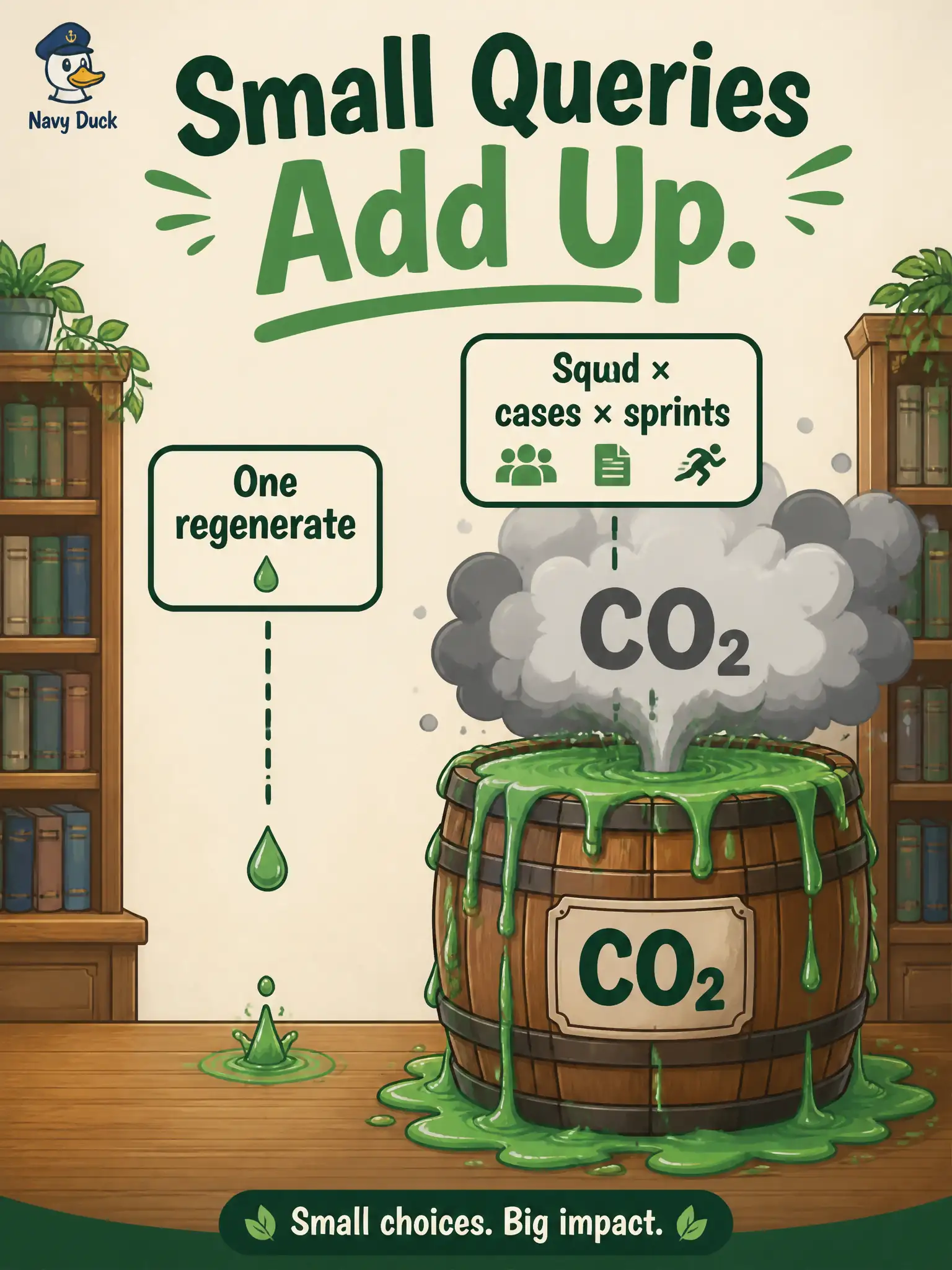
A county library-of-things tester shrugs that “one more regenerate” is nothing, then the squad does it on every case every sprint. Which environmental point does this illustrate?
Select an answer to reveal the explanation.
Short Explanation
One drip is tiny; a leaky faucet floods the basement. “One more regenerate” on every case every sprint adds up to real energy and CO₂ across the squad. Negligible-looking single tasks still matter at organizational scale.
Full Explanation
Library-of-things testers who shrug that “one more regenerate” is nothing—then repeat it on every case every sprint—illustrate that many small generations create a cumulative energy and CO₂ effect across the test organization. Drips become floods at squad scale.
Claiming single queries have no cumulative effect fails by concept. Claiming only image generation accumulates impact fails because text regenerations add up too. Claiming energy is billed solely to the data center and never to tester habits fails by ignoring demand-side behavior.
Exam caveat: cumulative impact is an organizational lens; individual queries look tiny in isolation.
Operational check: set regenerate budgets per story; require a reason code for re-runs; publish weekly GenAI call counts for the library squad; celebrate first-pass acceptance rates instead of regenerative thrash. Library-of-things squads should set a regenerate budget per story and require a reason code when that budget is exceeded, publishing call-count dashboards in the sprint review. Celebrate first-pass acceptance so “one more for luck” stops being the default civic testing habit. In sprint demos, show regenerate counts beside story points so library leads can see cumulative energy habits and coach teams that thrash identical prompts.