
A municipal ski-tow ticket team wants a model to paint a fake lodge UI for every case instead of only writing the steps in text. Which energy comparison from the syllabus best applies?
Select an answer to reveal the explanation.
Short Explanation
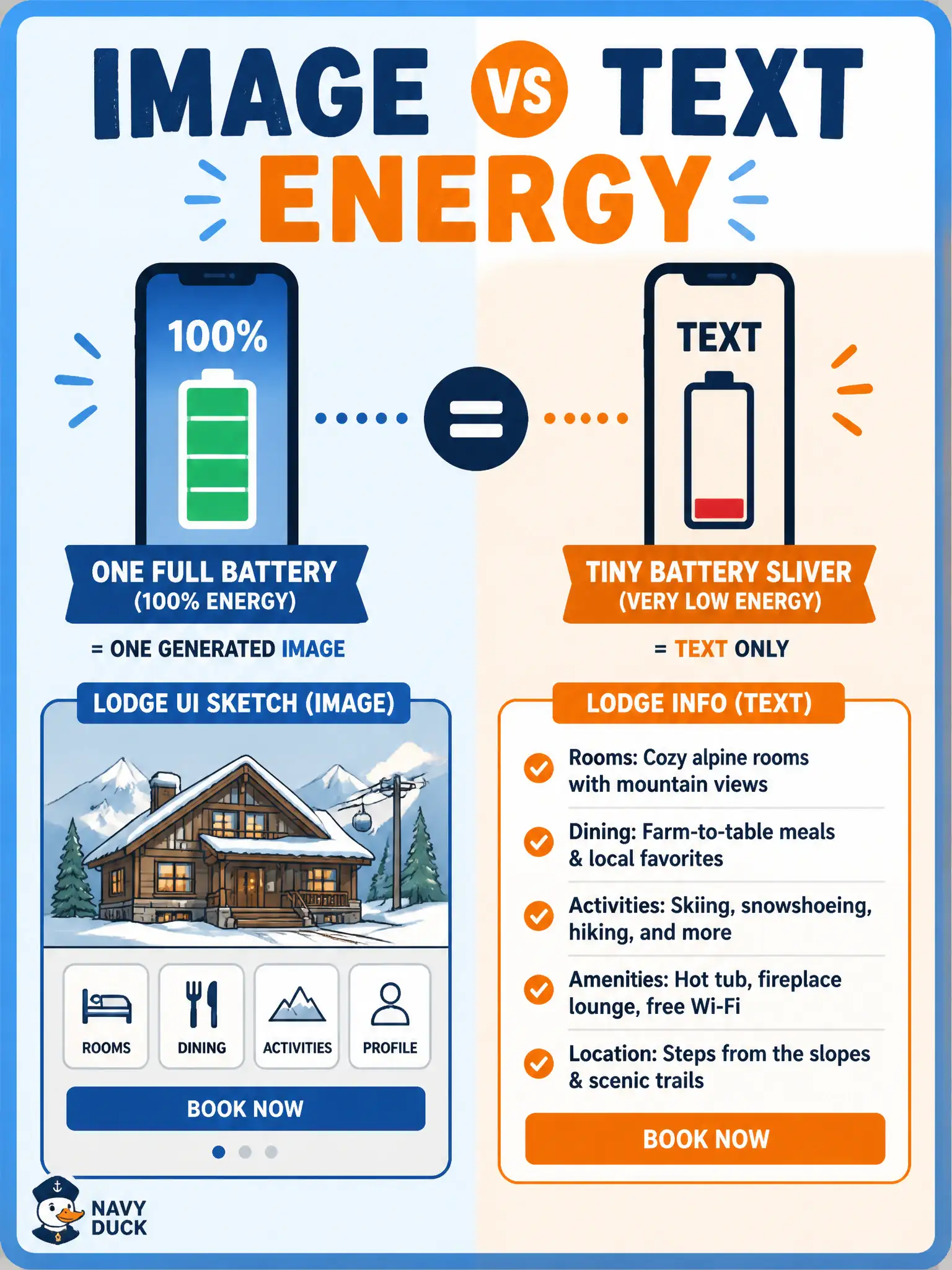
Painting a lodge UI is closer to fully charging a phone than jotting steps on a napkin. One image can cost roughly that charge’s worth of energy, while text uses only a small slice of it. Decorating every case with images multiplies that bill.
Full Explanation
Ski-tow ticket teams that want a fake lodge UI image for every case face a steep energy comparison: generating a single image can use about as much energy as fully charging a smartphone, while text uses only a small percentage of that. Decorating every case multiplies the bill.
Claiming text always uses more energy than images fails by concept. Claiming identical energy per request fails the syllabus comparison. Claiming energy depends only on whether cases are automated fails because modality and generation cost matter regardless of later automation.
Exam caveat: remember the smartphone-charge analogy for image versus the small fraction for text—directionally correct syllabus guidance, not a lab measurement item.
Operational check: default ski-tow packs to text steps; allow images only when a visual oracle is necessary; batch and reuse a single approved lodge mock rather than regenerating per case; track image-generation counts in environmental reporting. Ski-tow visual assets should be generated once, approved, and reused; per-case lodge image regeneration is an environmental anti-pattern unless a distinct visual oracle is required. Report weekly image-generation counts next to text-generation counts so leads see the smartphone-charge-scale costs accumulate.