
A municipal ice-cream-cart permit desk compares a one-line text rewrite with a long multi-file analysis in an LLM-powered test tool. What primarily drives the difference in energy consumption?
Select an answer to reveal the explanation.
Short Explanation
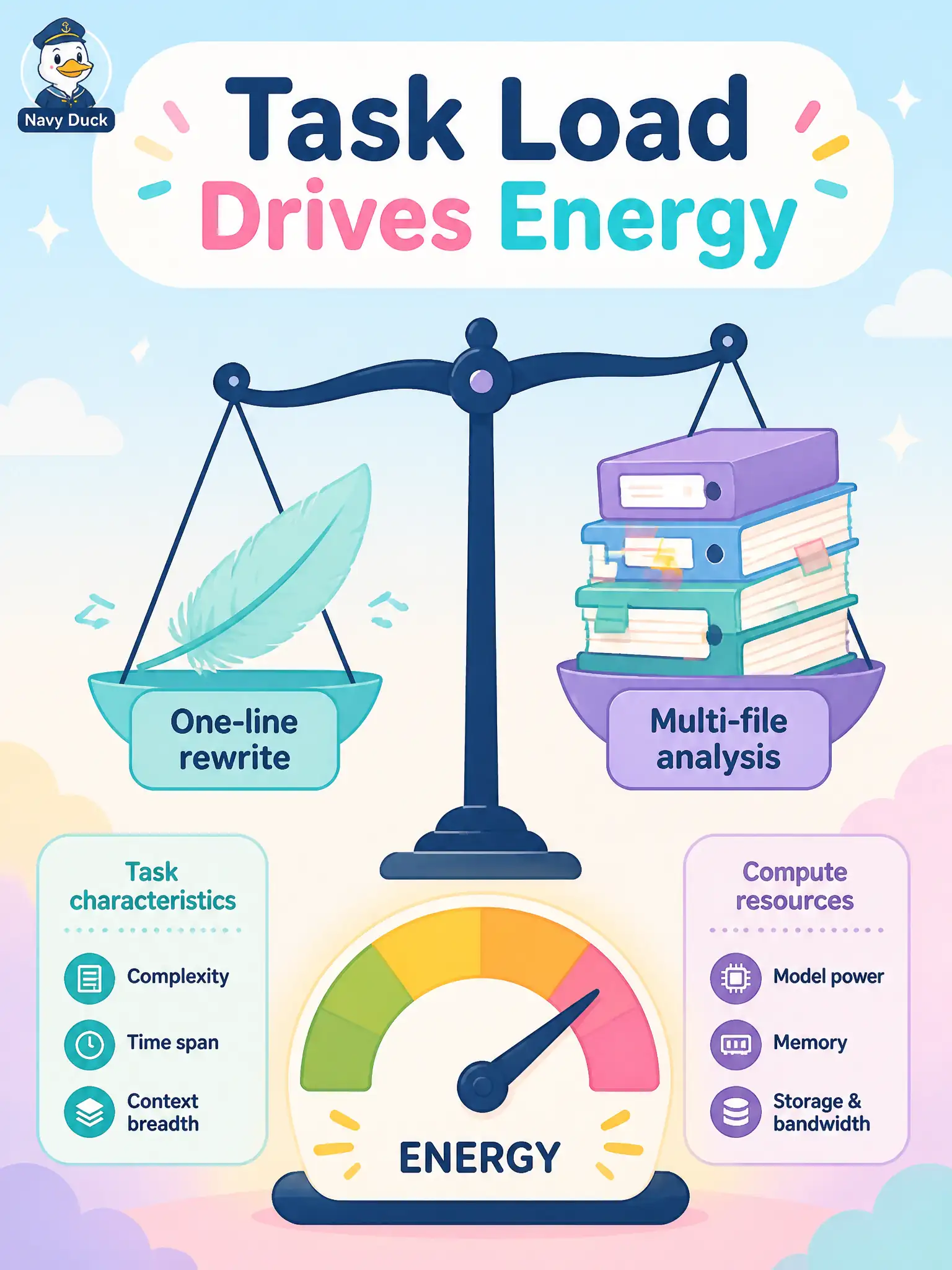
A one-line rewrite is a light errand; a multi-file analysis is a heavy lift. Heavier task characteristics and more compute drive higher energy use. Paper recycling, shot counts, and naming conventions are not the energy drivers here.
Full Explanation
Ice-cream-cart permit desks comparing a one-line rewrite with a long multi-file analysis see energy differences driven primarily by task characteristics and computational resources required by the GenAI work. Heavy civic analyses cost more energy than light edits.
Whether cases were printed on recycled paper fails by concept as the energy driver of the GenAI task itself. Zero-shot versus one-shot wording fails as the primary driver relative to task heft and compute. ISTQB naming conventions fail entirely as an energy factor.
Exam caveat: shot-count and prompt style can matter at the margin, but the syllabus point here is that heavier tasks and more compute dominate the energy story.
Operational check: prefer light sufficient tasks for cart-permit drafting; avoid multi-file analysis when a short extract answers the test question; record approximate compute class for large jobs; challenge “analyze everything” habits in sprint planning. Cart-permit teams should classify GenAI tasks as light edit versus heavy multi-file analysis during planning and challenge analysis requests that do not change a test decision. Prefer extracting the three relevant ordinance lines over uploading the entire permit archive when energy and clarity both improve.