
A municipal dump-sticker designer pastes the city’s unpublished fee table and a vendor’s unreleased locator map into a public chatbot to draft test cases. Which privacy or security concern does this scenario best illustrate?
Select an answer to reveal the explanation.
Short Explanation
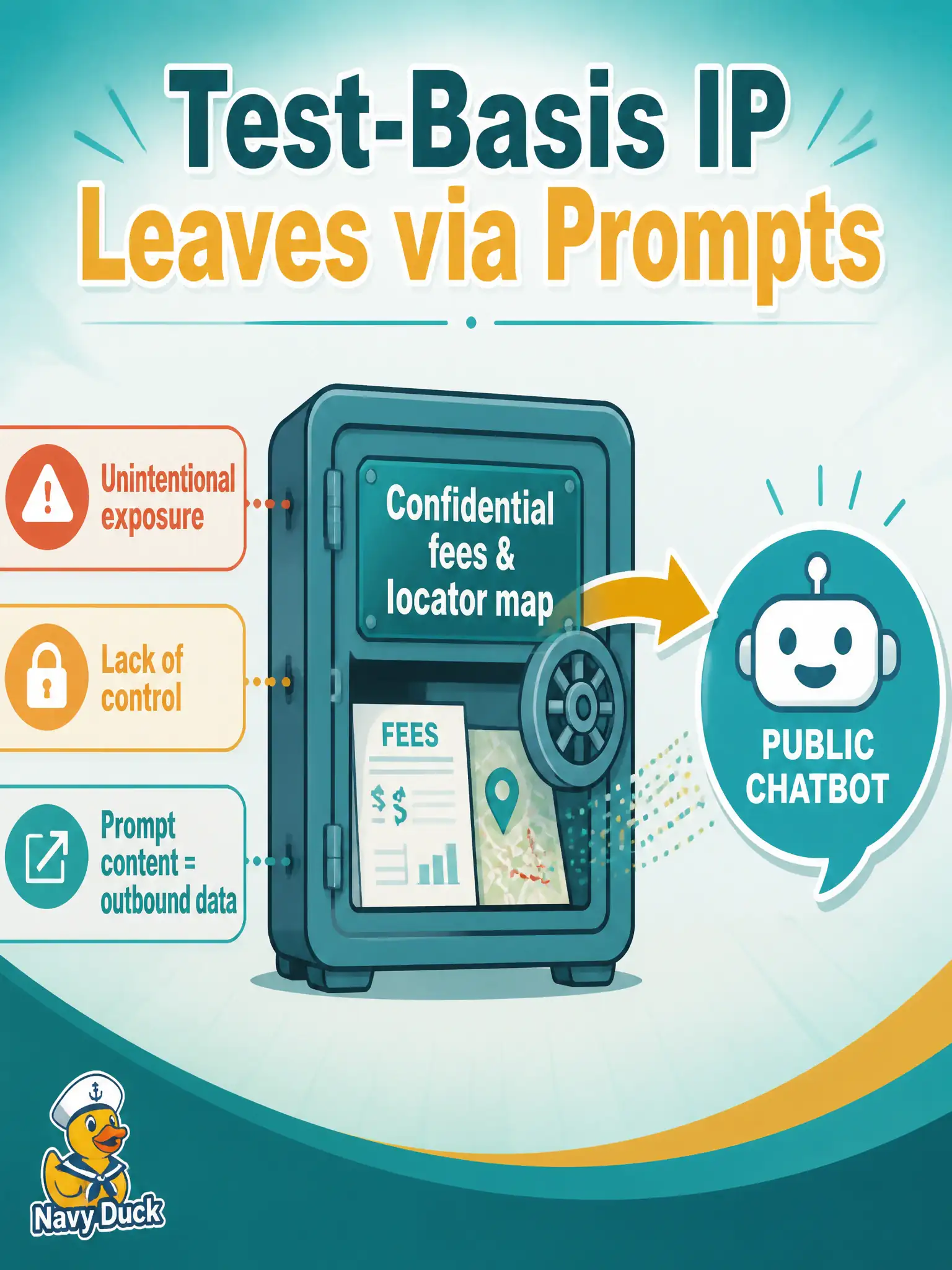
Think of mailing the city vault key out with the recycling flyer. Once unpublished fees and an unreleased map sit in a public chatbot prompt, that IP has left the organization. The risk is what testers put into the model, not a poisoned report or shadow-AI rollout drama.
Full Explanation
Dump-sticker designers who paste unpublished fee tables and unreleased locator maps into a public chatbot illustrate unintentional exposure of confidential test-basis IP through content placed into prompts. Once vault material enters a public model prompt, custody is effectively lost for that content path.
Data poisoning of weekly reports by bogus star-ratings fails by concept: the stem is about what staff put into the prompt, not corrupted ratings. Shadow AI adoption without a communities-of-practice plan fails because the scenario is exposure via prompting, not CoP rollout mechanics. Malicious code generation fails because the concern is confidential IP in prompts, not backdoored scripts.
Exam caveat: unintentional exposure includes trade-secret and pre-release civic operational IP in the test basis—not only personal data fields.
Operational check: classify fee tables and locator maps as confidential; ban public chatbots for unpublished basis material; use approved secure environments; scan prompts/outputs for fee strings; train designers that “just drafting cases” still transmits IP. Dump-sticker design desks must store unpublished fee tables in access-controlled repositories and route GenAI drafting through approved secure processors that contractually bar prompt training use.