
A county plat-map desk learns that someone is submitting bogus star-ratings on the AI-written weekly test report to skew what the team trusts. Which named vulnerability does this scenario match?
Select an answer to reveal the explanation.
Short Explanation
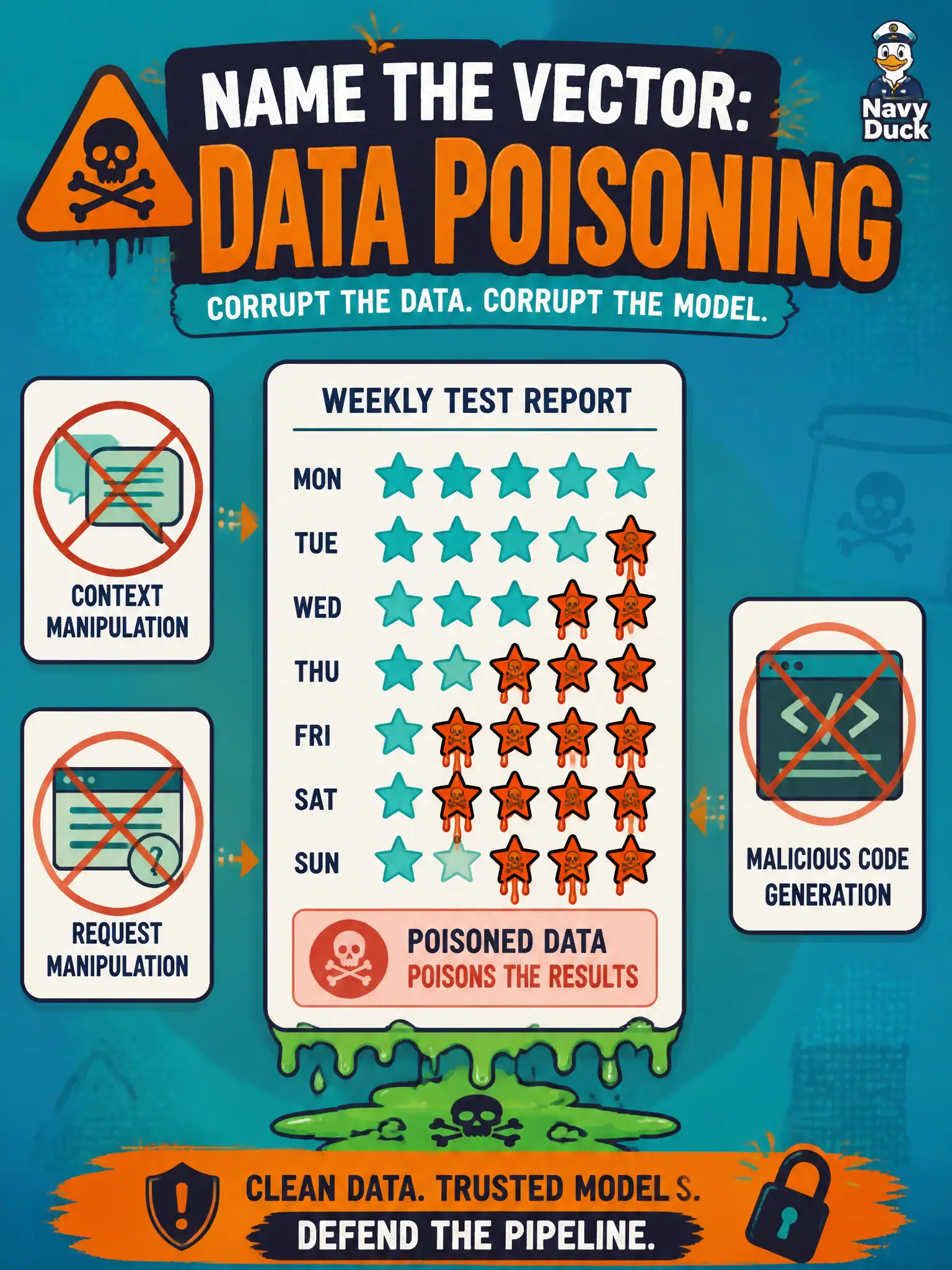
Picture someone slipping fake stamps into the quality-score book so the team favors the wrong pack. Bogus star-ratings that corrupt what the AI-assisted report trusts are data poisoning. That is different from twisting prompt context, hijacking a request, or planting bad code.
Full Explanation
County plat-map desks that see bogus star-ratings on AI-written weekly test reports are facing data poisoning: manipulated evaluation signals that skew what the team trusts. Fake stamps in the quality book push the wrong packs forward.
Context manipulation fails by concept: that vector centers on abusing context to leak or surface inappropriate training material, not rating fraud. Request manipulation fails because the attack here corrupts evaluations rather than disrupting a single generation request with tainted task input. Malicious code generation fails because no dangerous script side effect is described.
Exam caveat: when the scenario emphasizes fake ratings or corrupted training/evaluation data, choose data poisoning even if other GenAI risks exist elsewhere in the program.
Operational check: authenticate raters, anomaly-detect rating spikes, keep human sign-off on plat-map pack promotion, and exclude untrusted stars from any learning or vendor-feedback loop until validated. Plat-map weekly reports should accept ratings only from authenticated reviewers, and anomalous five-star bursts must auto-hold pack promotion until a lead investigates. Publish a plat-map rating policy that voids anonymous stars for promotion decisions and requires a lead’s written note whenever an anomaly hold is lifted.