
A workshop kiln-booking lead hears that people may submit fake evaluations when rating an AI-generated test report. Which official security vector names manipulating training or rating data this way?
Select an answer to reveal the explanation.
Short Explanation
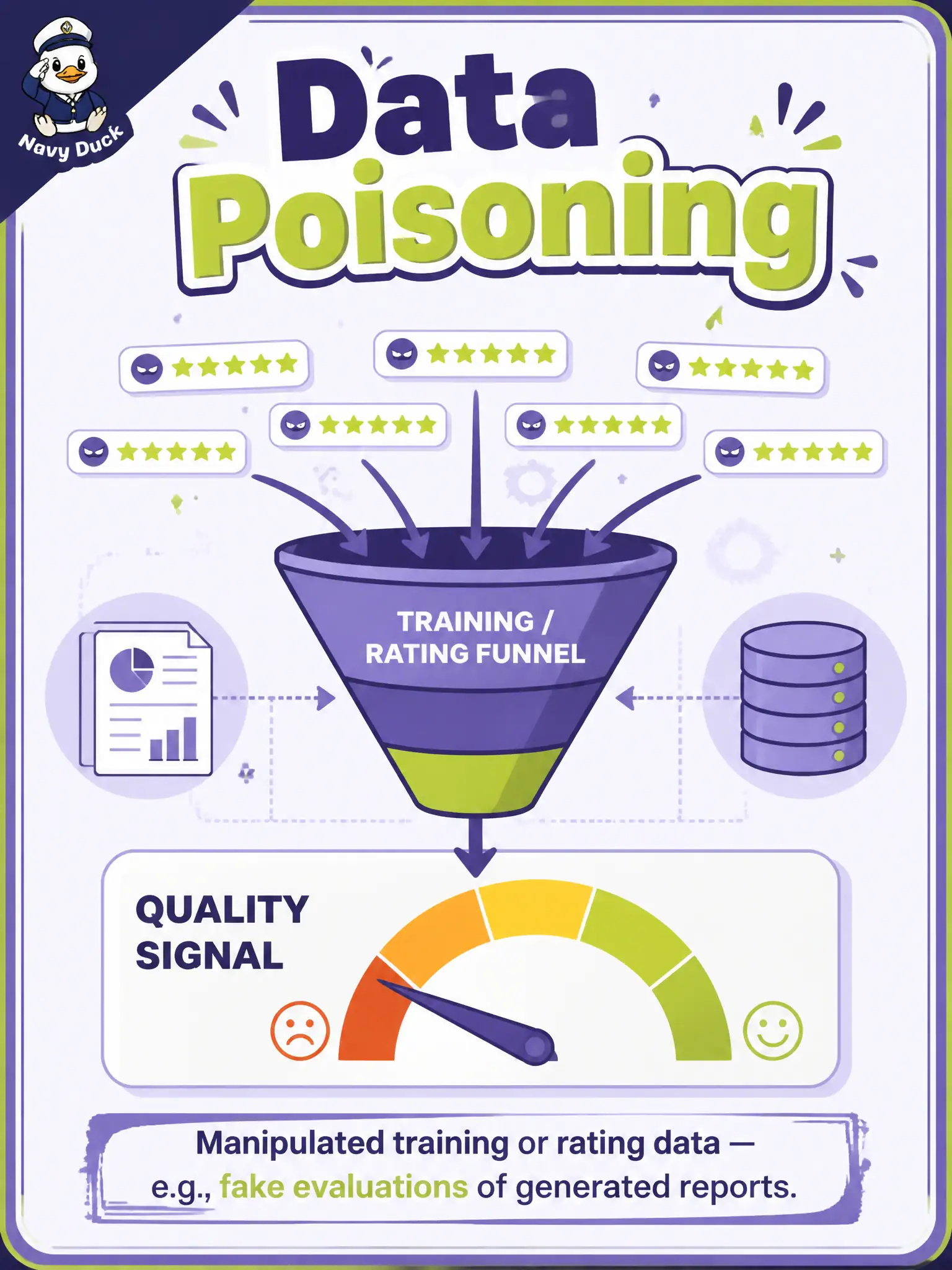
Fake five-stars on sloppy AI reports are not harmless applause — they can poison what the system learns to call “good.” That is data poisoning in the syllabus sense. It is about corrupted training or rating signals, not writing malware.
Full Explanation
Workshop kiln-booking leads who hear about fake evaluations on AI-generated test reports are being pointed at data poisoning—manipulating training data, including fake evaluations of generated reports. Corrupted “quality” signals teach the system to prefer the wrong artefacts.
Limiting the idea to request manipulation of misleading wireframe images fails by concept: that vector disrupts a request/output path, whereas fake ratings corrupt feedback or training signals. Context manipulation that solely extracts corpora fails because extraction is not rating fraud. Malicious code generation fails because inserting remote calls into scripts is a different vector.
Exam caveat: data poisoning in the syllabus includes manipulated training or rating data such as bogus evaluations—not only classic dataset backdoors in model pre-training lore.
Operational check: separate human review scores from unsupervised popularity metrics; require authenticated reviewers for kiln-report ratings used in learning loops; investigate sudden five-star floods; freeze model or rubric updates that consumed untrusted evaluations until review completes. Kiln-booking quality programs should treat sudden rating spikes as integrity incidents, freeze any automated “good report” learning updates, and restore SME-scored rubrics until the evaluation corpus is validated.