
A municipal storm-drain report assistant keeps marking “blocked inlet on a school walk” as low severity after a week of unexplained five-star ratings on sloppy drafts. What should the tester do?
Select an answer to reveal the explanation.
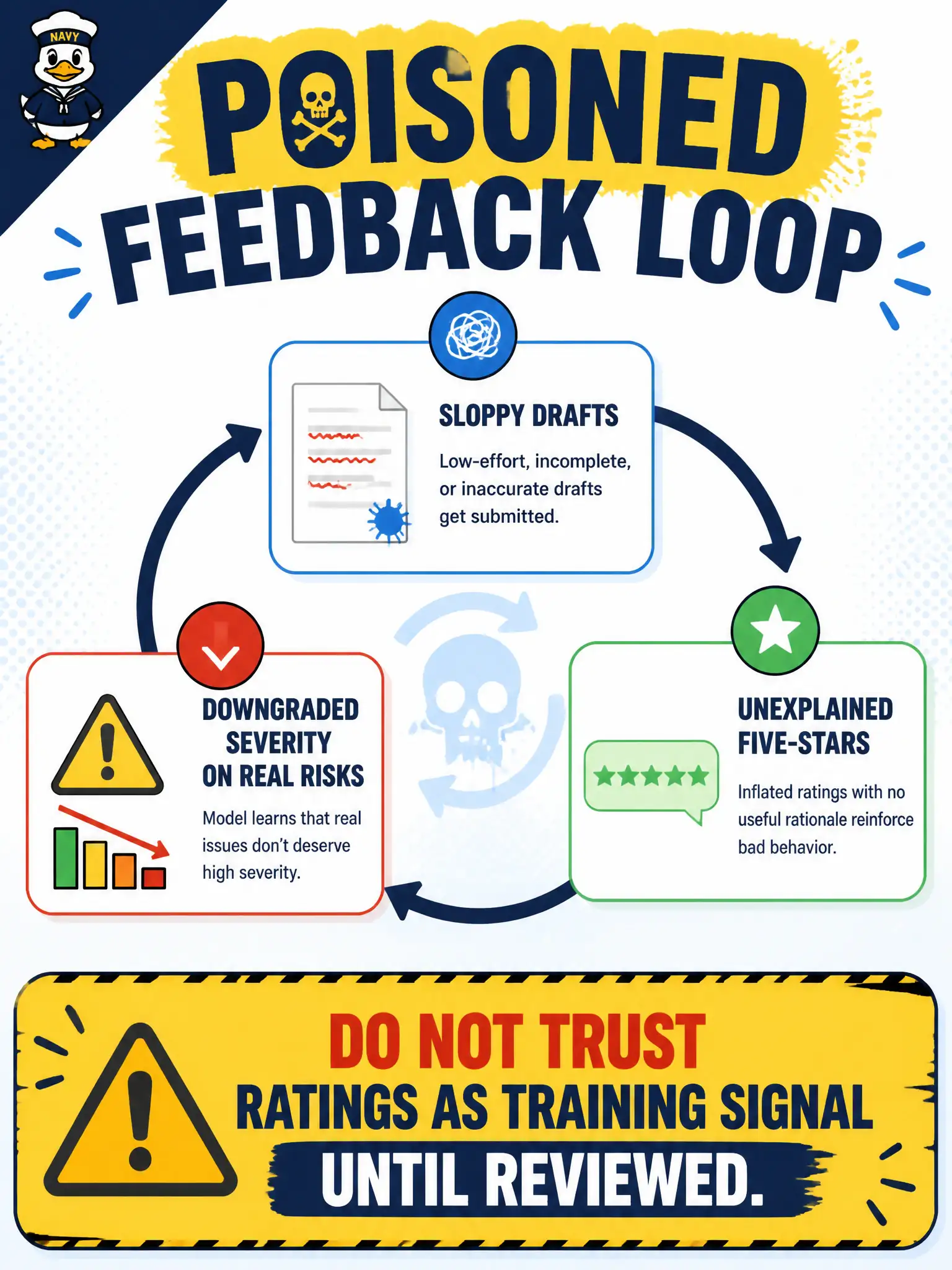
Short Explanation
A sudden parade of five-stars on weak drafts is a crooked scoreboard. That can poison what “good” means for the next round. Hold the ratings out of the training signal until someone reviews them.
Full Explanation
Storm-drain report assistants that mark “blocked inlet on a school walk” as low severity after a week of unexplained five-star ratings on sloppy drafts should trigger suspicion of data poisoning of the feedback loop. Testers must not trust those ratings as a training signal until reviewed. School-walk safety severity is too important to learn from a crooked scoreboard.
Treating the five-star flood as calibration proof fails by concept: unexplained praise on weak drafts is a warning, not validation. Raising temperature for more creative severity labels fails because creativity does not restore integrity of the feedback signal. Exporting the ratings into production prompts immediately fails by amplifying the poison.
Exam caveat: possible poisoning demands hold-and-review, not automatic confirmation of the anomaly through reuse.
Operational check: alert on rating distribution spikes; quarantine suspect evaluations; restore severity decisions to SME-reviewed rubrics tied to school-walk risk; re-train or re-tune only after the feedback corpus is cleaned and approved. Storm-drain severity models that touch school-walk safety must require dual control before a feedback-derived severity change can reach production prompts or dashboards.