
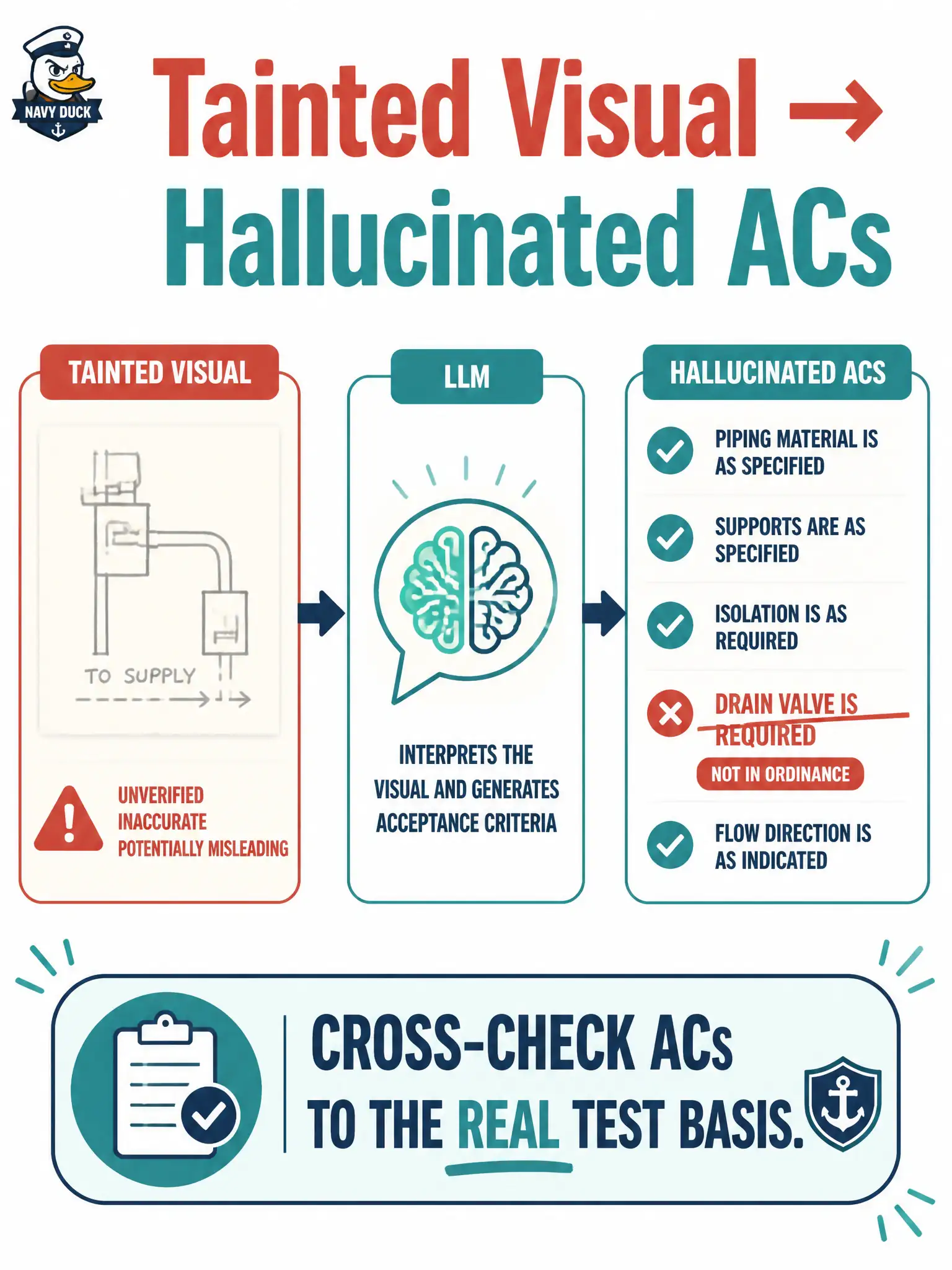
A city food-truck-permit tester attaches a vendor sketch; the generated acceptance criteria include “skip health-sticker if the truck is electric,” which is not in the ordinance. Security later says the sketch was tainted input. What should the tester conclude?
Select an answer to reveal the explanation.
Short Explanation
A sketch that smuggles a fake rule into the acceptance criteria is request manipulation in action. Believe the ordinance, not the glittery extra line. Cross-check every generated criterion to the real test basis.
Full Explanation
City food-truck-permit sketches can smuggle fake rules into generated acceptance criteria. When a sketch yields “skip health-sticker if the truck is electric,” which is absent from the ordinance, and security later identifies tainted input, the tester should conclude this fits request manipulation and must cross-check acceptance criteria against the ordinance before trusting them. Fluent extras are not law.
Treating it as only a temperature issue fails by concept: regenerating without an ordinance check leaves the integrity failure unaddressed. Calling it data poisoning of star ratings fails because the stem is about disrupted generation from a tainted attachment, not corrupted scores. Claiming it proves context manipulation because every wrong AC comes from training-data theft fails by forcing the leakage vector onto a request-disruption scenario.
Exam caveat: wrong acceptance criteria can have multiple causes; when security identifies tainted input that disrupted output, map to request manipulation and still verify against the civic test basis.
Operational check: detach untrusted vendor sketches from production prompt paths; require ordinance citations on each AC; reject any criterion that cannot be traced to a section; re-run the pack from a clean, reviewed brief after the tainted sketch is removed.