
A snow-emergency parking tester pastes a live tow list with names and plates into a chatbot; a later summary repeats a plate that should never have left the yard. Which privacy risk does this illustrate?
Select an answer to reveal the explanation.
Short Explanation
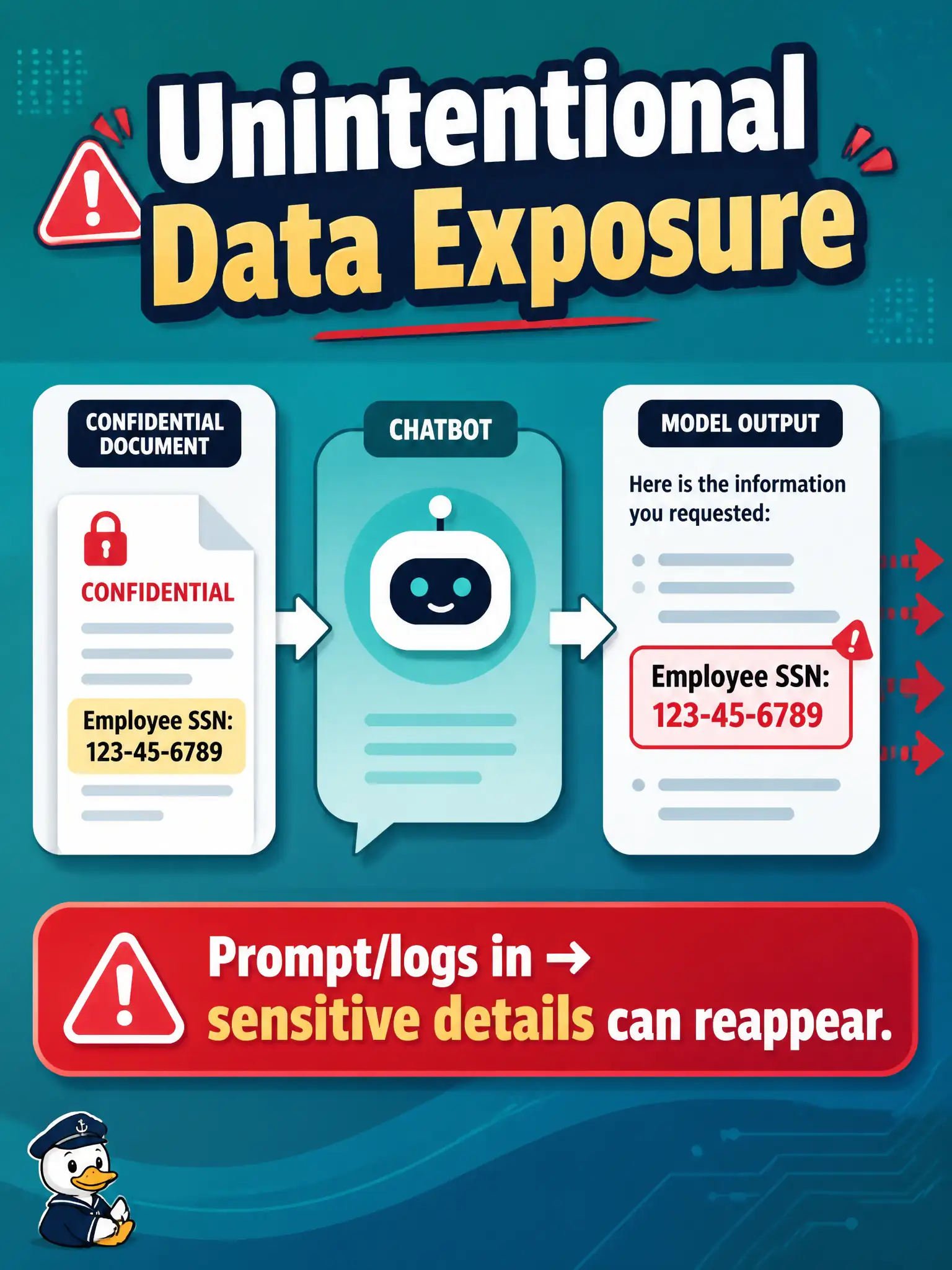
If you drop a confidential clipboard into the chat, the reply can echo pieces of it — like reading private notes aloud in a hallway. That accidental reveal is unintentional data exposure. The model did not need a clever attack to leak what you already fed it.
Full Explanation
Snow-emergency tow lists contain plates and names that must not echo into summaries. Pasting a live tow list into a chatbot that later repeats a plate illustrates unintentional data exposure: GenAI output reveals sensitive information that was in the prompt or related logs. No clever exploit is required when staff feed confidential civic data into the model.
Data poisoning fails by concept here: the stem is about leakage of supplied sensitive data, not corrupted training or rating signals. Malicious code generation fails because a repeated plate in a summary is disclosure, not an executable backdoor. Low temperature drift fails because stable wording is not what causes plates to appear; the sensitive prompt content is.
Exam caveat: unintentional exposure covers prompts, logs, and vendor-side retention paths—not only the visible chat reply. Treat the whole processing path as in scope.
Operational check: forbid live tow-list pastes into public or unvetted chatbots; use minimized synthetic plates for drafting; scrub outputs for identifiers; escalate any unexpected plate echo to privacy/security before the summary is filed. Snow desks should prefer ticket ids and redacted statuses in prompts, keeping plate-level detail inside systems that already enforce need-to-know access.