
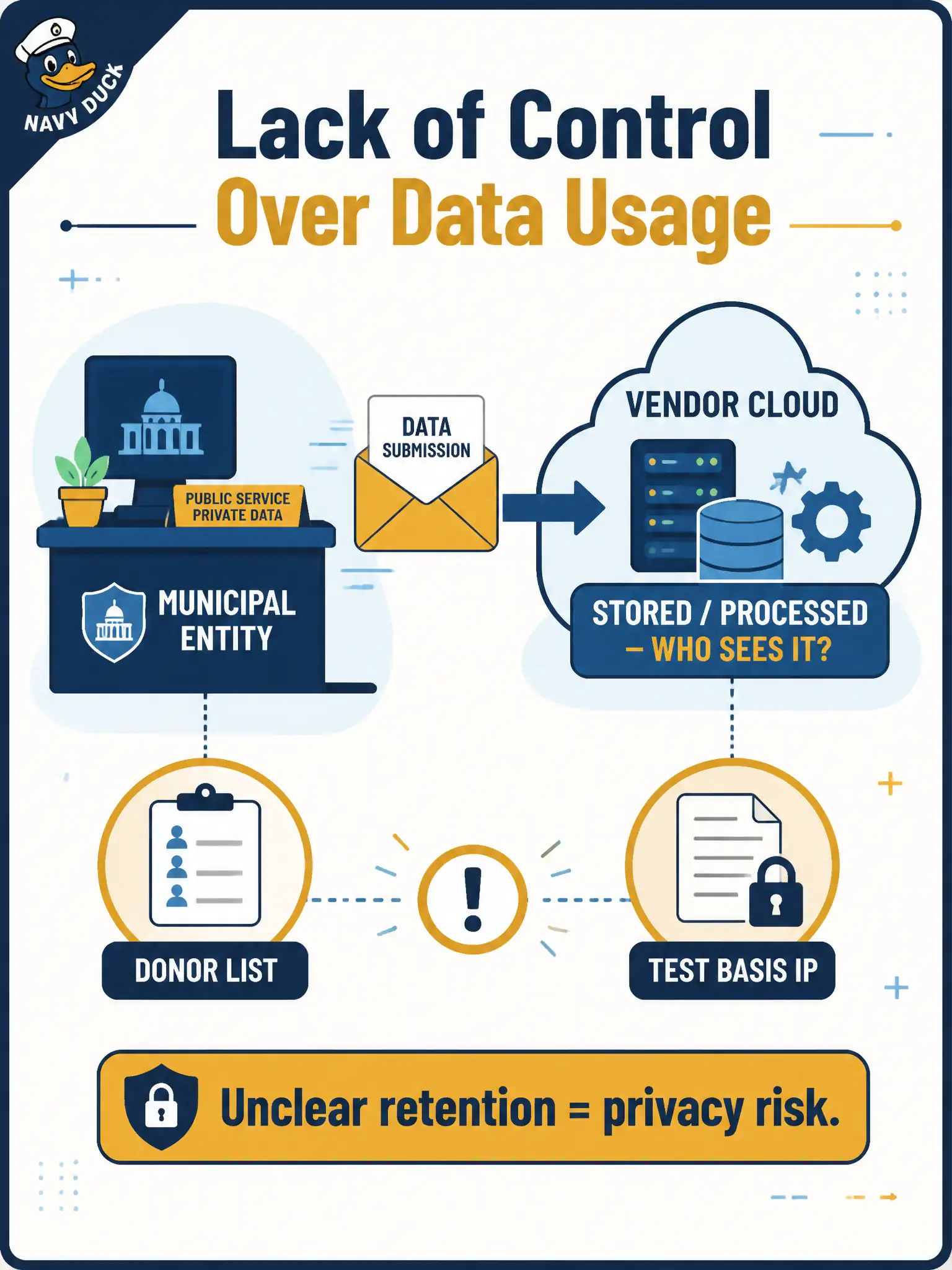
A community-choir ticket desk learns the chatbot vendor keeps prompts to “improve the model,” and the desk cannot say who sees last night’s donor list. Which privacy concern does this describe?
Select an answer to reveal the explanation.
Short Explanation
Once your prompt leaves the building, you may not own the filing cabinet anymore. Vendor retention “for model improvement” without clear control is a classic lack-of-control privacy risk. That includes intellectual property sitting in the test basis, not only personal names.
Full Explanation
Community-choir ticket desks often learn too late that vendors keep prompts “to improve the model.” When the desk cannot say who sees last night’s donor list, the privacy concern is lack of control over data usage—including how prompts and test-basis content are stored or processed. Intellectual property and personal data in the test basis share this control problem.
Request manipulation that plants a fake health rule fails by concept: that is an adversarial input vector, not vendor retention opacity. Temperature misconfiguration fails because temperature does not create custody over vendor storage. Neuron coverage gaps fail because that metric is unrelated to privacy control of prompts.
Exam caveat: lack of control is about governance of storage, processing, and third-party use—not merely whether a name appeared once in a reply.
Operational check: before sending choir donor or test-basis content to a vendor model, obtain written retention and training-use terms, prefer environments with contractual non-training clauses, minimize data sent, and maintain a register of which desks use which GenAI processors. Choir operations should inventory which GenAI vendors may train on prompts and migrate donor-adjacent drafting to processors with contractual non-training and deletion terms.