
A county deed-recording pair sees two GenAI runs diverge and debates whether to change temperature or set a seed. How do these two mitigations differ?
Select an answer to reveal the explanation.
Short Explanation
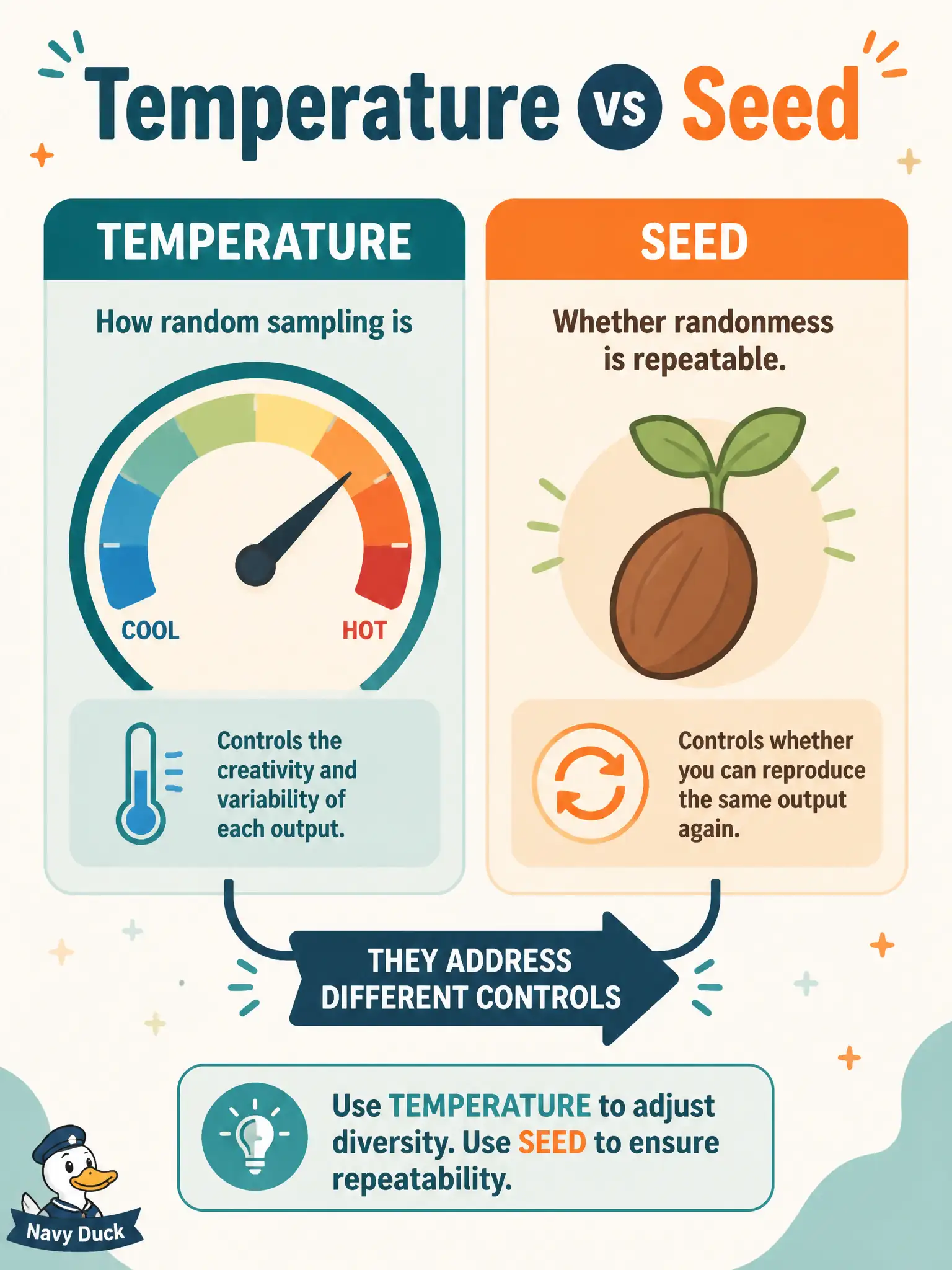
Temperature is how wild the shuffle feels; a seed is whether you can replay that shuffle. One shapes the amount of randomness. The other shapes whether you can see the same random path again.
Full Explanation
Deed-recording teams that see two GenAI runs diverge need the right vocabulary for the two knobs. Temperature controls how random sampling is (the breadth of the distribution); a seed controls whether that randomness is repeatable (replay of the sampling sequence when supported). They address different dimensions of non-determinism.
Claiming temperature locks the exact token path while a seed only changes reply length fails by swapping the roles. Claiming a seed increases creative diversity while temperature only stores prompts fails equally. Claiming both do the same thing so either alone guarantees identical long scripts fails because the knobs are not equivalent and neither alone guarantees perfect long-script identity.
Exam caveat: understanding the distinction matters more than memorizing vendor UI labels. On the exam, map “how random” to temperature and “replayable random path” to seed.
Operational check: when debugging divergent deed packs, change one knob at a time, log temperature and seed with each artefact, and explain divergence using the correct mechanism before retuning civic prompts. Document both values on every deed-recording artefact label so later reviewers can tell whether divergence came from a hotter distribution or an unset replay seed.