
A sidewalk-cafe-permit lead claims that setting a random seed “turns the LLM into a deterministic rule engine.” What does a seed actually provide?
Select an answer to reveal the explanation.
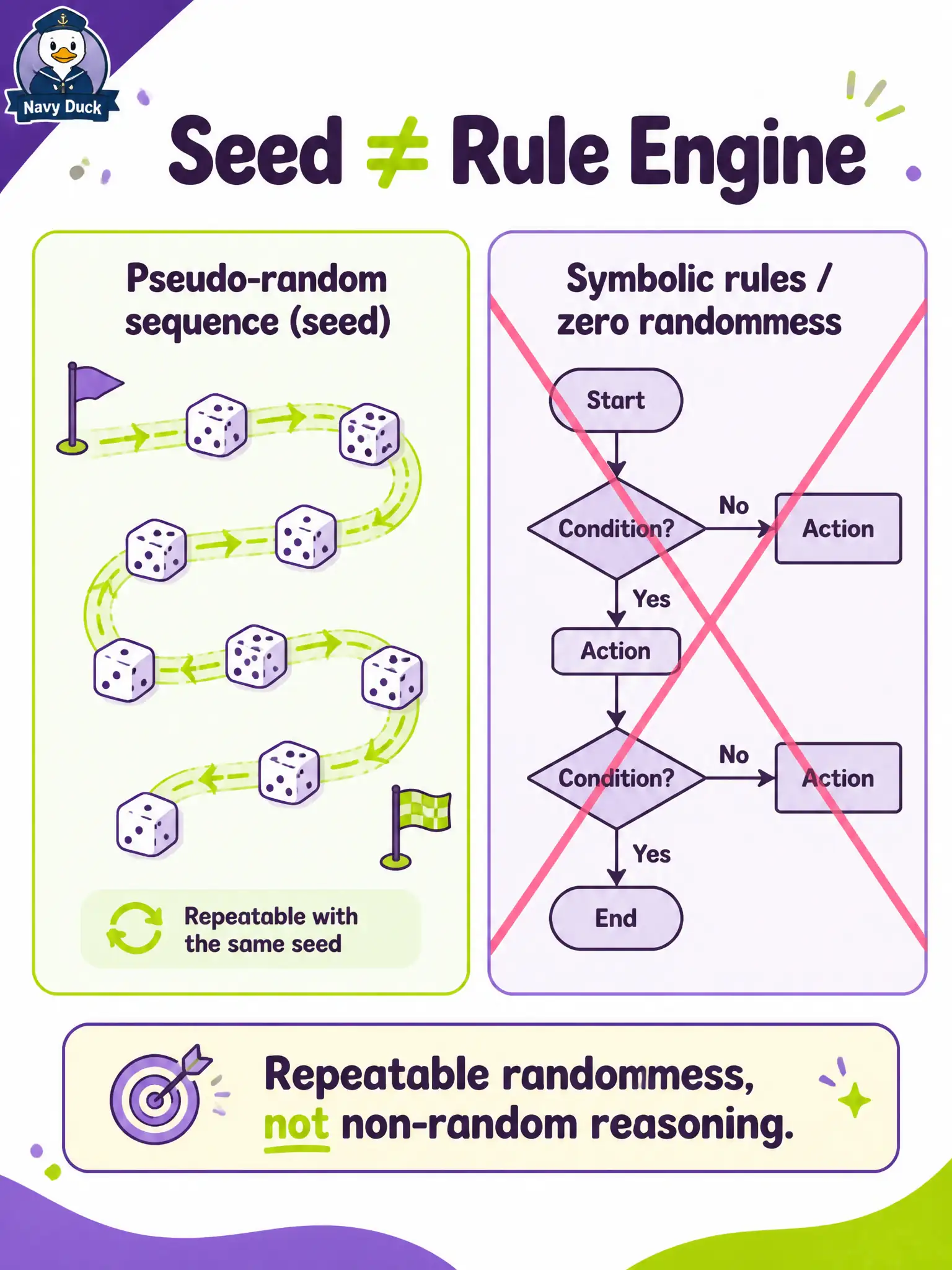
Short Explanation
A seed is more like reusing yesterday’s lottery draw order than rewriting the lottery as a checklist. It makes the random path repeatable. It does not turn GenAI into symbolic, rule-based reasoning.
Full Explanation
Sidewalk-cafe permit leads sometimes oversell seeds. A random seed provides repeatable pseudo-random sampling values that improve reproducibility; it does not create true non-random symbolic reasoning. The model still samples—only along a reusable random path when the stack supports it.
Symbolic rules that replace probabilistic token sampling entirely fails by concept: a seed does not install a rule engine. Guaranteeing every vendor emits identical answers without verification fails because seed support and model stacks differ. Zero randomness via a fixed decision tree fails for the same reason: GenAI remains generative, not a compiled decision tree.
Exam caveat: do not confuse “more reproducible sampling” with “deterministic business-rule execution.” Seeds help testers compare; they do not eliminate the need to verify cafe-permit outputs against ordinance.
Operational check: train staff that seeds are replay controls, require verification of permit packs even when seeds match, and record platform seed support in the tool profile so false “rule engine” claims are corrected early. Permit leads who call a seeded model a rule engine may skip ordinance checks; training materials should correct that metaphor explicitly with a worked cafe-fee example.