
A community-kitchen rental tester needs yesterday’s GenAI data pack again to compare two prompt versions fairly. Which control reuses the same pseudo-random sampling sequence in implementations that support it?
Select an answer to reveal the explanation.
Short Explanation
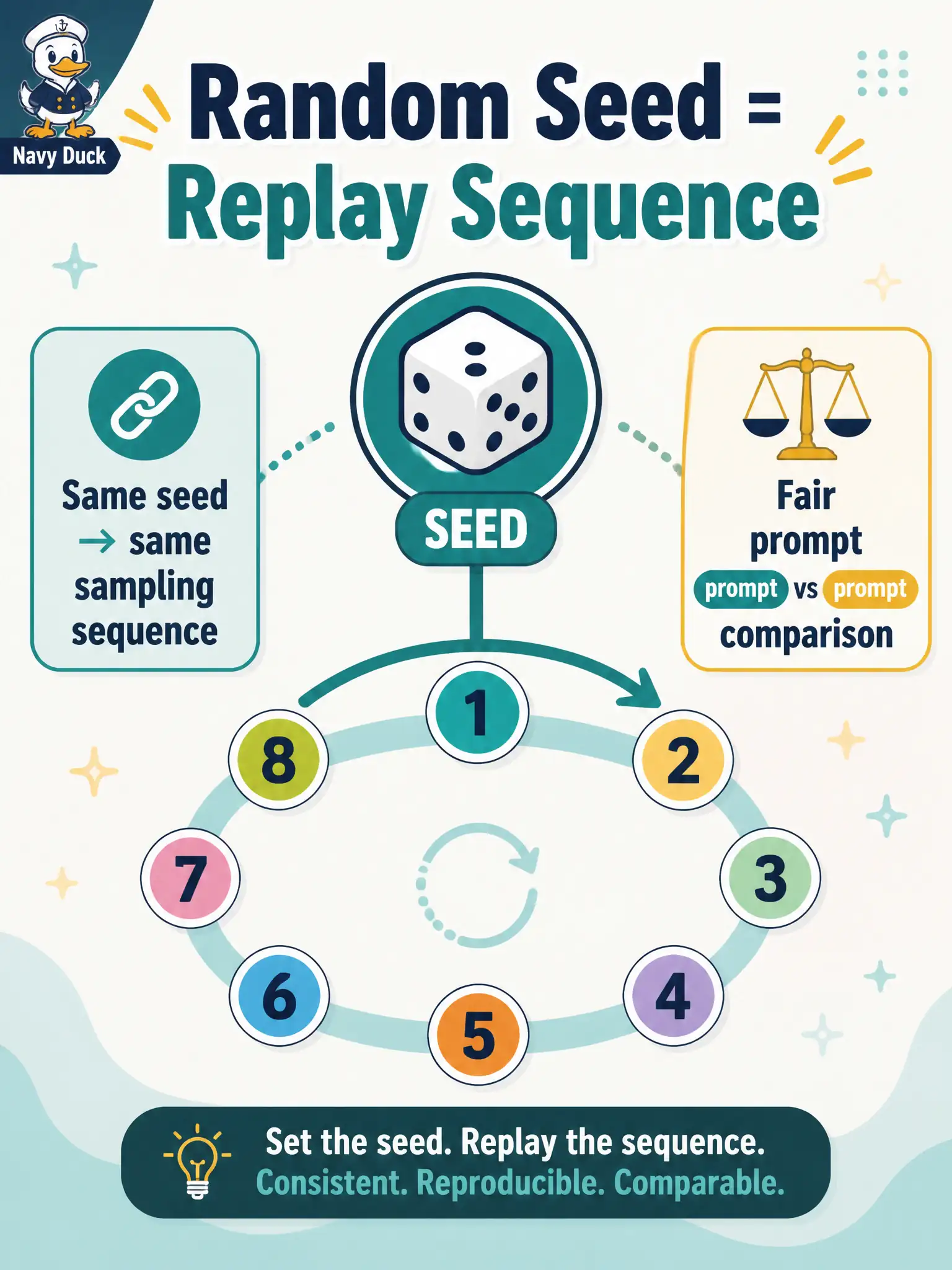
A random seed is like hitting “replay” on a shuffled deck that already played once. When the implementation supports it, the same pseudo-random sequence comes back. That helps fair prompt comparisons without pretending the model became a rule engine.
Full Explanation
Community-kitchen rental testers comparing two prompt versions need yesterday’s GenAI data pack again for a fair race. Setting a random seed so the same pseudo-random sampling sequence can be reused is the control that—when the implementation supports it—replays the sampling path. That improves comparative reproducibility without converting the model into a symbolic rule engine.
Raising temperature so each comparison run explores new variants fails by concept: that increases divergence when you want comparable paths. Removing all context fails because it changes the task basis and increases invention risk. Switching roles mid-prompt fails because persona tricks do not provide a supported sampling-sequence control.
Exam caveat: seeds improve repeatability of sampling where supported; they do not guarantee identical outputs across different vendors, model versions, or unsupported APIs.
Operational check: when comparing prompt versions for civic packs, fix seed and temperature, record implementation details, regenerate under those controls, and document whether the platform actually honors seeds before trusting “fair comparison” claims. Kitchen-rental prompt experiments without a seed (when available) mix sampling noise into the comparison and can falsely blame or praise a prompt wording change.