
A county animal-control script pack changes verbs on every run. The tester is advised to reduce randomness so wording stays more consistent. Which action matches that advice?
Select an answer to reveal the explanation.
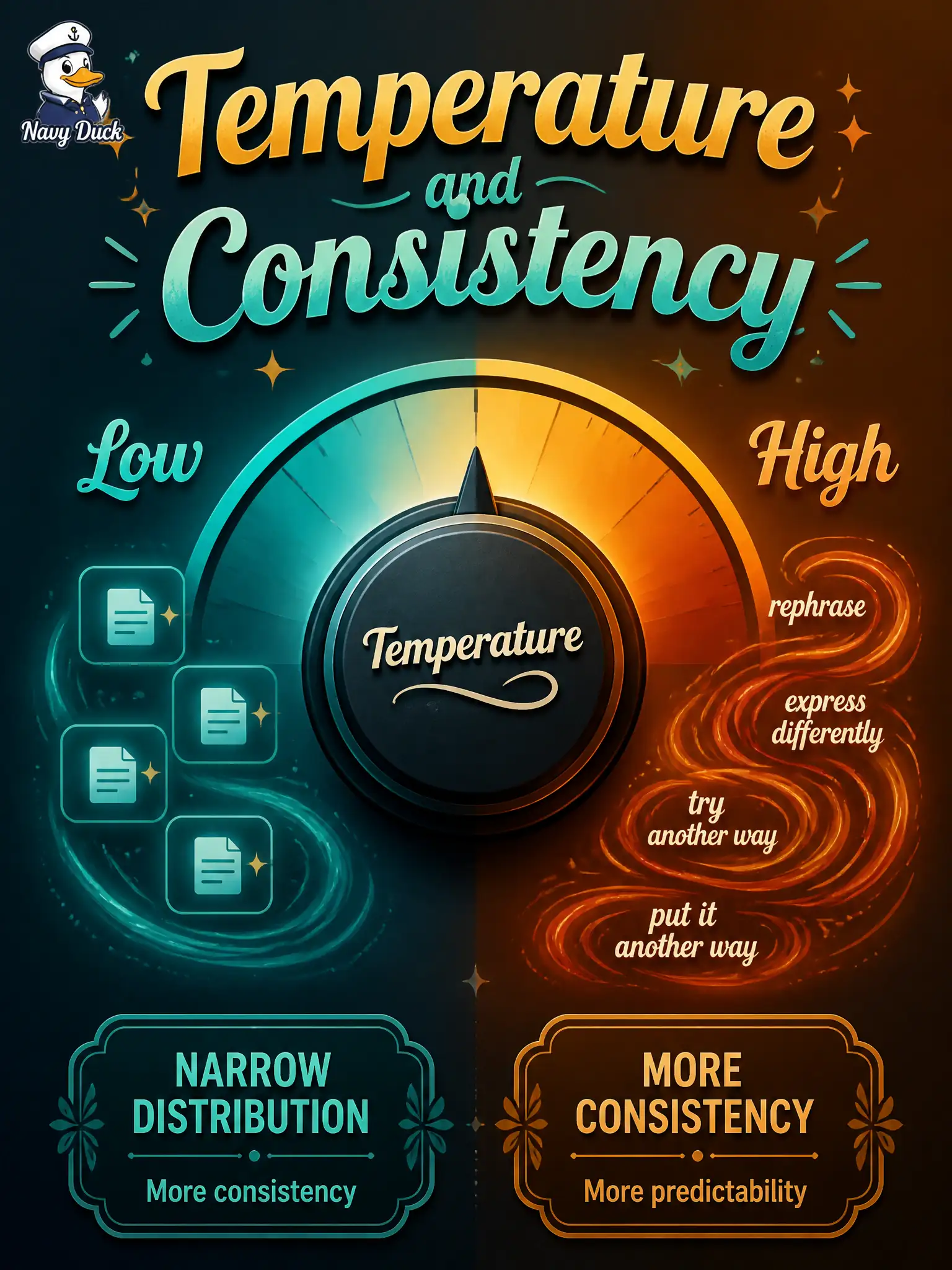
Short Explanation
If every run swaps verbs, turn down the creativity dial. Lowering temperature narrows randomness and steadies the script wording.
Full Explanation
County animal-control scripts that change verbs on every run undermine automation stability. The action that reduces randomness so wording stays more consistent is lowering the temperature parameter to narrow the probability distribution and increase consistency. Temperature is the primary dial for how widely the model samples alternate tokens.
Raising temperature fails by concept: it widens the distribution and usually increases wording churn. Deleting all context so fewer tokens can vary fails because removing context invites hallucination and does not correctly target sampling breadth. Switching to metamorphic testing of model weights fails because that is a model-evaluation approach, not the parameter change advised for steadier script wording.
Exam caveat: lower temperature improves consistency; it does not certify that scripts are correct against the animal-control SOP. Verification remains mandatory.
Operational check: set a documented low-temperature profile for locator- and script-generation jobs, regenerate a sample of animal-control flows, measure wording variance across runs, and promote the setting only after stability and basis checks both pass. In animal-control automation, inconsistent verbs break keyword aliases and reviewer trust, so temperature policy belongs in the same change ticket as the script pack itself. Prefer a shared configuration profile over ad-hoc chat settings so every regenerate inherits the narrower distribution.