
A county flood-alert pack from one model invents a “text all residents at 3 a.m.” acceptance criterion; a second model stays inside the posted policy. The tester compares both replies before promoting any case. Which mitigation is this?
Select an answer to reveal the explanation.
Short Explanation
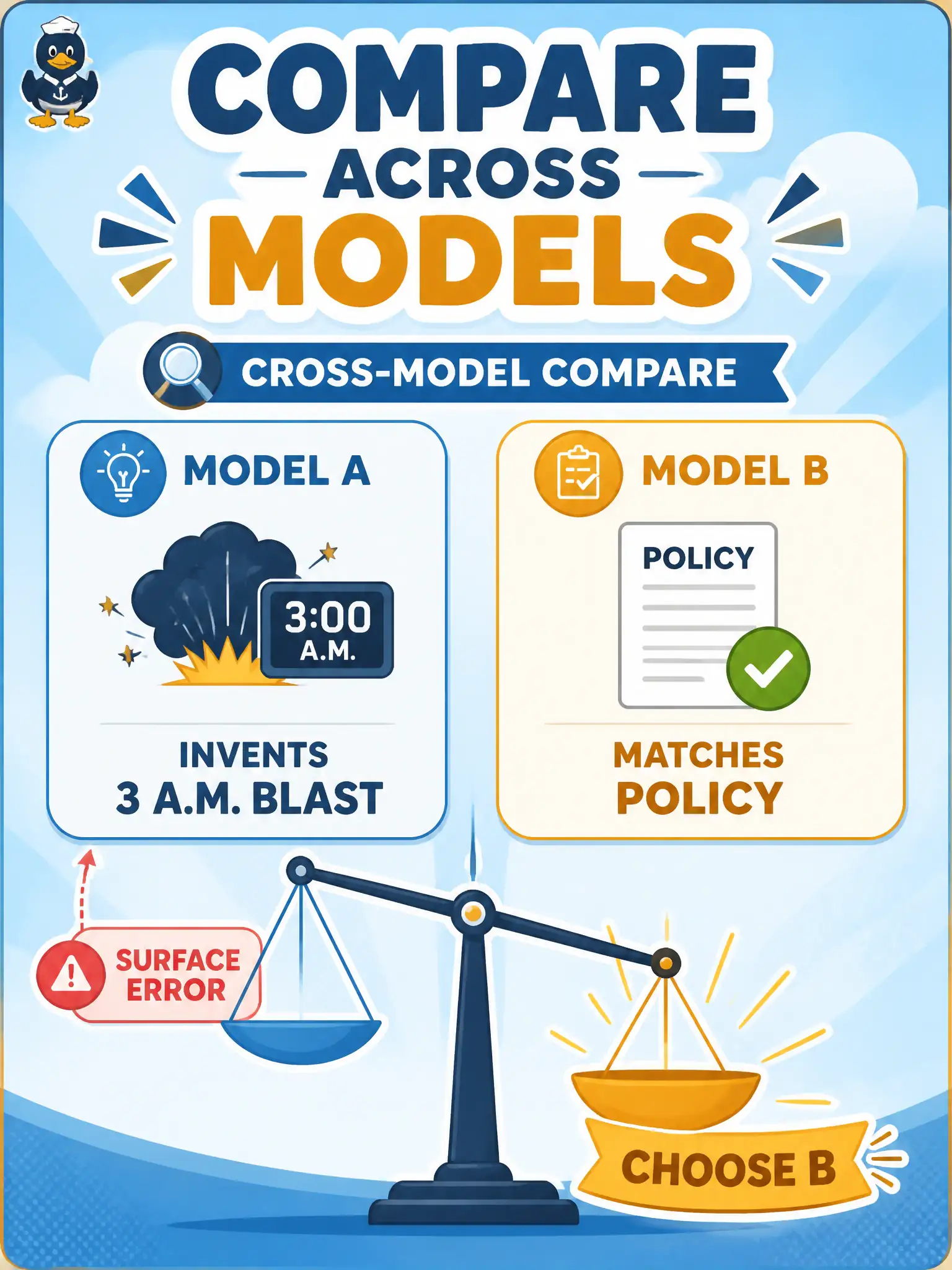
Two models, two stories—one invents a 3 a.m. blast, one stays on policy. Comparing them surfaces the error before any case is promoted.
Full Explanation
County flood-alert packs can endanger residents if invented blast rules go live. Comparing a pack that invents a “text all residents at 3 a.m.” criterion with a second model’s policy-aligned pack, then choosing before promotion, is comparing results across models to surface errors and select the more reliable artefact. Divergence is a detection signal against the posted policy.
Providing incomplete context so models invent less fails by concept: incomplete context increases hallucination risk; it is not a comparison mitigation. Assuming the more dramatic pack is always better coverage fails because drama is not coverage evidence and invented criteria can violate policy. Fine-tuning both models before any comparison fails because fine-tuning is a Chapter 4 complementary technique and is not required before cross-model review in Chapter 3.
Exam caveat: cross-model comparison surfaces differences; it does not automatically prove which pack is correct. The posted policy or test basis remains the arbiter after divergence is noticed.
Operational check: run critical civic packs through at least two models or major configurations, diff acceptance criteria against the published alert policy, quarantine invented criteria, promote only basis-aligned cases, and log which model’s output was accepted and why.