
A municipal compost-pickup pack invents a “holiday skip if snow exceeds two inches” rule that looks plausible to a new tester. The solid-waste supervisor says that rule was never adopted. Which detection method does this exemplify?
Select an answer to reveal the explanation.
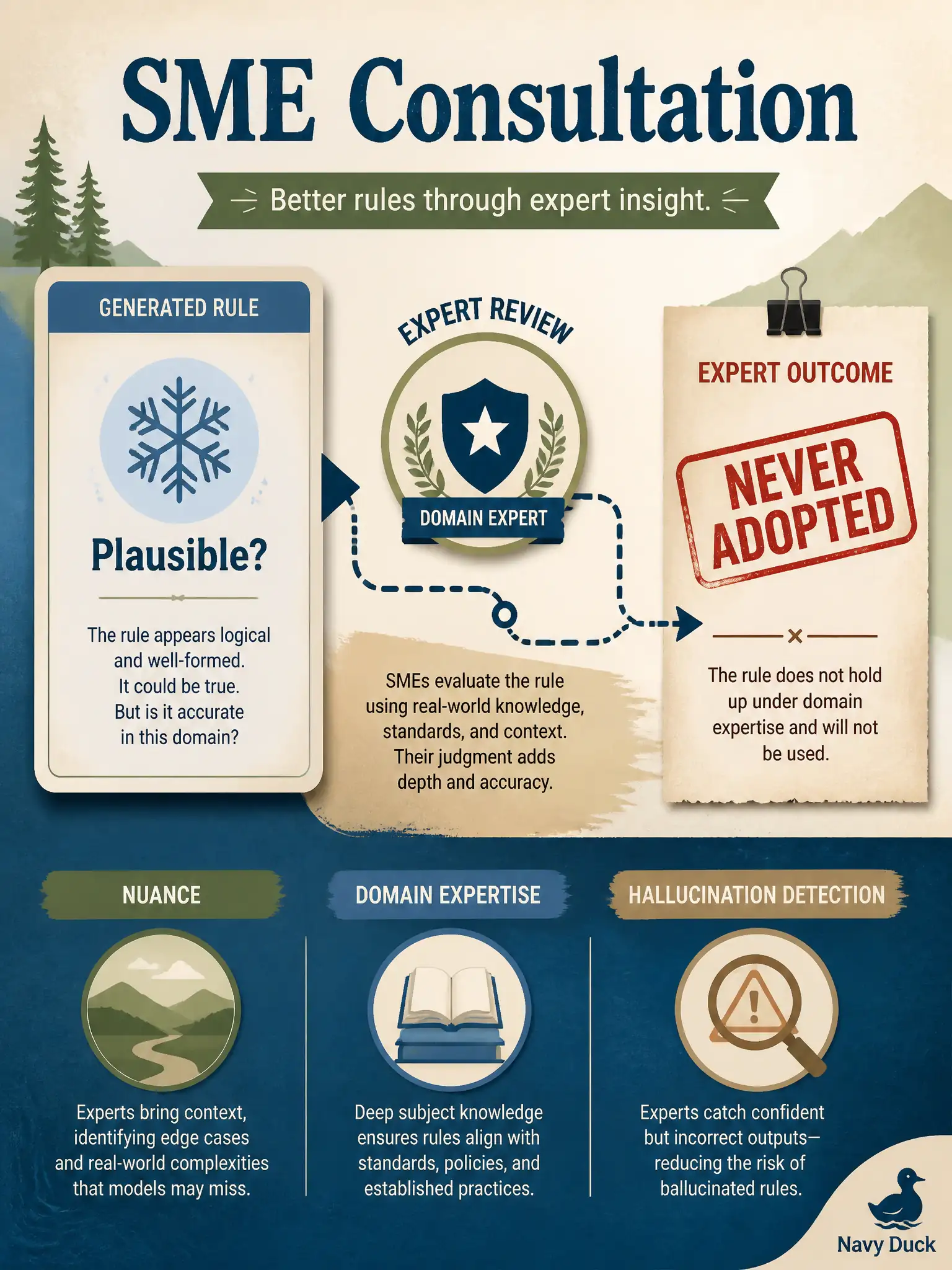
Short Explanation
Plausible is not the same as adopted. When nuance hides from a junior skim, asking the solid-waste SME is domain-expertise consultation.
Full Explanation
When a municipal compost-pickup pack invents a “holiday skip if snow exceeds two inches” rule that looks plausible to a new tester, and the solid-waste supervisor says that rule was never adopted, the detection method is domain-expertise consultation to catch a nuanced hallucination. Civic solid-waste policy often hides in institutional knowledge that juniors cannot spot from fluency alone. Consistency checking only between two generated cases fails when both could share the same invented rule. Adjusting temperature until the snow rule disappears fails as undirected sampling tinkering rather than authoritative detection. Neuron-coverage analysis of the language model fails by concept for detecting application-policy hallucinations. Exam caveat: SMEs catch plausible-but-false local rules. Operational check: route suspicious civic policy lines to the solid-waste supervisor, document non-adoption, remove the snow-skip cases, and update prompts with “only adopted holiday rules” before the next compost-pickup release. Retain the municipal audit note so later testers can see why the decision protects public service quality and fairness. Retain the municipal audit note so later testers can see why the decision protects public service quality and fairness.