
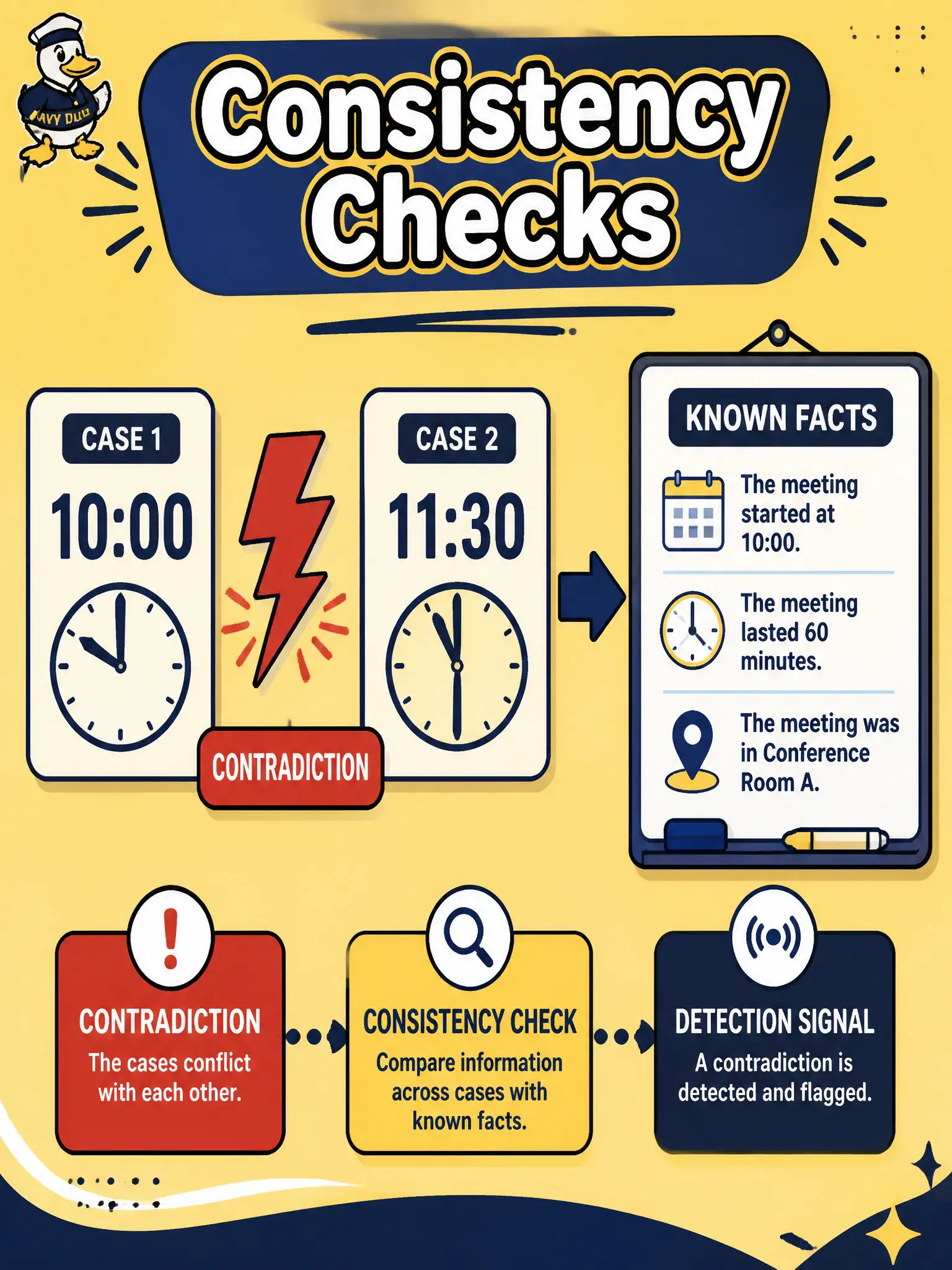
In one generated senior-center meal-delivery pack, one case says the cutoff is 10:00 and another says 11:30. Both sound locally plausible. What should the tester conclude and do?
Select an answer to reveal the explanation.
Short Explanation
Two clocks cannot both be the cutoff. When artefacts disagree with each other, that inconsistency is a detection signal—run a consistency check.
Full Explanation
In a generated senior-center meal-delivery pack where one case says the cutoff is 10:00 and another says 11:30, both sounding locally plausible, the tester should treat the contradiction as a hallucination signal and run a consistency check. Civic meal logistics cannot operate two cutoffs as if fluency made both true. Treating both as valid because fluency implies correctness fails overtrust. Raising temperature to encourage more varied cutoffs worsens incoherence. Ignoring the conflict unless an SME volunteers a comment fails proactive detection duty. Exam caveat: intra-artefact contradictions are consistency-check triggers and hallucination signals. Operational check: run an automated or manual consistency pass across cutoff fields, freeze the pack, confirm the official civic cutoff with meal-program staff, regenerate aligned cases, and re-check before drivers receive the evening list. Retain the municipal audit note so later testers can see why the decision protects public service quality and fairness. Retain the municipal audit note so later testers can see why the decision protects public service quality and fairness. Retain the municipal audit note so later testers can see why the decision protects public service quality and fairness.