
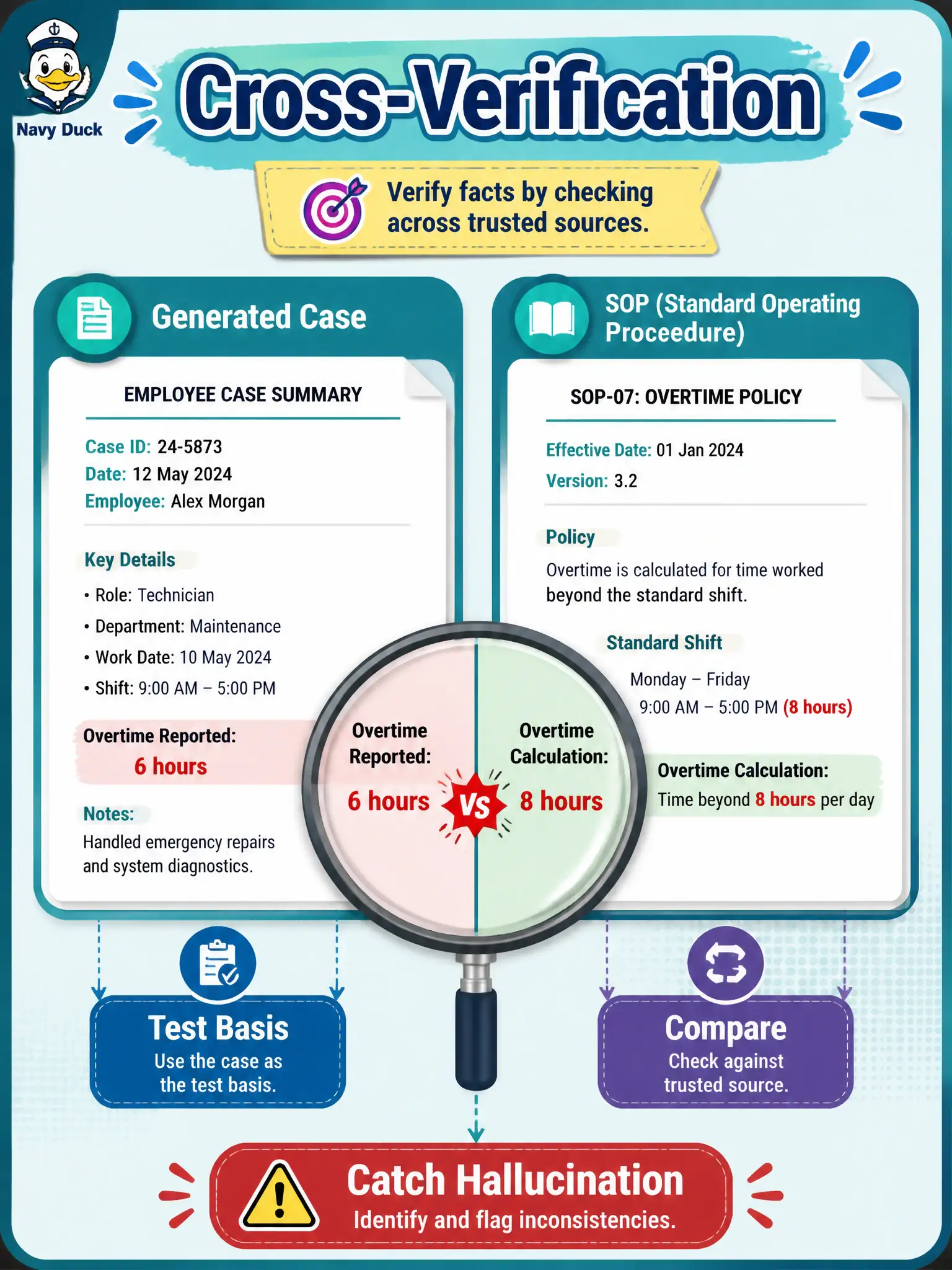
A volunteer-fire shift app generates a case that “overtime starts after six hours,” but the posted SOP says eight. The tester compares the pack to the SOP and flags the extra rule. What detection approach is this?
Select an answer to reveal the explanation.
Short Explanation
Hold the generated claim next to the SOP like a twin photo check. That side-by-side against the test basis is cross-verification catching a hallucination.
Full Explanation
When a volunteer-fire shift app generates a case that “overtime starts after six hours” but the posted SOP says eight, and the tester compares the pack to the SOP and flags the extra rule, the detection approach is cross-verification of generated output against the test basis or known behavior. Civic labor rules must be checked to authoritative documents, not accepted from fluent extras. Output testing by executing the script against the live shift app only fails as the primary label when the detection described is documentary comparison, not runtime execution. Lowering temperature to reduce sampling randomness fails because temperature tuning is mitigation, not the detection method used. Selecting a different GenAI model without reviewing documentation fails to detect the SOP mismatch. Exam caveat: cross-verification is basis-versus-output checking. Operational check: keep the overtime SOP beside generated cases, flag six-versus-eight conflicts, constrain prompts to SOP figures, and require a fire-admin steward to confirm civic overtime rules before suite entry. Retain the municipal audit note so later testers can see why the decision protects public service quality and fairness.