
A municipal kayak-rack rental lead cannot tell why the tuned model added a “life-jacket color” check. Which fine-tuning challenge is named by that opacity?
Select an answer to reveal the explanation.
Short Explanation
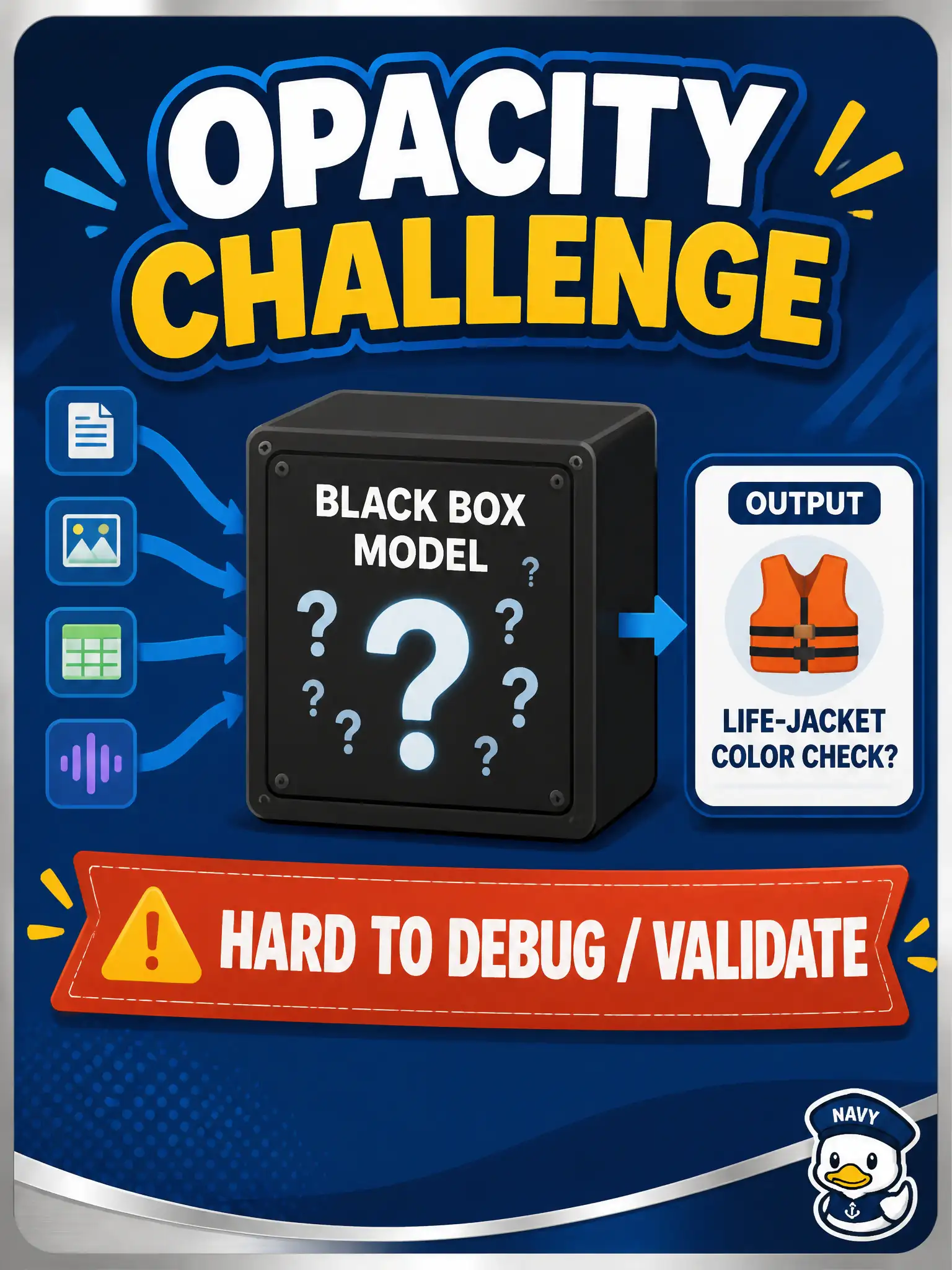
When nobody can see why “life-jacket color” appeared, the model’s reasoning is opaque. That lack of transparency makes debugging and validating tuned testware harder. Opacity is a named fine-tuning challenge.
Full Explanation
Opacity names limited transparency into how an LLM produces its outputs. After fine-tuning, a municipal kayak-rack rental lead who cannot tell why the model added a “life-jacket color” check faces harder debugging and validation of tuned testware because the reasoning path is not fully visible. Recognizing opacity as a fine-tuning challenge pushes teams to plan stronger review and verification around tuned civic packs. Unlimited transparency that always lists every internal weight change is not how production LLMs behave and is not the named challenge. Chunk size selection for roughly 256–512 token RAG pieces is a retrieval preparation topic, not post-tuning opacity. Front-end form validation of ticket id formats is ordinary UI checking unrelated to model explainability. Exam caveat: opacity complicates validation; it does not forbid fine-tuning, and written items stay at recognizing the challenge rather than requiring gradient-level inspection. Operational check: when a tuned kayak-rack model inserts unexplained checks, escalate to human review of the pack and document that opacity limited automated trust in the change. Keep civic testware subject to the same review discipline you would apply to human-authored packs.