
A community little-free-library instructor wants the bank item to walk through selecting a framework, loading a dataset, and launching a training job. What should candidates recognize?
Select an answer to reveal the explanation.
Short Explanation
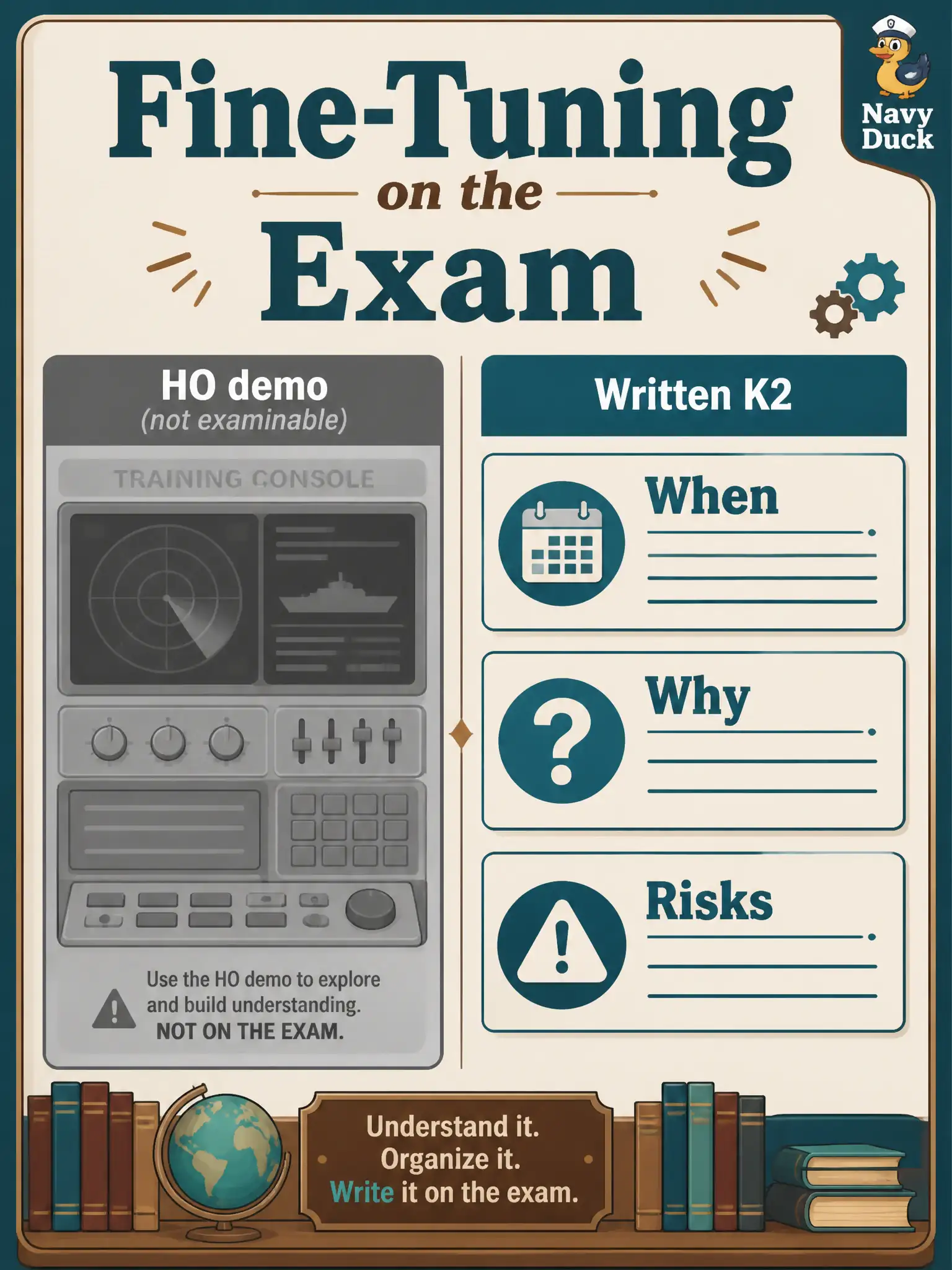
The written exam asks when, why, and what can go wrong — not which button launches training. HO-4.2.1 is not examinable. Candidates stay at explain depth, not ML-engineer procedure.
Full Explanation
Hands-on HO-4.2.1 walks through selecting a framework, loading a dataset, and launching a training job, but that lab is not examinable on the written CT-GenAI exam. Candidates explain when and why to fine-tune and name key risks at K2 depth; they are not examined as ML engineers who run the job for a community little-free-library bank item. Treating HO-4.2.1 training-job demos as the primary written-exam format confuses practice labs with multiple-choice summarize coverage. Requiring testers to run production fine-tunes during the multiple-choice exam exceeds examinable scope and invents an operational mandate. Testing fine-tuning only via vendor SKU installation steps turns the item into product branding rather than conceptual understanding. Exam caveat: HO labels mark non-examinable hands-on work; fair written stems still may ask when fine-tuning helps or what data and opacity risks matter. Operational check: if a proposed item requires selecting a framework, loading data, and launching training, rewrite it as a summarize question about purpose and risks of fine-tuning instead. Keep civic testware subject to the same review discipline you would apply to human-authored packs. On the written exam, prefer syllabus terminology over vendor marketing language or lab choreography.