
A community-woodshop reservation agent books a “dust-gate closed” check that the shop never required. What risk does this illustrate for agents?
Select an answer to reveal the explanation.
Short Explanation
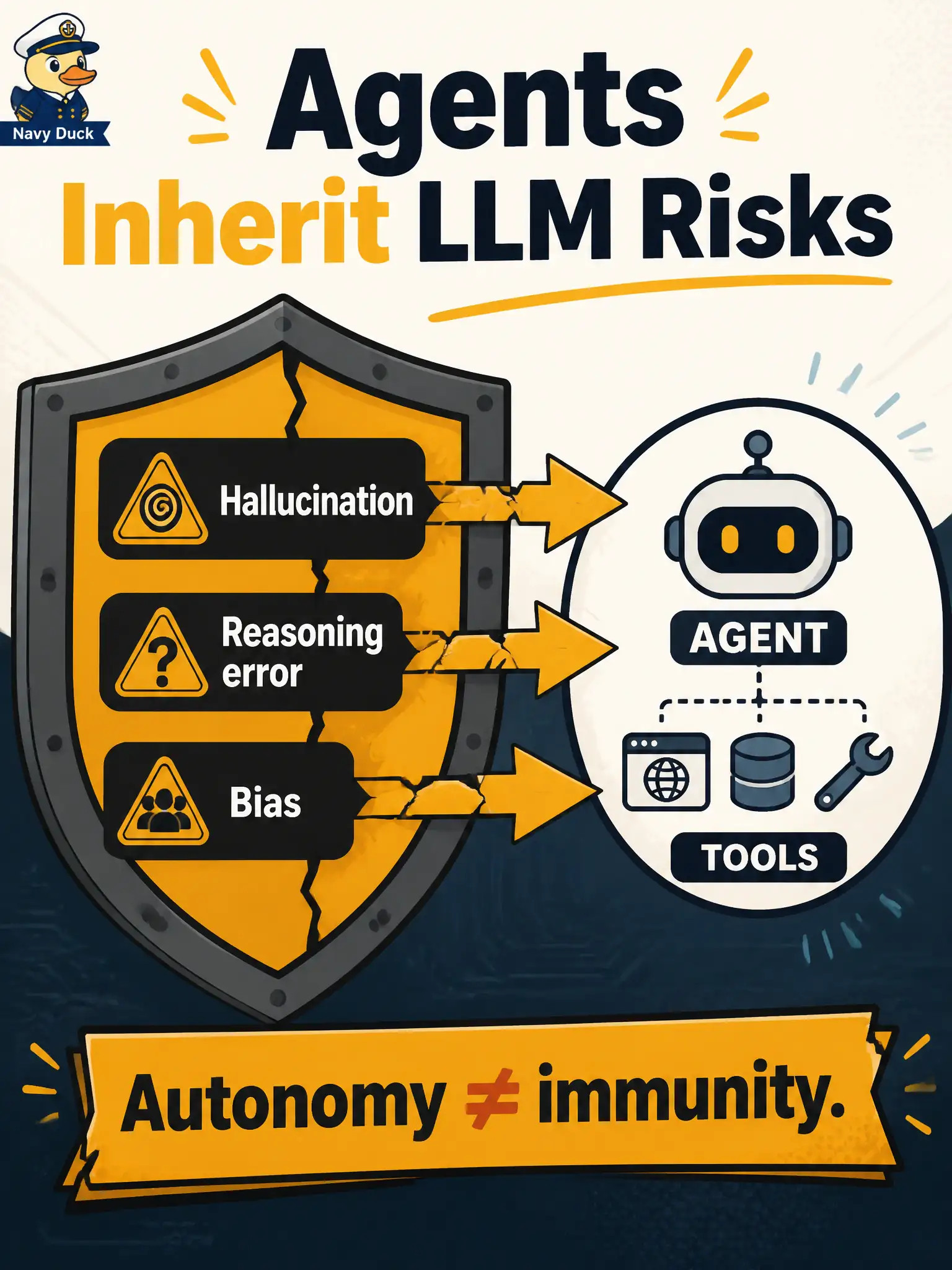
Giving an agent tools does not give it a free pass on inventing checks. Hallucination, reasoning errors, and bias still apply — just like other LLM use. Autonomy does not erase those Chapter 3 defect classes.
Full Explanation
LLM-powered agents still hallucinate, reason incorrectly, or reflect bias, and those inherited defect classes can damage automated testing processes—for example booking a “dust-gate closed” check that the community woodshop never required. Tool use and autonomy do not remove Chapter 3 defect classes; they can make flawed outputs more consequential because the agent acts on them. Claiming agents are immune to hallucination, reasoning error, and bias once they can call tools is false; tools amplify action but do not certify truth. Saying agents only fail when relational databases store structured cases invents an unrelated storage dependency and ignores LLM-origin defects. Asserting that agents eliminate Chapter 3 defect classes by definition of autonomy confuses independence of operation with correctness of reasoning. Exam caveat: this item only recognizes inherited risk; detailed detection techniques remain Chapter 3 topics and are not re-taught here. Operational check: when an agent invents a civic woodshop check that policy never required, treat it as hallucination or reasoning error risk and apply verification or human oversight rather than assuming tools made the output trustworthy.