
A municipal sidewalk-cafe permit shop used to maintain brittle click-scripts. The new suite is told “confirm a weekend-patio application can be refused for missing insurance” and works toward that goal. What shift does that illustrate?
Select an answer to reveal the explanation.
Short Explanation
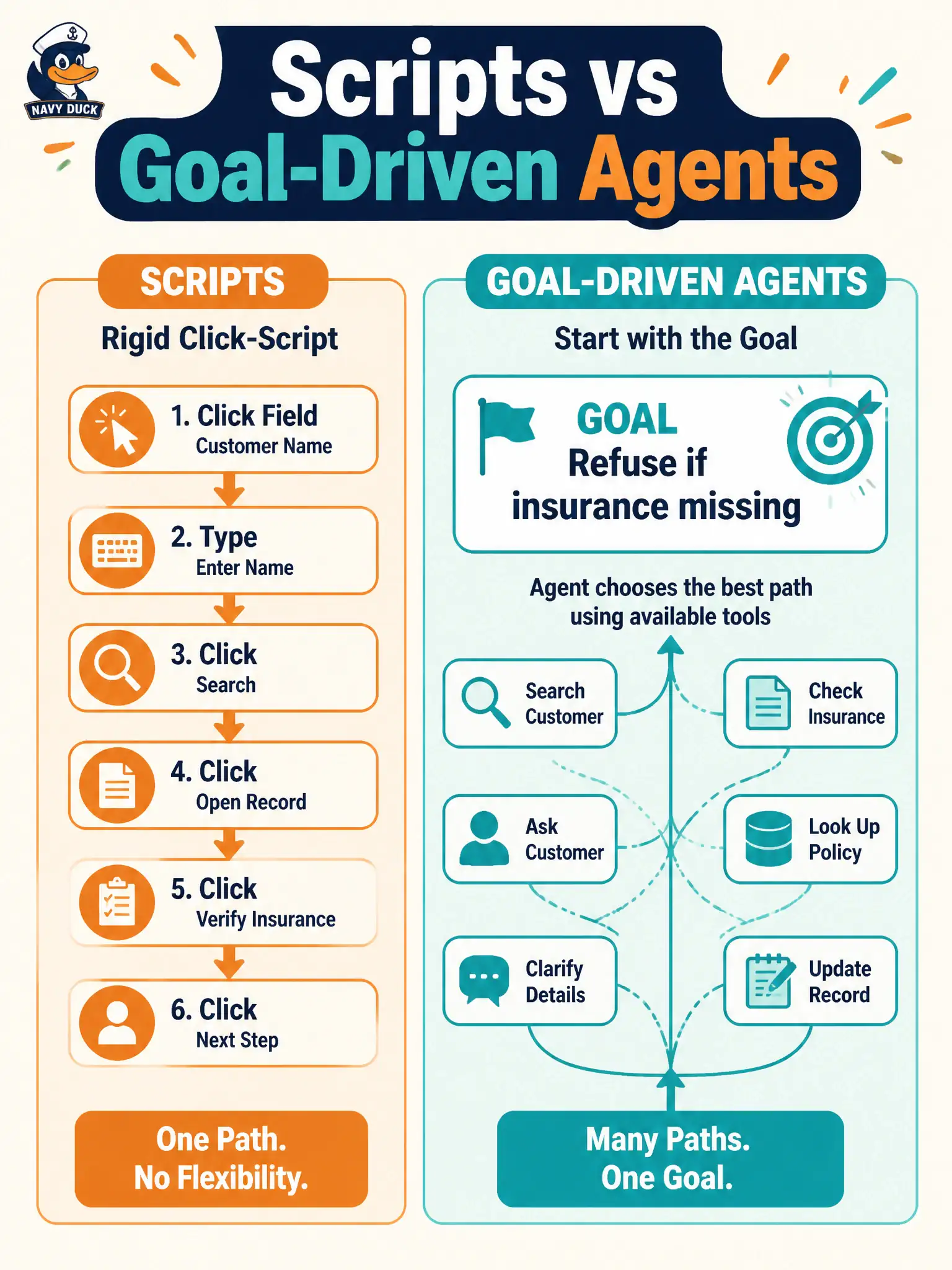
Old scripts click the same path; a goal-driven agent pursues the outcome you named. “Confirm refusal for missing insurance” is the goal, not a brittle click list. That is the shift to agent-based automation.
Full Explanation
Goal-driven, agent-based test automation contrasts with script-based automation that replays stored click paths. When a municipal sidewalk-cafe permit shop moves from brittle scripts to a suite told to “confirm a weekend-patio application can be refused for missing insurance,” the agent pursues that stated goal and can adapt tool use toward the outcome—the syllabus’s script-to-agent shift for civic permit testing. The emphasis is on achieving the named refusal condition, not on replaying yesterday’s click sequence when screens change. Moving from goal-driven agents back to exclusively manual clipboard testing reverses the illustrated progress and abandons automation benefits the shop sought. Declaring a permanent ban on LLM use in testing is not the shift described and conflicts with GenAI-for-testing adoption in municipal suites. Framing the change as from RAG retrieval to pasting the entire permit code into every script confuses retrieval architecture with automation style and promotes a whole-corpus anti-pattern. Exam caveat: written items highlight the goal-versus-script contrast without requiring vendor tooling details or exploit content. Operational check: if the suite is given an outcome goal such as confirming refusal for missing insurance rather than a fixed click list, treat it as goal-driven agent-based automation rather than brittle script replay.