
Testers at a community-radio playlist desk see an in-tool helper that turns a new “no-overlap weekday” story into analysis notes, cases, and a short report without leaving the test application. What are AI assistants in this context?
Select an answer to reveal the explanation.
Short Explanation
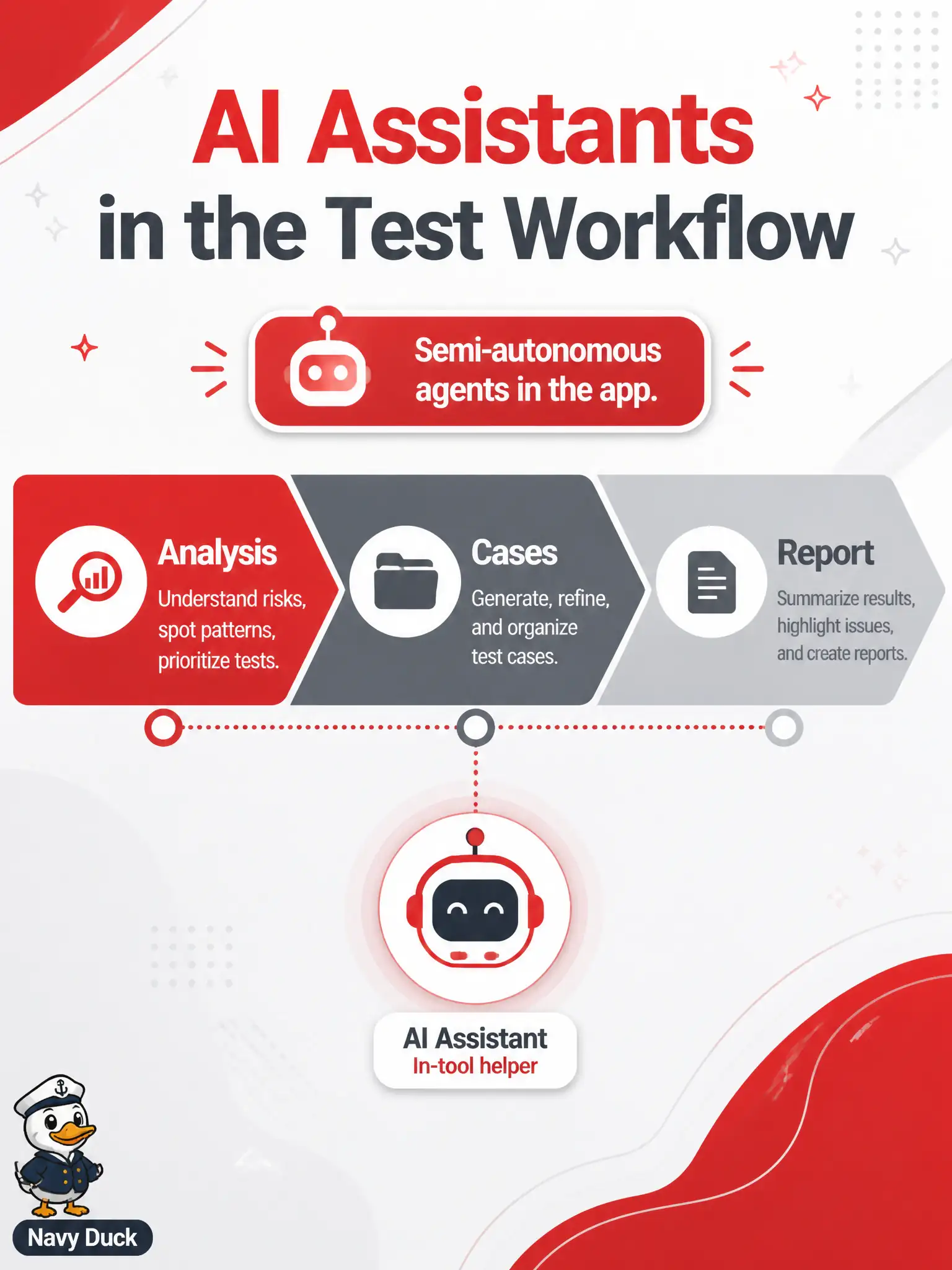
The helper living inside the test app is the assistant face of agents. It stays in the workflow from analysis to reporting, usually semi-autonomous. That is how many modern tools expose LLM-powered agents.
Full Explanation
In modern testing tools, AI assistants are the usual way LLM-powered agents appear inside the workflow: they support analysis through reporting in a semi-autonomous fashion without forcing testers to leave the application. The community-radio playlist desk helper that turns a “no-overlap weekday” story into analysis notes, cases, and a short report in-tool matches that definition. A ban on using agents inside any commercial or open-source test tool contradicts the syllabus emphasis on assistants as the workflow face of agents. Requiring CT-AI neuron coverage measurement before any story analysis imports model-as-SUT techniques into a GenAI-for-testing assistant item. Replacing all human reporting with unsupervised overnight training only overstates autonomy and drops the semi-autonomous oversight typical of in-tool assistants. Exam caveat: v1.1 stresses assistants as how agents show up in the testing workflow; do not confuse that with CT-AI coverage of a model under test. Operational check: if the helper lives inside the test application and moves a civic playlist story from analysis to cases to a short report with human-visible review points, classify it as an AI assistant exposing agent capability.