
Municipal ice-rink slot rules change every freeze warning, and testers need analysis and design to follow this week’s handbook and the existing case store. How does RAG support that testing need?
Select an answer to reveal the explanation.
Short Explanation
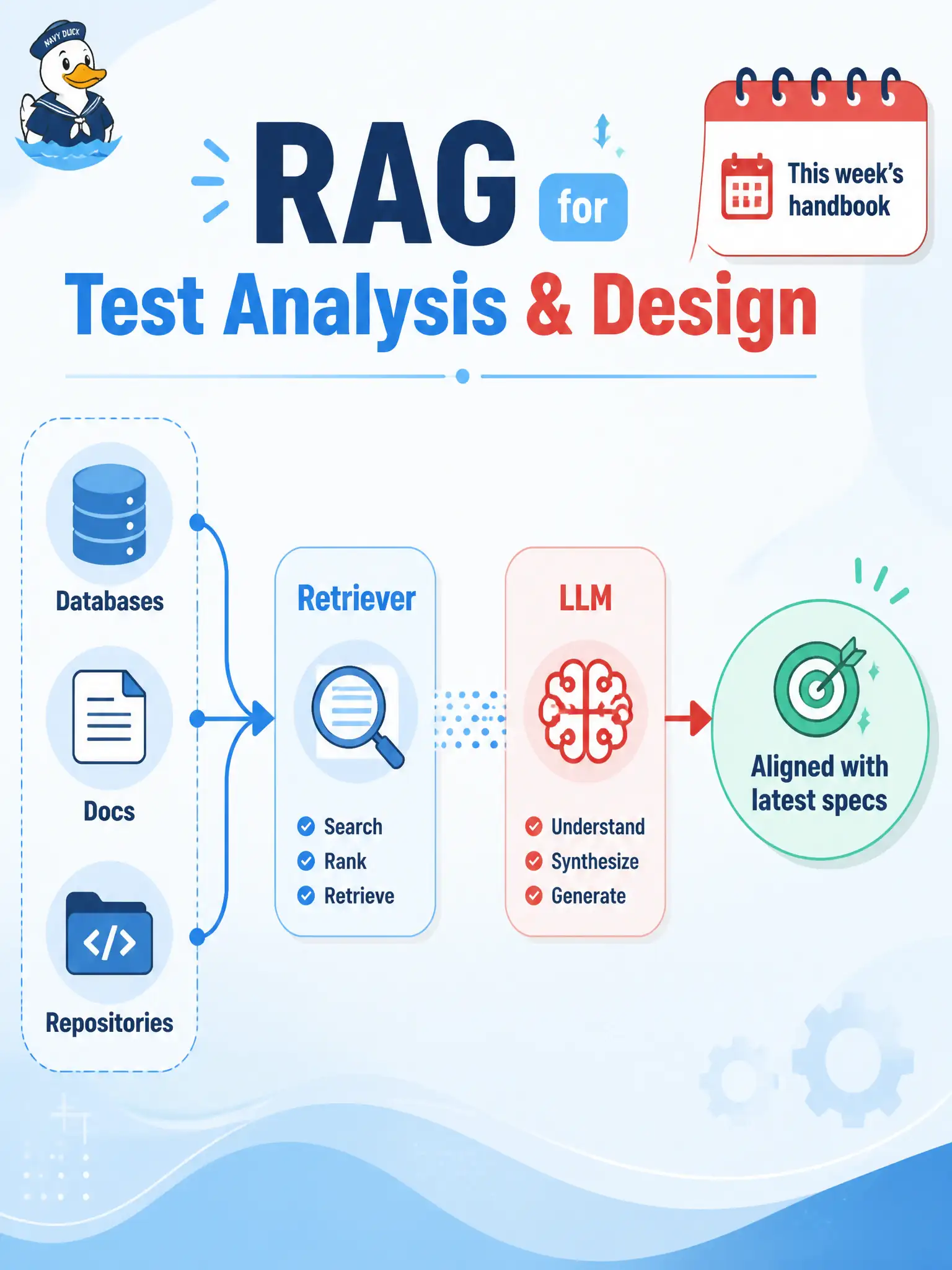
When rink rules change with the weather, you want today’s binder on the bench — not last winter’s memory. RAG reaches live enterprise sources so analysis and design track the latest specs and existing test data. Dumping the whole wiki every time is not the same idea.
Full Explanation
Municipal ice-rink slot rules that change with every freeze warning need analysis and design aligned to this week’s handbook and the existing case store. RAG supports that by reaching enterprise data sources such as databases, documentation, and repositories in real time so analysis and design stay aligned with latest specifications, requirements, and existing test data. Today’s binder, not last winter’s weights alone.
Forbidding access to enterprise documentation fails by concept. Pasting the entire historical wiki into every prompt without similarity selection fails focused retrieval practice. Replacing all human test analysis with unsupervised overnight training fails role boundaries and governance.
Exam caveat: real-time reach into enterprise sources is the testing-value proposition of RAG for fast-changing civic rules.
Operational check: wire rink handbook repos and case DBs into the retriever; refresh after freeze-warning updates; require analysts to confirm retrieved version dates; keep humans accountable for final design decisions while RAG supplies current basis material. Ice-rink RAG connectors should pull live handbook repos and case databases after freeze warnings, showing version dates to analysts who remain accountable for final design decisions. Reject “paste the whole wiki” and “forbid enterprise docs” configurations as substitutes for similarity-guided retrieval.