
A volunteer fire-hall equipment-checkout lead asks what “relevant” or “grounded” means after RAG runs. Which summary is best?
Select an answer to reveal the explanation.
Short Explanation
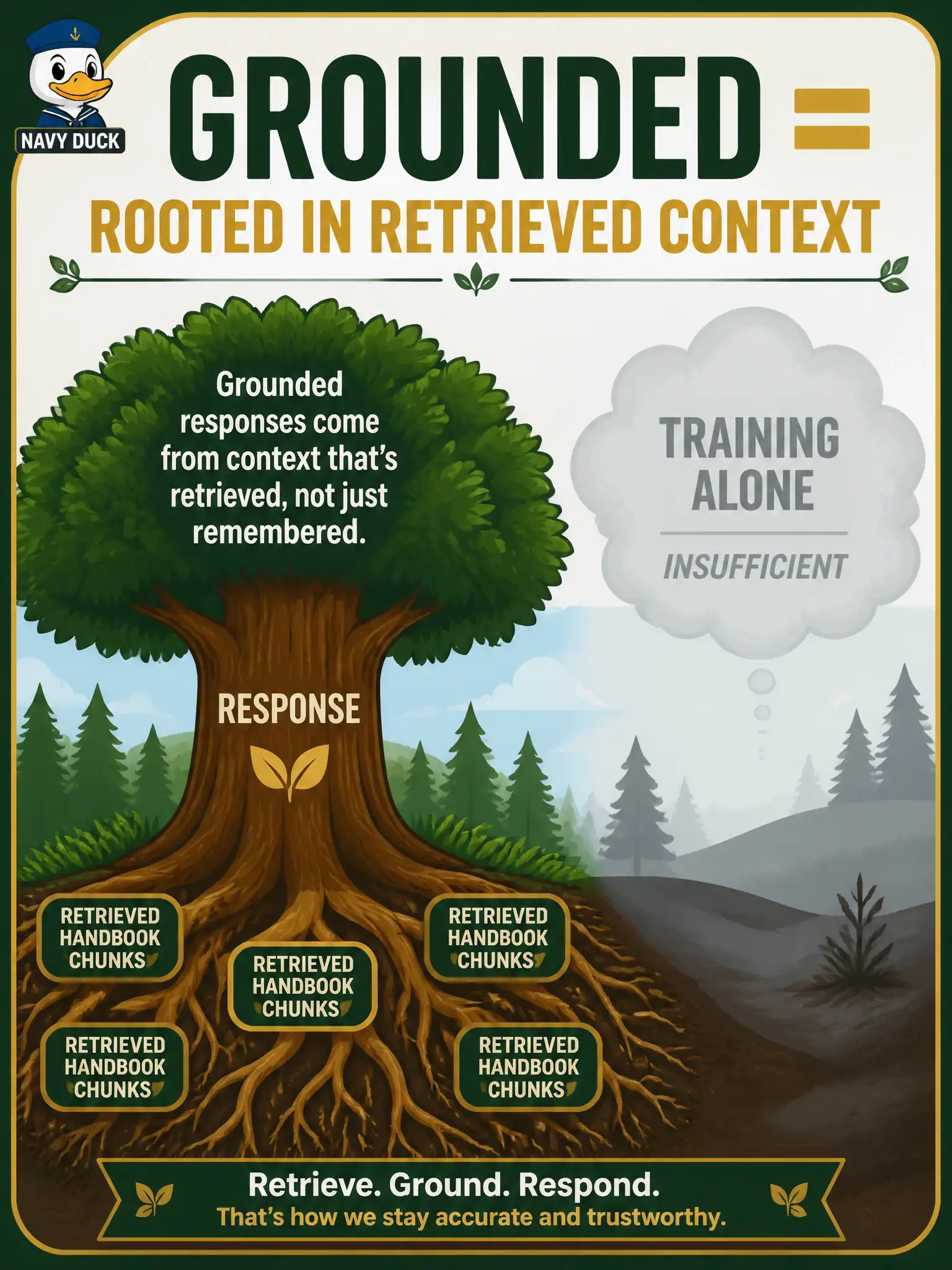
Grounded is like quoting the checkout log you just pulled off the shelf, not guessing from memory. After RAG, a relevant answer is rooted in what retrieval gathered. Training memory alone is not enough.
Full Explanation
Volunteer fire-hall equipment-checkout leads asking what “relevant” or “grounded” means after RAG should hear: a grounded response is rooted in accurate, contextually appropriate information gathered during retrieval—not only in the model’s pre-existing training. Quote the log you pulled; do not guess from memory alone.
Any fluent sentence invented without checking retrieved context fails the grounded definition. Defining grounded only by token count matching prompt length fails. Treating grounded as CT-AI SUT neuron-coverage rules fails domain.
Exam caveat: grounded ≠ fluent; grounded ≠ same length; grounded = retrieval-rooted appropriateness.
Operational check: score checkout answers for citation of retrieved chunks; reject fluent but uncited critical rules; sample audits comparing answers to source paragraphs; retrain staff metaphors away from “the model remembered.” Fire-hall checkout answers should be scored for retrieval citations; fluent uncited critical rules fail the grounded bar even when token length matches the prompt. Audit samples against source paragraphs and retire “the model remembered” language in training. Grade fire-hall groundedness with a simple rubric: citation present, citation accurate, action matches policy—fluent uncited answers score zero on critical rules.