
A county mosquito-spray notice shop finds the plain model invents last year’s exclusion streets and wants cases grounded in the current spray handbook. What does RAG primarily add?
Select an answer to reveal the explanation.
Short Explanation
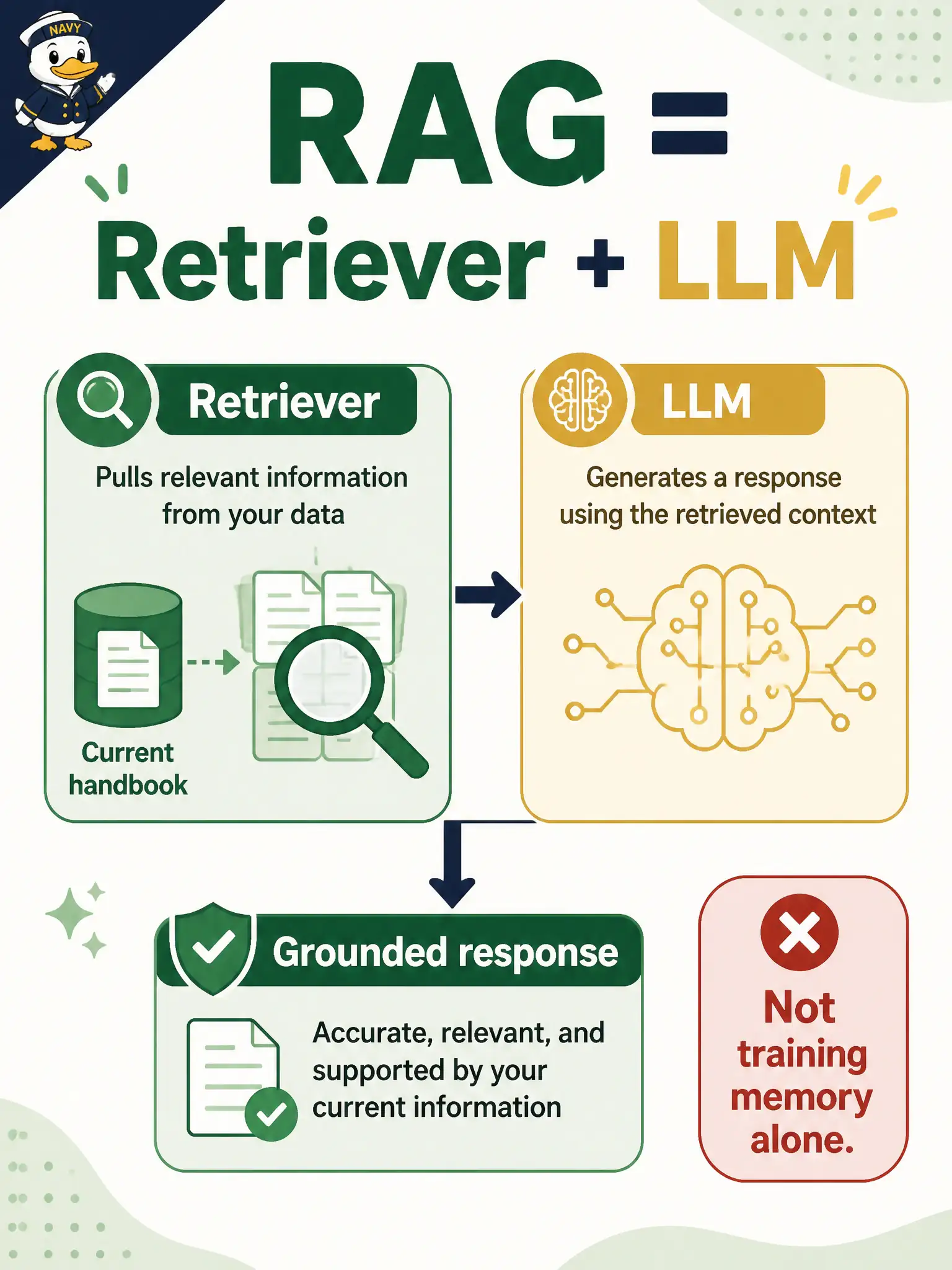
RAG is like handing the cook today’s recipe card instead of relying on memory alone. A retriever pulls current sources; the LLM then answers with that material in reach. That keeps cases tied to this year’s handbook.
Full Explanation
Mosquito-spray notice shops that see plain models invent last year’s exclusion streets need RAG: a retriever combined with the LLM so responses draw on additional, current sources rather than the model’s training alone. Today’s handbook on the bench beats stale memory.
Banning external handbooks fails by concept. Pasting the entire municipal archive into every prompt without retrieval fails scalability and context-window practice. Replacing grounded handbook use with CT-AI neuron-coverage metrics fails domain.
Exam caveat: RAG = retrieve then generate with current sources—not “no docs” and not “paste everything.”
Operational check: index this year’s spray handbook; retrieve relevant streets/exclusions per query; cite retrieved chunks on generated cases; refresh the index when exclusions change after inspections. Mosquito-spray RAG indexes must refresh when exclusion streets change, and generated cases should cite retrieved handbook chunks rather than unaided model memory. Ban “no external handbook” configurations for this year’s notice packs. Require spray-notice packs to display the handbook version date retrieved by RAG, and fail the job if the index is older than the latest exclusion bulletin.