
A municipal boat-ramp reservation model returns a raw case list that still mentions a retired “cash-only” rule. The suite strips or flags that line before testers see the pack. What is that back-end step called?
Select an answer to reveal the explanation.
Short Explanation
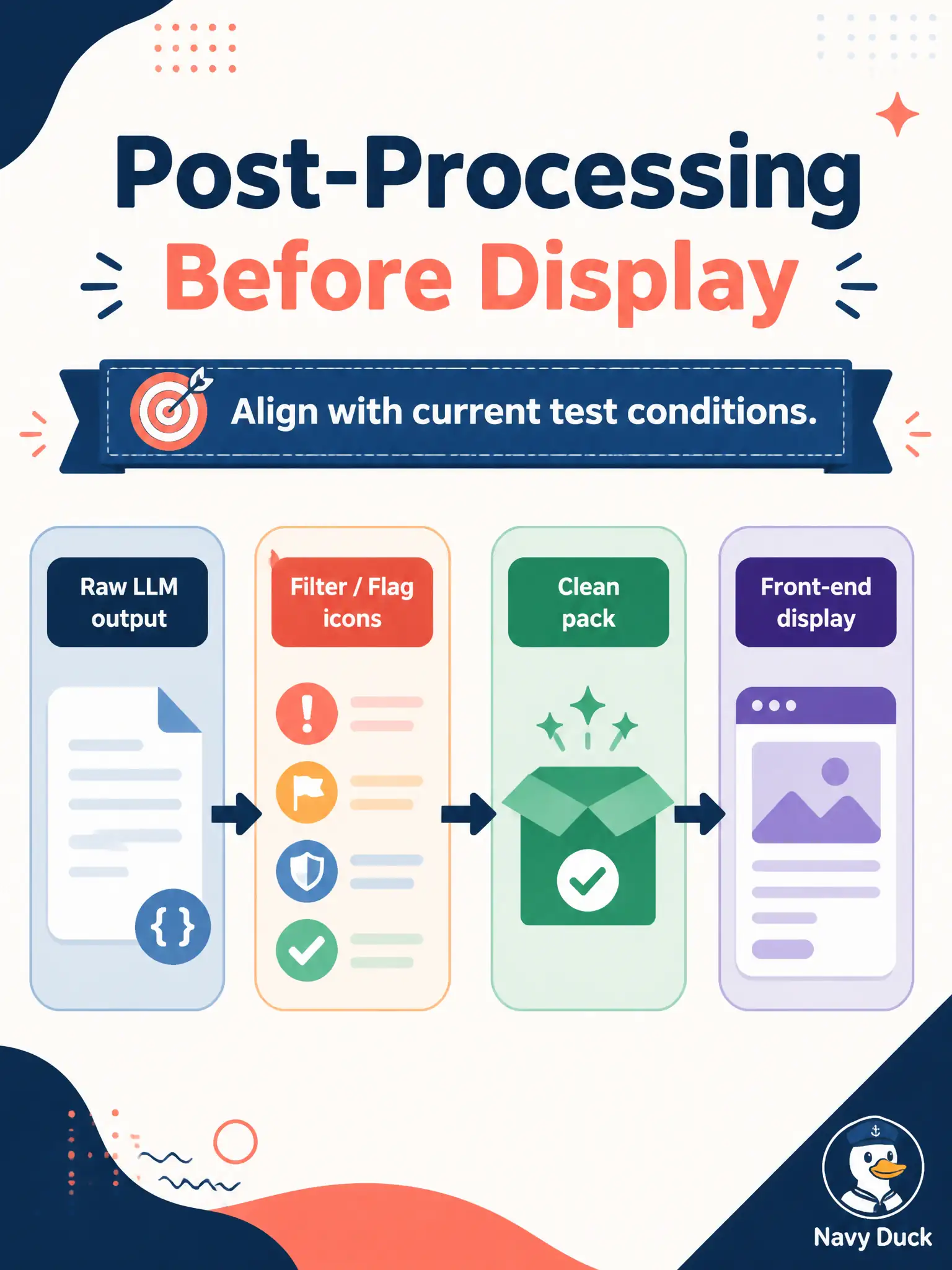
Raw model output is like dough that still needs shaping before it hits the plate. Post-processing is the back-end step that strips or flags stale lines so the pack matches current test conditions. Testers then see cleaned output on the front-end.
Full Explanation
Boat-ramp reservation models that return raw case lists mentioning a retired “cash-only” rule need post-processing—aligning raw LLM output with the test process before the front-end presents it. Strip or flag stale lines so testers see packs matching current conditions.
Chunking fails by concept: that splits documents for retrieval, not cleaning model output. Fine-tuning fails because further training is not the named back-end alignment step here. Front-end capture fails because typing a ticket id is input UI, not output alignment.
Exam caveat: post-processing sits after generation and before presentation; it enforces process fit.
Operational check: maintain a filter list of retired ramp rules; automatically flag forbidden phrases; require human accept on flagged lines; never show raw model output as final pack when post-processing is in the architecture. Boat-ramp post-processing must maintain a retired-rule filter, flag cash-only remnants, and withhold raw model lists from the front-end until alignment checks pass. Human accept remains required on flagged lines even when the rest of the pack looks clean. Show testers a side-by-side of raw versus post-processed ramp packs during onboarding so the retired cash-only line’s removal is a visible process, not a rumor.