
A community-orchestra ticket-exchange lead calls the new suite “just a web form talking to a file server.” Why is that description incomplete for an LLM-powered test infrastructure?
Select an answer to reveal the explanation.
Short Explanation
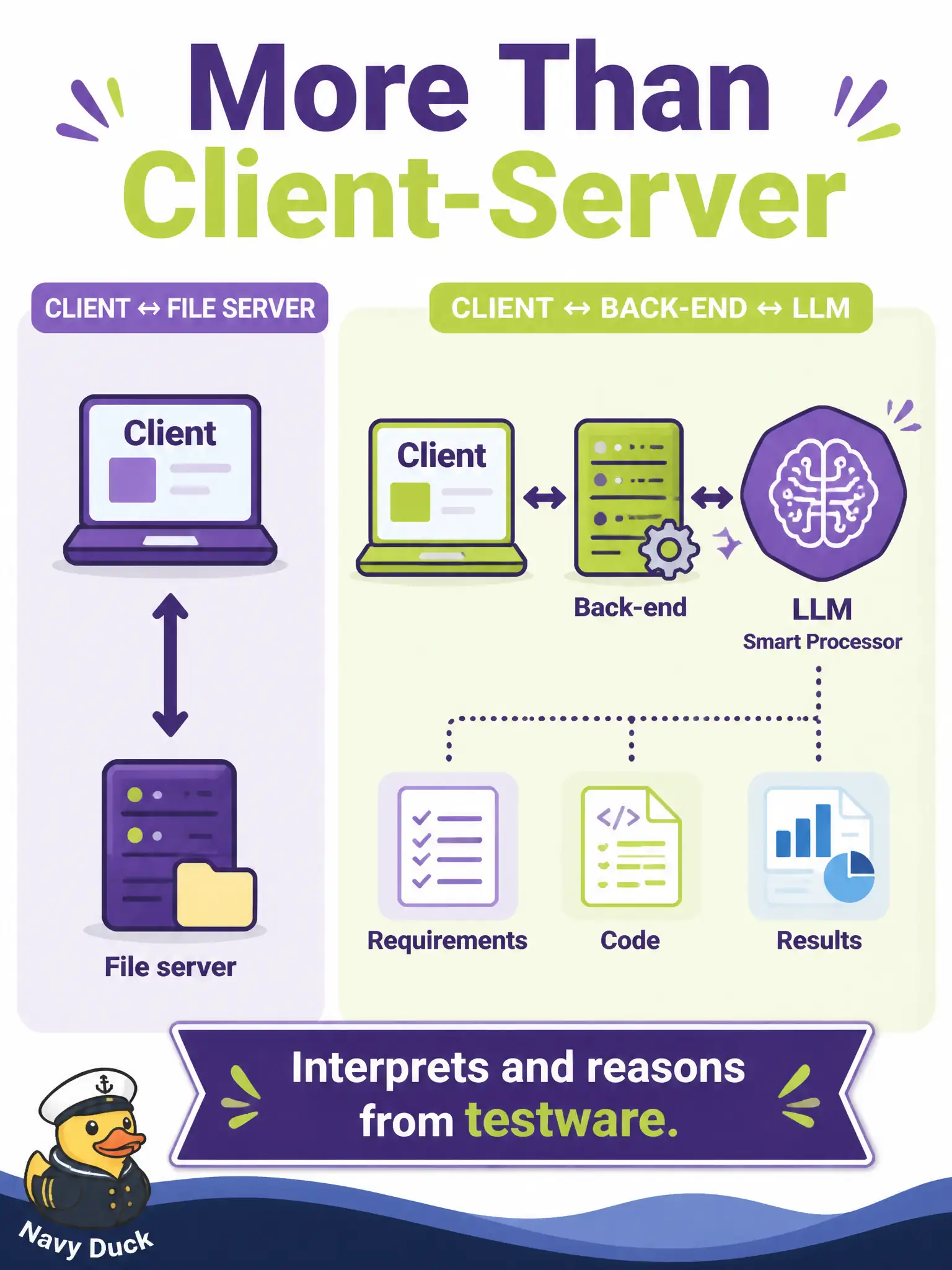
A plain file server hands back what you stored; a smart processor reads requirements, code, and results and reasons about them. LLM-powered test infrastructure uses the model that way — not as a scripted rule chatbot or a dumb client-server file share.
Full Explanation
Community-orchestra ticket-exchange leads who call the suite “just a web form talking to a file server” undersell LLM-powered test infrastructure. The architecture goes beyond traditional client-server: the LLM is a smart processing component that interprets and reasons from testware such as requirements, code, and results.
Claiming the suite is only a static FAQ fails by concept. Replacing every LLM call with a fixed decision tree fails the LLM-powered premise. Allowing only a chatbot that refuses to read testware fails the test-infrastructure purpose.
Exam caveat: emphasize smart processing of testware, not dumb file fetch, as the differentiator.
Operational check: update orchestra architecture one-pagers to show the LLM reasoning over requirements and results; train stakeholders off the “file server” metaphor; evaluate tools on testware interpretation capability. Orchestra stakeholder one-pagers should replace the file-server metaphor with “smart processing of requirements, code, and results,” and evaluations should score tools on that capability. Chatbots that refuse testware remain out of scope for LLM-powered test infrastructure KPIs. Replace “file server” language in orchestra RFPs with requirements for LLM reasoning over requirements, code, and results, and score vendors on that criterion.