
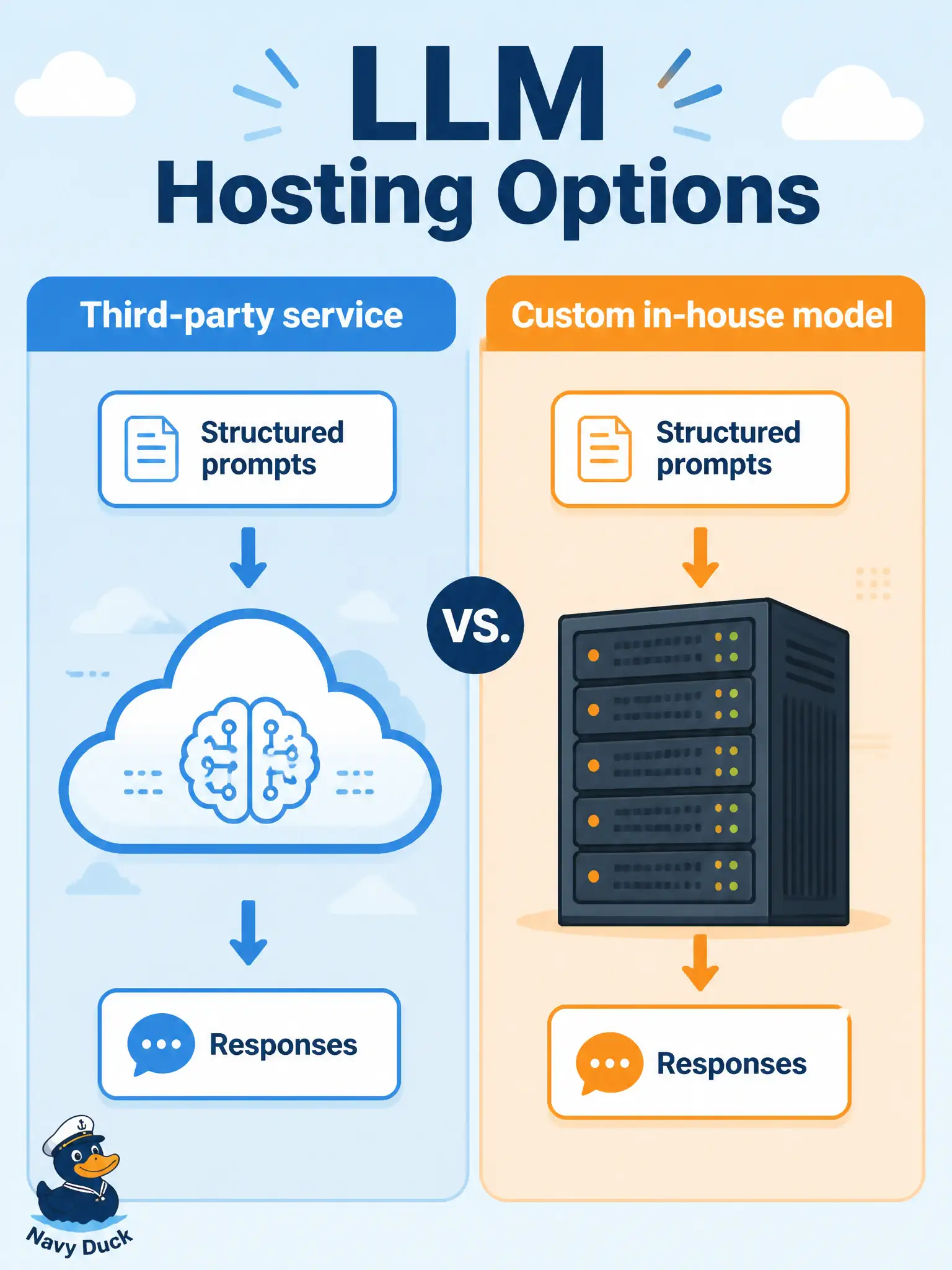
A public-pool lane-reservation shop can either send structured prompts to a vendor model over an API or host a custom model on its own servers. How may the LLM component be provided in test infrastructure?
Select an answer to reveal the explanation.
Short Explanation
The model is like a hired chef or a kitchen you staff yourself — either path can cook from the same recipe card. Test infrastructure may call a third-party API or run a custom in-house model. Both generate responses from structured prompts.
Full Explanation
Public-pool lane-reservation shops may provide the LLM component as a third-party service via API or as a custom in-house model that generates responses from structured prompts. Hired chef or staffed kitchen—both are valid infrastructure patterns.
Only as an on-device rule script that never uses a language model fails the LLM component definition. Only as a third-party API with in-house models out of scope fails by false exclusivity. Only as a fine-tuned SLM with large models forbidden fails by artificial restriction.
Exam caveat: infrastructure may call vendor APIs or host custom models; both consume structured prompts to generate responses.
Operational check: document which pools use API versus on-prem models; apply equivalent logging and review gates to both; avoid assuming “API only” or “SLM only” in architecture standards. Pool lane-reservation standards should allow either vendor API or in-house hosted models, applying equal logging, review, and secret-management gates to both patterns. Architecture policies must not claim “API only” or “fine-tuned SLM only” without a documented exception. Maintain an inventory row per pool site listing API versus in-house model, owner, and last secret rotation so neither pattern drifts outside review gates.