
Municipal compost-pickup testers type a ticket id and a “draft weekend cases” command into a form before the suite does anything else. Which architecture component is that form?
Select an answer to reveal the explanation.
Short Explanation
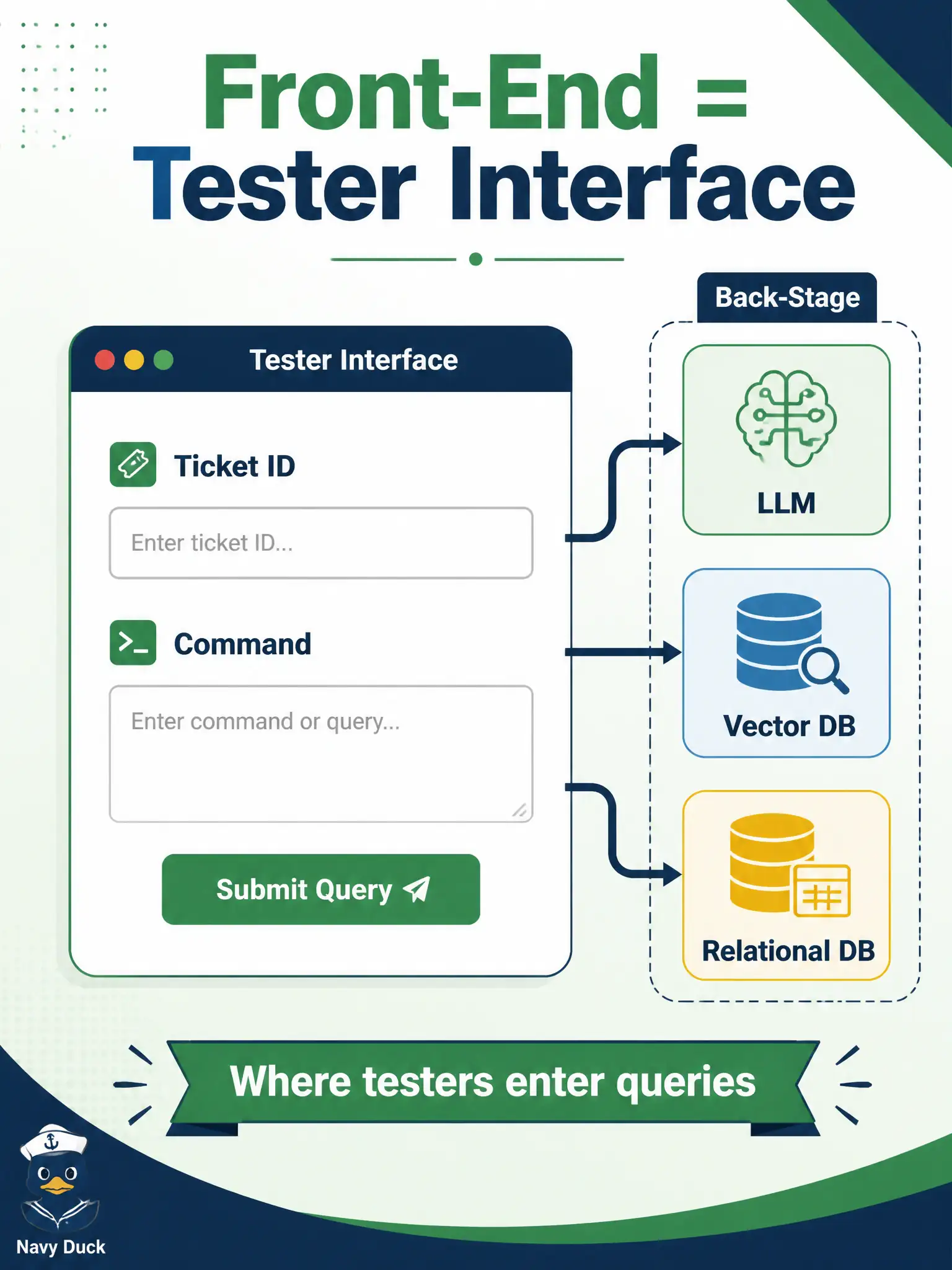
Think of the front-end as the counter where you place your order. Testers type ticket ids and commands there. The model, the vector store, and the case table sit behind that counter.
Full Explanation
Municipal compost-pickup testers typing a ticket id and “draft weekend cases” into a form are using the front-end—the user interface where testers enter queries or commands. The counter takes the order; other components work behind it.
The LLM that generates the pack fails as the form’s identity. The vector database of handbook embeddings fails. The relational database of approved cases fails. Those are downstream or sibling components.
Exam caveat: front-end = UI entry point for tester queries/commands in the architecture diagram.
Operational check: label the compost suite UI as front-end in diagrams; keep auth and prompt assembly out of “front-end only” descriptions; train new testers on what the form does versus what the back-end does next. Compost suite diagrams should label the ticket-and-command form as front-end and keep authentication, retrieval, and model calls in back-end descriptions. Onboarding scripts demonstrate what testers type versus what happens after submit so component names stick. Add hover-text in the compost UI that says “Front-end: enter ticket and command,” reinforcing the architecture vocabulary every time a tester drafts weekend cases. Retain the civic test basis as the authority whenever fluent model wording conflicts with posted rules, and document who accepted any residual risk.