
A community-garden plot desk needs a system that reads this week’s watering rules and emits a case table, not a chat pane that only answers “what is a test condition?” Which description best fits an LLM-powered test tool or test infrastructure?
Select an answer to reveal the explanation.
Short Explanation
Picture a workshop bench versus a help desk: one builds the pack, the other answers questions. An LLM-powered test tool plugs the model into analysis, case drafting, and evaluation. A chatbot that only chats is a different shape of system.
Full Explanation
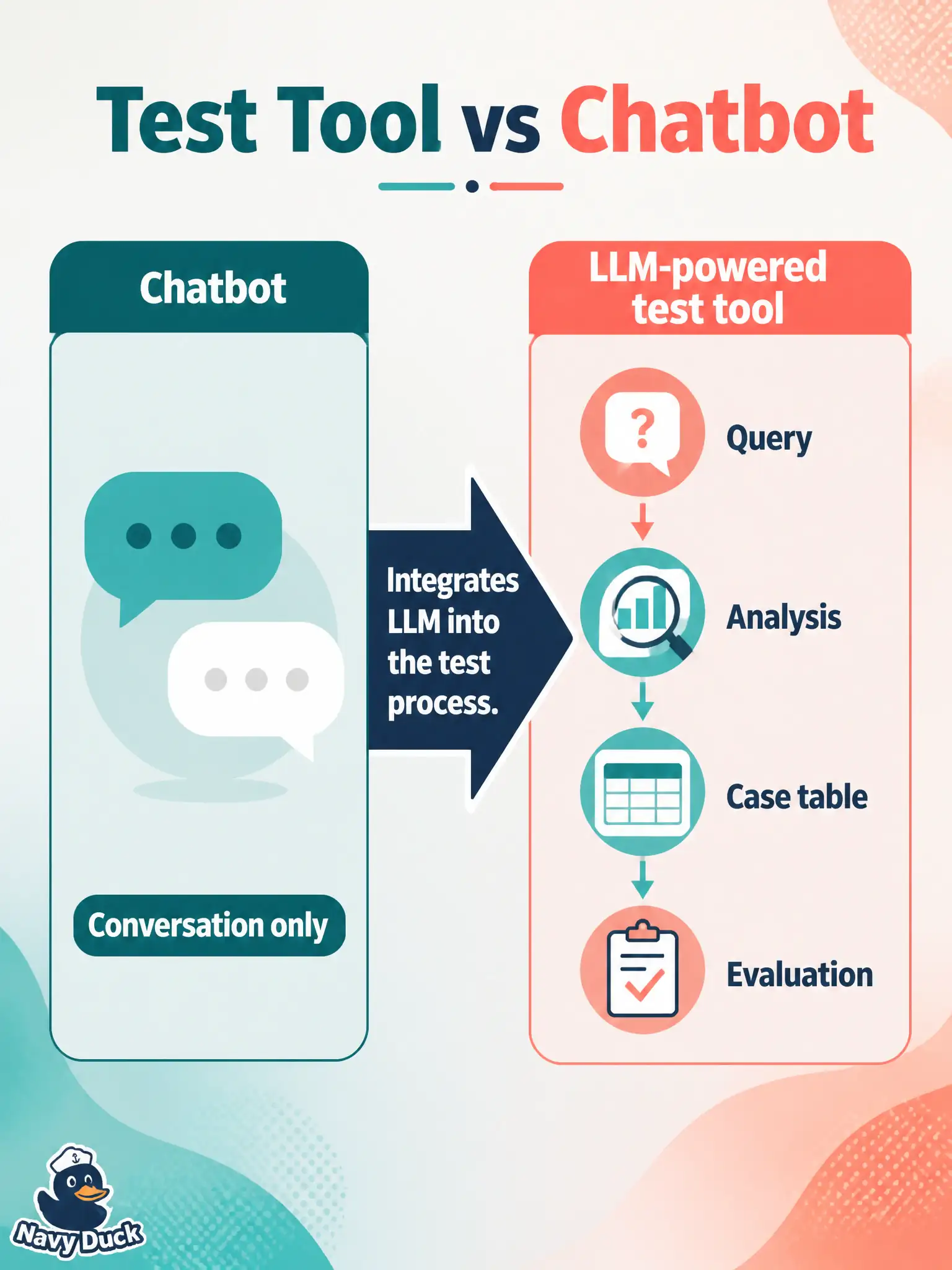
Community-garden plot desks need systems that read this week’s watering rules and emit case tables—not chat panes that only define “test condition.” An LLM-powered test tool or test infrastructure integrates an LLM into the test process for queries, analysis, case generation, and output evaluation, distinct from a chatbot that mainly holds a conversation.
A conversational pane that never writes structured testware fails by concept for this need. A static rule engine without any language model fails the LLM-powered definition. A CT-AI setup treating the LLM as SUT with neuron coverage fails because that evaluates the model, not infrastructure that generates garden testware.
Exam caveat: tool-vs-chatbot distinction hinges on structured test-process integration, not on whether a UI has a text box.
Operational check: select garden tooling that exports case tables into the suite; reject “chat only” bots for pack generation KPIs; document how requirements, code, and results flow through the LLM component. Garden tooling selection criteria should require structured case-table export and test-process integration, failing chat-only bots that never emit testware into the suite. Architecture reviews ask how requirements, code, and results reach the LLM component—not whether a text box exists.