
A bike-share kiosk team has a wireframe PNG plus a one-line user story and wants unlabeled controls called out for testing. Which model choice best fits the task?
Select an answer to reveal the explanation.
Short Explanation
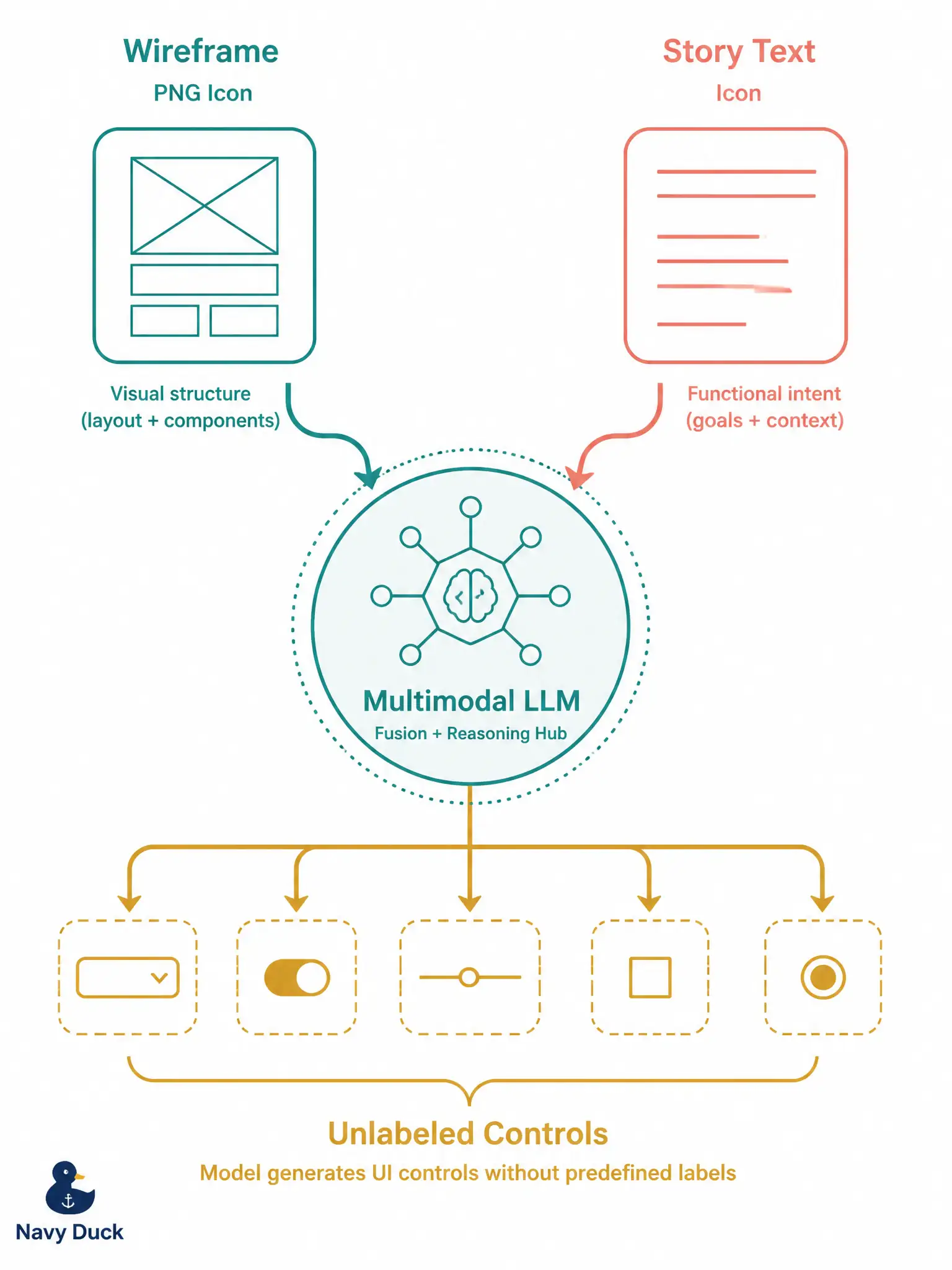
When the test basis includes a picture, you need a model that can actually look at pixels and read the story together. A text-only model never sees the unlabeled buttons on the wireframe. Multimodal input is the right tool for calling those controls out.
Full Explanation
A multimodal LLM that can accept a wireframe image together with story text best fits a bike-share kiosk team that has a PNG plus a one-line user story and wants unlabeled controls called out for testing. Visual input is required to see controls the prose never names; text provides the intended journey. Civic kiosk programs frequently ship wireframes ahead of polished copy—multimodal pairing is the honest tool choice.
A text-only LLM that receives only the story filename as a string never sees pixels, so unlabeled buttons remain invisible. A reasoning text model that never accepts image embeddings has the same modality gap despite reasoning strength. A small language model limited to renaming fields in CSV exports addresses neither the image nor the unlabeled-control discovery task.
Exam caveat: when the test basis includes pictures, modality must include vision. Reasoning ability does not substitute for image input.
Operational check: attach the wireframe PNG and the story in one multimodal prompt; ask for unlabeled or weakly labeled controls as draft test conditions; verify each flagged control on the real image; store the multimodal checklist in the bike-share municipal test playbook.