
A municipal poll-worker eligibility screen has nested if-then rules, and the tester needs a model that can walk those steps before proposing a case order. Which LLM category fits best over a plain instruction-tuned model?
Select an answer to reveal the explanation.
Short Explanation
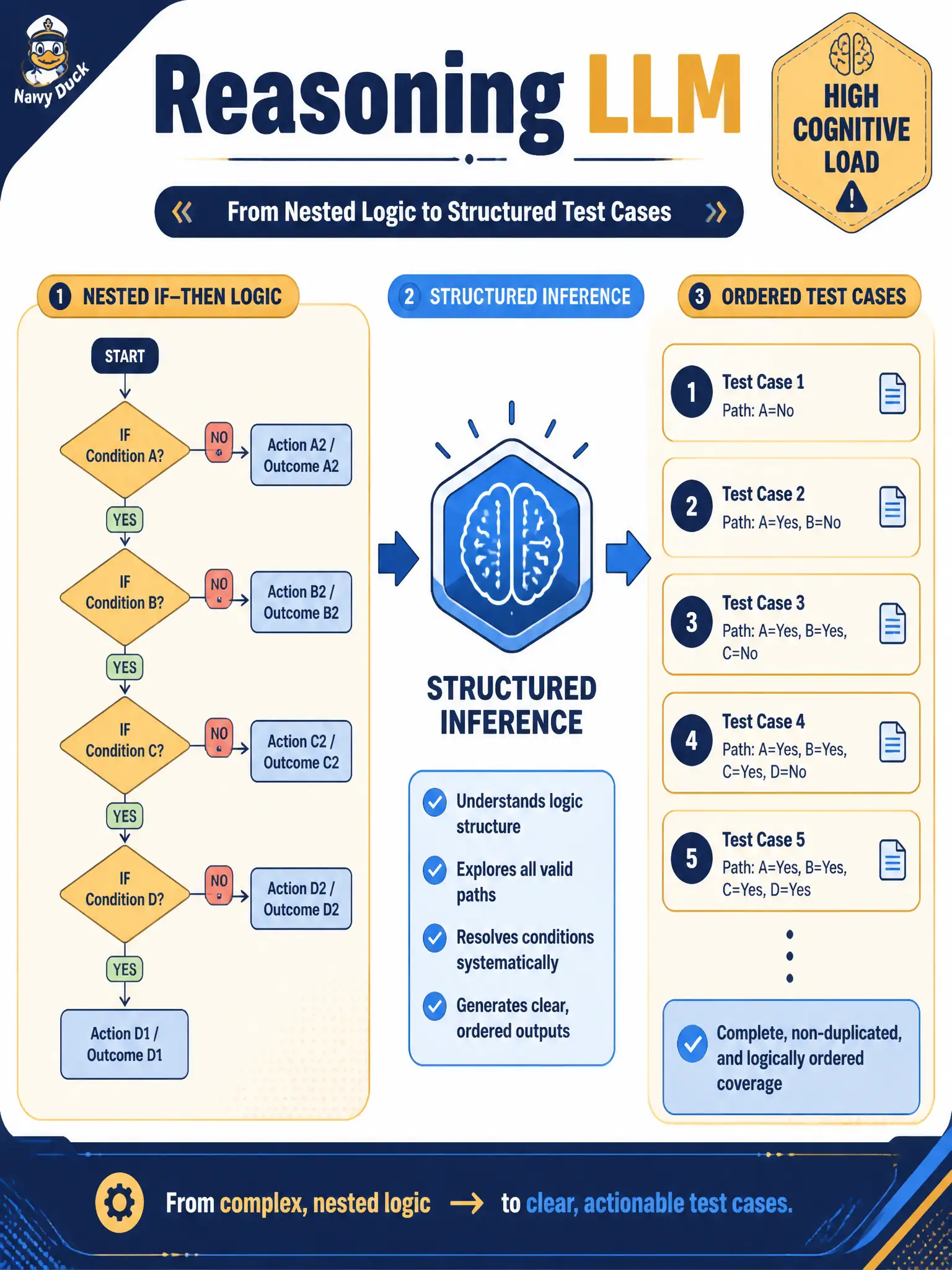
Some jobs need a guide who can work through a tangled checklist, not only follow a one-line order. Reasoning LLMs are further trained for structured, multi-step inference. Nested eligibility rules before a case order are that kind of load.
Full Explanation
A reasoning LLM is further trained for structured inference and high-cognitive-load tasks. That fits a municipal poll-worker eligibility screen with nested if-then rules that a tester needs walked before proposing a case order—deeper than a plain instruction-tuned draft of a simple table. Civic election-support testing often presents tangled eligibility logic where stepwise justification matters for public trust.
A foundation LLM offered only as an unadapted general base lacks the further training implied by nested structured inference. A classical ML no-show scorer that only outputs category labels is the wrong family and wrong output for walking eligibility then ordering cases. Defining an SLM solely as having more parameters than any LLM inverts the size relationship and ignores reasoning specialization entirely.
Exam caveat: choose reasoning models when the testing aid must chain structured inferences under load; do not default them for every simple format-following task where instruction-tuned models suffice.
Operational check: on a nested poll-worker eligibility sample, compare justification quality and case-order rationale from an instruction-tuned versus reasoning model; use reasoning when step walking is required; document cost, latency, and review gates for the municipal election test environment.