
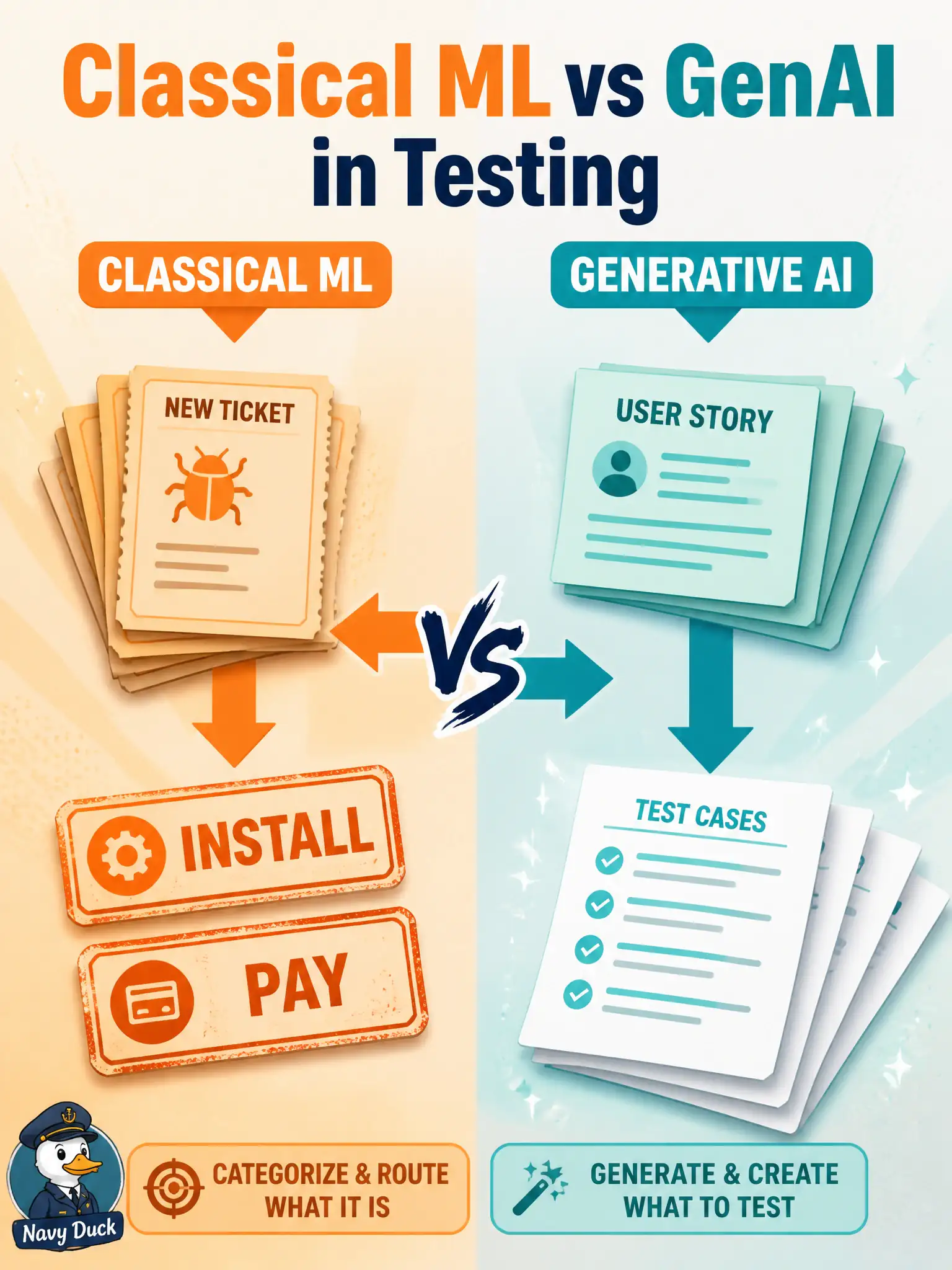
Last year’s defect tickets feed a predictor that only assigns categories such as “install” or “pay.” A second tool drafts new cases from this sprint’s stories. How should a tester classify these two uses?
Select an answer to reveal the explanation.
Short Explanation
One tool stamps folders; the other writes new pages. Categorizing past defects is classical ML-style prediction. Drafting fresh cases from stories is generative AI. Same shop, different roles—do not merge the labels.
Full Explanation
Testers should classify a predictor that only assigns categories such as “install” or “pay” from last year’s defect tickets as classical ML-style categorization, and classify a tool that drafts new cases from this sprint’s stories as generative AI. Same civic shop, two syllabus roles: labeling historical problems versus creating new test content. Keeping those labels separate prevents wrong tool expectations.
Calling both tools generative AI because they touch testing artefacts fails—touching artefacts is not the type definition. Calling the predictor deep learning and the drafting tool symbolic AI invents unsupported mechanisms. Calling both classical ML because they somehow relate to historical data fails for the drafting tool, which creates new cases from stories rather than categorizing past tickets.
Exam caveat: historical data feeding a category predictor ≠ GenAI. Drafting from stories ≠ classical classification. Mechanism and output type decide the label.
Operational check: for each tool, ask whether the primary output is a category/score on past items or newly authored cases/scripts; label accordingly; update the municipal tooling catalog so “AI testing aid” is split into predictor versus GenAI drafter.